
| Hyssop |


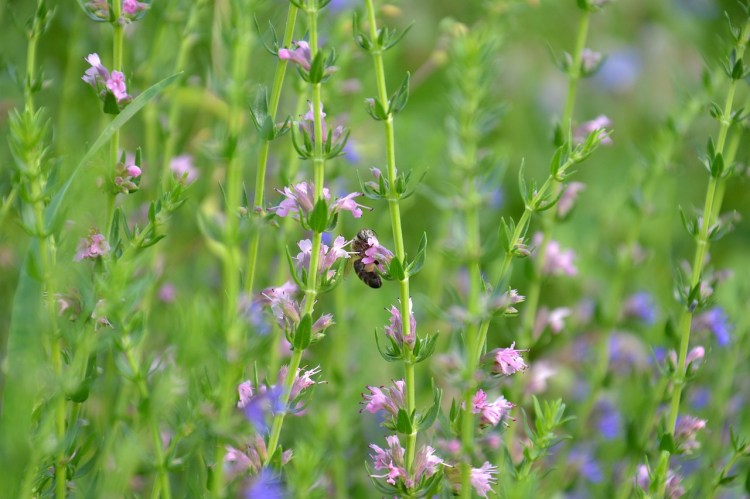
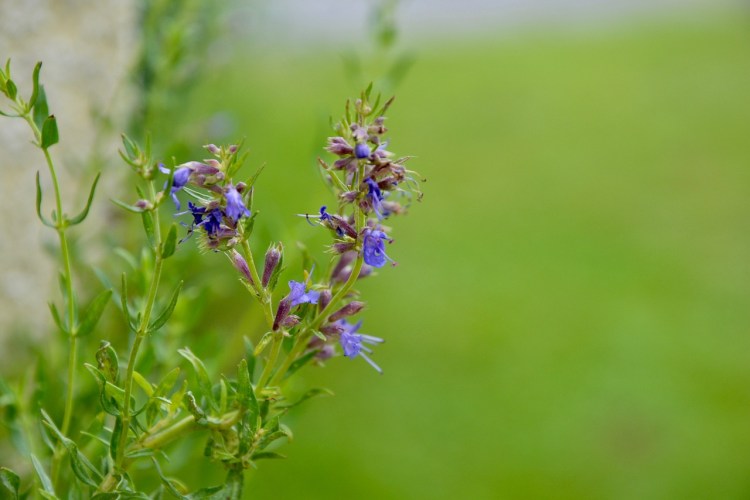
| Over the last five years, I have grown Hyssop [Hyssopus officinalis] on various occasions and found it both a pretty herb and a beneficial companion plant for the Brassica family. Hyssop is not just a pretty herb, but also a versatile one. Throughout history, it has been used for its cleansing properties, earning it the status of a ‘holy’ plant or herb. Today, its herbal extracts and oils are used in aromatherapy circles, offering remedies for colds, asthma, stress relief, and focus or concentration. However, it’s important to note that inappropriate usage can cause and trigger seizures in some people. It has been known to fall under various named alternatives, such as Herbe Sacrée, Hiope, Ysop, Hysope, Hissopo, Rabo De Gato and Herbe de Joseph, to name a few. Hyssop is a wonderfully striking, highly visual, upright, spiky branched plant with a variable height of 12 – 24″ and longish lance-shaped green leaves roughly an inch long. The blossoms, usually pink, blue, purple, white or red, are seen during summer – May to October. The plant’s spiky branches and vibrant blossoms add a unique texture and color to any garden. It prefers full sun but can tolerate dappled shade, providing the sun is present for up to five hours a day. However, the optimum sun will keep Hyssop growing happy and comfortable. If the conditions are right, Hyssop can be harvested twice yearly—at the start of spring and autumn. It has a sweet liquorice scent. It is a drought-resistant plant and can thrive well in chalky and sandy soils. If grown in clay, the planting area will need to be fed thoroughly beforehand with organic matter; failing that, grow it in containers. It can be produced directly from seed, although success has also been achieved from softwood summer cuttings. To keep growth plentiful, pinch out foliage in the spring months and deadhead dead blossoms during the summer for continued bloom. At times, people have mistaken Hyssop for lavender; however, there are differences between the two herbs, most notably in the foliage shape and colour. Lavender leaves are silvered greyish green, unlike hyssops’ brighter, fuller-bodied leaves. Hyssops are excellent for borders, raised beds, planters, or containers. Working within dead hedging does wonders and can perform well as ground cover. They can also serve allotmenteers well as ideal trap crops. Some beekeepers also have Hyssop occasionally growing near their hives, and the nectar from the blossom can influence more aromatic honey. Companion planting-wise, Hyssop is an attractive pollinator and friendly towards honeybees, bees, wasps, butterflies, moths, and other beneficial insects. Some birds, including hummingbirds, visit the plant, as do goldfinches, who feast on the seeds. As much as it attracts insects, it also acts as a pest repellant for certain beetles, cabbage butterflies, and moths, so it is planted near or alongside Brassicas, and many gardeners further suggest slugs do not care for it. When planted next to the following herbs, Hyssop will make for a beautiful companionship with many benefits: Bee Balm, Rosemary, Lavender, Coneflowers, Yarrow, Allums, Russian sage, Lupines, Sedums and Sweet Eyed Susan. If you’re looking to plant next to vegetables, think Cabbage, Brussels Sprouts, and Cauliflower, but also Grape Vine, Onions, Shallots, Garlic, and Lettuce. Over the last five years, I have grown Hyssop [Hyssopus officinalis] on various occasions and found it both a pretty herb and a beneficial companion plant for the Brassica family. Throughout history, Hyssop has been used as a purer or more valuable plant for cleansing. It was classed as a ‘holy’ plant or herb. Today, herbal extracts and oils are used in aromatherapy circles and are remedied for colds, asthma, stress relief, and focus or concentration. However, it’s important to note that inappropriate usage, such as ingesting large amounts or using it undiluted, can cause and trigger seizures in some people. It’s always best to consult a professional before using Hyssop for medicinal purposes. It has been known to fall under various named alternatives, such as Herbe Sacrée, Hiope, Ysop, Hysope, Hissopo, Rabo De Gato and Herbe de Joseph, to name a few. Hyssop is a wonderfully striking, highly visual, upright, spiky branched plant with a variable height of 12 – 24″ and longish lance-shaped green leaves roughly an inch long. The blossoms, usually pink, blue, purple, white or red, are seen during summer – May to October. It prefers full sun but can tolerate dappled shade, providing the sun is present for up to five hours a day. However, the optimum sun will keep Hyssop growing happy and comfortable. If the conditions are right, Hyssop can be harvested twice yearly—at the start of spring and autumn. To harvest, simply cut the stems just above the leaves, leaving enough foliage for the plant to continue growing. It has a sweet liquorice scent. It is a drought-resistant plant and can thrive well in chalky and sandy soils. If grown in clay, the planting area will need to be fed thoroughly beforehand with organic matter; failing that, grow it in containers. It can be produced directly from seed, although success has also been achieved from softwood summer cuttings. To keep growth plentiful, pinch out foliage in the spring months and deadhead dead blossoms during the summer for continued bloom. Deadheading is the process of removing spent flowers from a plant. This not only keeps the plant looking tidy but also encourages more blooms, ensuring your Hyssop stays vibrant and healthy. At times, people have mistaken Hyssop for lavender; however, there are differences between the two herbs, most notably in the foliage shape and colour. Lavender leaves are silvered greyish green, unlike hyssops’ brighter, fuller-bodied leaves. Hyssops are excellent for borders, raised beds, planters, or containers. Working within dead hedging does wonders and can perform well as ground cover. They can also serve allotmenteers well as ideal trap crops. Some beekeepers also have Hyssop occasionally growing near their hives, and the nectar from the blossom can influence more aromatic honey. Companion planting-wise, Hyssop is an attractive pollinator and friendly towards honeybees, bees, wasps, butterflies, moths, and other beneficial insects. Some birds, including hummingbirds, visit the plant, as do goldfinches, who feast on the seeds. As much as it attracts insects, it also acts as a pest repellant for certain beetles, cabbage butterflies, and moths, so it is planted near or alongside Brassicas, and many gardeners further suggest slugs do not care for it. This makes it an excellent companion plant for the Brassica family, as it can help deter common pests that can damage these plants. When planted next to the following herbs, Hyssop will make for a beautiful companionship with many benefits: Bee Balm, Rosemary, Lavender, Coneflowers, Yarrow, Allums, Russian sage, Lupines, Sedums and Sweet Eyed Susan. For instance, planting Hyssop near Rosemary can help deter cabbage moths, while its proximity to Lavender can enhance the growth and aroma of both plants. If you’re looking to plant next to vegetables, think Cabbage, Brussels Sprouts, and Cauliflower, but also Grape Vine, Onions, Shallots, Garlic, and Lettuce. |
 Earthly Comforts
One thought on “The Benefits of Hyssop (Hyssopus Officinalis) as a Companion Plant for Brassicas”