
| Yarrow |
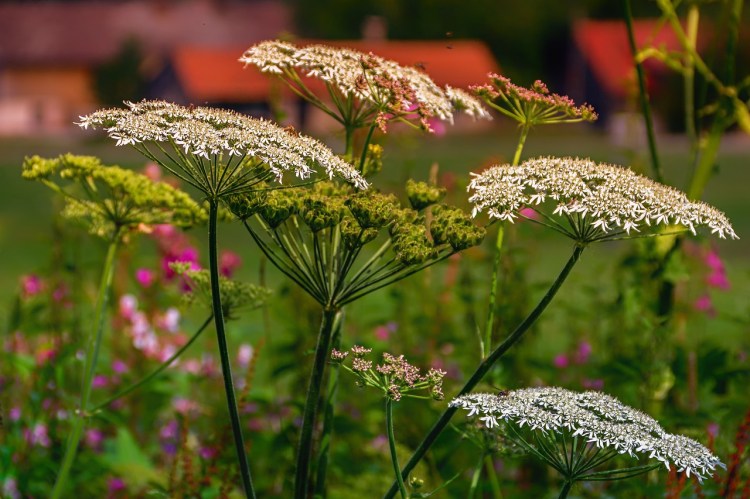


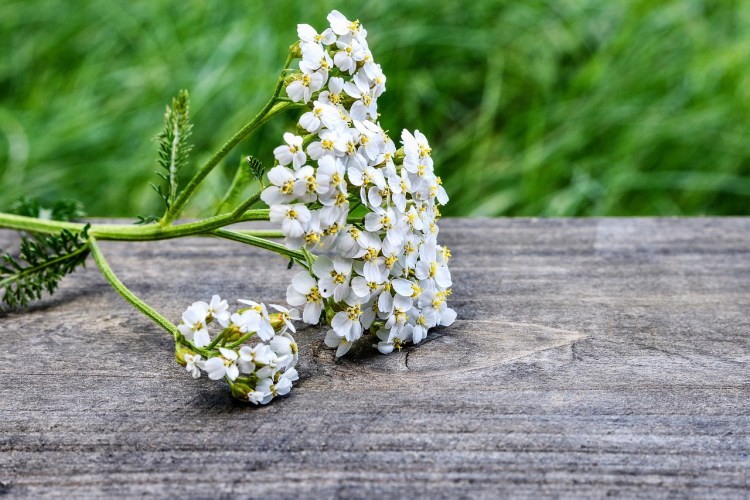
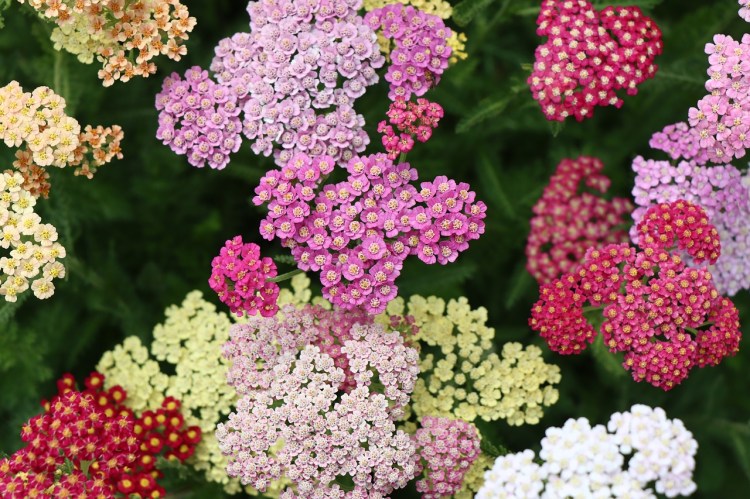


| Achillea of Achillea millefolium was named after Achilles, who used plant extracts to treat soldiers wounded by iron blades and spears or arrowheads during the Battle of Troy. Millefolium in Latin refers to a thousand leaves better known now as milfoil. Legend has it that Achilles was bathed by his mother in a pool of yarrow-laced water near the River Styx when he was a babe, and the yarrow gifted him immortality. [His mother, however, forgot to immerse his heel] Hence the term. My first encounter with this wild herb was thirty years ago in Lincolnshire, where a game chef introduced me to its unique culinary uses. He used the foliage as a raw garnish in a salad with freshly squeezed lime, paired with freshly shot pheasant. This innovative use of yarrow sparked my interest and set me on a journey to explore its diverse applications. He was a natural forager who introduced me to many different wildflowers and weeds that could be used in a culinary way. Yarrow is an active bloom between June and November, depending on the season’s weather and growing area. The flowers are found atop multistems in clusters and are either pink, cream or white [other cultivars have now been produced in different colours]. The plant can easily attain a height of forty inches. His advice was to always use it as a garnish, side dish, decoration, or within salads, sauces, or soups. If it is to be cooked, do it lightly—like that of chives or parsley—only as deep heat destroys the flavour—the leaves will taste like aniseed, and the leaves can be used to make tea. Over the last few years, I have become used to seeing and working with yarrow [Achillea millefolium] in wildlife reserves. This coming year, I intend to grow it in the polytunnel and plant it in some of my clients’ wildlife gardens. It is lovely for attracting pollinators, such as bees, butterflies, hoverflies, and moths. Common yarrow is also known by a few alternatives such as milfoil, soldier’s woundwort, staunched, thousandleaf, devil’s nettle [due to the devil loving the plant], older man’s pepper or mustard [snuff terminology], nosebleed [if a stem is twiddled within the nose it can induce a nosebleed] and stenchgrass. However, many of these are older English terms; the typically used term since 1503 is yarrow. Occasionally, yarrow is mistaken for Queen Anne’s Lace, and while they are similar botanically, they are very different. In Sweden, yarrow is known as field hops and has been used to make beer. The French refer to it as the carpenter’s plant as it was reputed to help treat wounds caused by edged tools. Yarrow has been a field flower for many years. The Greeks called it the military herb – herba militaris, and the Anglo Saxons called it gear we and grew it in their medieval gardens. The herb, flower, and garnish have enjoyed many uses over the years by many patrons, including warding off witches and demons, herbal remedies for healing ailments and wounds created by iron and as a cooking herb or salad garnish for foragers and chefs alike. This flowering plant can be found in many locations, ranging from grasslands and meadows to fields and set-asides, pastures, waste grounds, landscaped areas, nature reserves, wild gardens and country or cottage gardens, hedgerows, and woodlands throughout most of the UK, Europe, Asia, and North America. Once established, yarrow is remarkably easy to care for and maintain. Its adaptability makes it a perfect choice for raised beds, containers, garden borders, ground cover, and wild meadows. This low-maintenance plant is a testament to the resilience and beauty of nature, and it will surely thrive in your green spaces. Yarrow is not just a beautiful addition to your garden, it also plays a crucial role in creating a healthier ecosystem. Its companion setting encourages the growth of valuable insects like ladybirds, hoverflies, and parasitic wasps, which in turn help reduce the populations of predatory insects like caterpillars and aphids. By planting yarrow, you are not just beautifying your garden, but also contributing to a more balanced and sustainable environment. Starlings are said to use yarrow as a nest liner, and it is also helpful in restricting the growth of parasites in the young. It is useful when planted near or alongside cabbages, cauliflowers, broccoli, and rocket [arugula]. It also enjoys the company of salvias and coneflowers. While it can handle regular watering, it prefers drier conditions. Slugs and snails are not fond of this plant’s pepperyness. Planting it into an herb bed will strengthen all the plants around it. Yarrow is a great composting accelerator and can be used as a topsoil mulch layer. If you place it into a container and drown the plant with water, lid it for two weeks and let it stew, it will act as a fertiliser for your plants. It makes for a beautiful dried flower and can be easily dyed with different colours for arrangements. |
 Earthly Comforts
Thank you for sharing this wealth of information, Rory! I didn’t know Yarrow had so many uses.
LikeLiked by 1 person
Hey Betty, ah it is a very versatile herb 🙂
LikeLiked by 1 person
Indeed! 😊
LikeLiked by 1 person