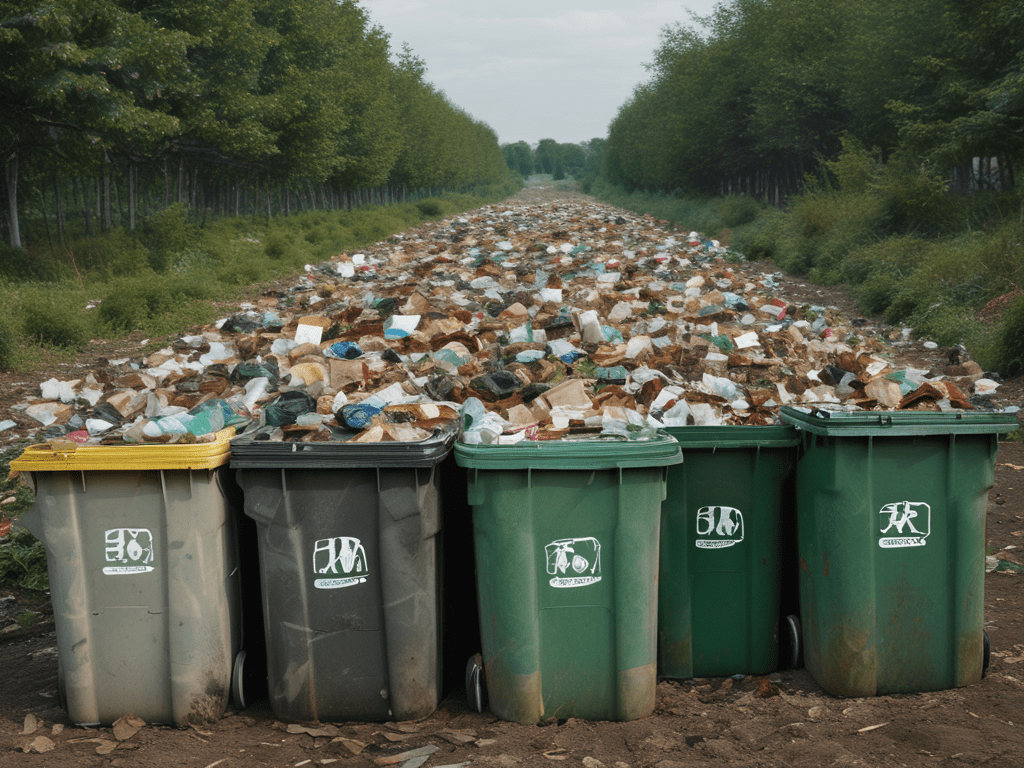
| Suze and l are trying to live a greener lifestyle and are working towards being more eco- and environmentally friendly. We work on reducing our consumption of things that pollute our planet, we work towards reducing our wastage, and where we can, we work on introducing more ways to find solutions to everyday issues. Some things are straightforward to achieve, whilst others are not. At times, it feels like the world is against you – you are bashing your head against the wall to be this way, and the world denies you and wants you to be more like another way! The irony in the UK doesn’t escape my cynical eye, either. They preach that we must live a greener lifestyle, yet we still export 60% of our waste products to other countries. The reality of the recycling ecosystem in the UK today is that it needs to be fixed and more effective. Sure, I remember the eighties when garbage was just that—it either went out with the trash and was collected weekly by the rubbish truck, or you took it to a community tip. If you use that as a comparison, then, in the last forty years, we have progressed marvellously as a nation as we have more boxes set aside for separating our unwanted goods. Today, some households have a wheelie bin for green garden waste instead of garden bags outside the house, a wheelie bin for bags of standard household waste products, and two boxes, one for plastic waste and another for paper and cardboard. Now we also have a kitchen caddy for food scraps, whilst forty-plus years ago, everything ended up in the household bin and was bagged. However, this is not a universal practice – waste management and recycling vary from one local authority to the next. Some councils control everything in-house, whilst others contract everything out. Plus, if that needs to be better, trying to fathom the understanding behind what is and is NOT recyclable in the first place must be clarified! I have also read data on the subject in the last year alone, which is baffling. More and more households are left concerned about where everything should go. Is something recyclable, or is it waste and needs to be dumped in the standard bin? Recent studies suggest that over 15% of British recycling contaminates the depots. The plant’s filters cannot sort and sift, so a concerned public’s efforts are discarded, and the waste is dumped into a landfill anyway. Sometimes, the contamination might be minor, like a jam jar not being cleaned and trace residue remains. Suddenly, the filter reads the item as non-recyclable, and the whole batch is identified as false. Other examples of trace residues causing faults are – peanut butter jars, takeaway packaging like pizza boxes, toothpaste tubes, gift wrap, glossy magazines, nappies, pet food pouches, electrical goods, non-biodegradable wares, printed glassware, envelopes with plastic windows, and the list goes on – BUT it can amount to an excessive list that the plant’s filters are unable to cope with. But to add further to that confusion, those classed as contaminants in one depot MIGHT not be classed as faulty in another … Whether we wash and rinse off and otherwise attend to offending items is only sometimes relevant in the whole recipe for remarkable recycling in the UK today. Sadly, many households have given up and no longer bother with recycling, so if it becomes too time-consuming to dispose of rubbish, why recycle? Households shouldn’t have to have a Master’s in engineering and alternative science to dispose of unwanted waste in the home, seemingly becoming a desirable skill. Many manufacturers need to make life or recycling easier. The need to be seen and be brand-conscious is one of their prime motivators, and at times, being eco-oriented takes a back seat. What’s needed is a complete reeducation in the recycling and the wishcycling departments. [Wishcycling is the practice of households thinking or overthinking about recycling and which items should or shouldn’t be recycled]. Wishcycling is also a leading contributor to batches of actual recycled goods being disposed of due to the increasing level of contamination. The chant is the old philosophy of waste want not or want not waste not. It boils down to our governments tackling this issue properly in the first place, bringing all local authorities and other regulators together and saying, “Right, let’s work together and get this right, right!” The way forward is simplified packaging with easy-to-understand symbols and a unified collection of all goods recognised by all householders. An education into how recycling works today will encourage households to be able to dispose of recyclable goods with comfort and ease and not have to worry about causing problems for the environment or authorities. People want to help their planet become more environmentally aware and friendly, live a greener lifestyle, enjoy sustainable living, and do the right thing. But we also need help to achieve that goal, and it’s easier to keep up with governmental developments if you are appropriately notified. But if you still need to, here are some easy guidelines. |
| Recycling |
| Research your local authorities’ website and check what they say about which materials they are willing to take when recycling in your area. You can also check out if stuck the official Recycle |
| Get to know the icons and symbols used for plastic waste and recycling. If unsure, check online. Not all depots, for instance, will take opaque or coloured plastic microwave food trays and only accept clear. The reason for these restrictions is the machinery used in depots. The filtering systems are designed to detect clear plastics, but they struggle with black, opaque, or coloured plastics, leading to their rejection. |
| Rinse everything plastic, glass, or metal—kitchen pots, trays, and so on—give it a quick wash-off. It doesn’t need to be spotless, but take off what residues you can. Plastic and glass bottles [including bleaches, detergents, and shampoos] usually can be recycled; just remember to ensure all the previous content is not present. Spray guns can be left on. Recycling is a breeze with the clean, crush, and replace method. Simply clean your items, crush them if possible, replace lids or triggers, and then place them into the plastic recycling. It’s that easy! |
| Fast food takeaway cartons are more complex to recycle due to the food waste not being able to be filtered through the machines. It’s crucial to remove as much food as possible from the cardboard and then assess its cleanliness for recycling. If it’s not clean enough, it’s our responsibility to discard it in the kitchen bin, not the paper/cardboard recycler, showing consideration for the recycling process. |
| Batteries should not be placed in the standard kitchen bin or recycling home units. They should be bagged or boxed separately and taken to the rubbish tip or a supermarket, as some of these stores are now accepting them. |
| Be forever mindful of what you think is recyclable and what you might only wish is – for instance – broken kettles, toasters, hairdryers, keyboards and other small handheld electrical items are not for the kitchen bin or the recycle bins; these should be taken to the local rubbish tip. |
| Make sure that all cardboard is crushed underfoot or torn up, as this will save energy and space in the disposal sequence from your waste bin to the recycling centres. Squashed items also mean more space in your recycling bins or boxes. |
| Check for glittery bits on wrapping paper and celebration cards; take/tear them off where you can and discard them separately. Panels should be removed from envelopes and binned separately. |
| If you can, shred paper, cardboard, and compost. I compost a wide range of items, including toilet and kitchen rolls, envelopes [no panels], matt food boxes, brown packing paper, till receipts, magazines [non-glossy], bills, and many more in the paper and cardboard range. [Paper takes four weeks to decompose, and cardboard [pending thickness] takes four to eight weeks.] |
| Used paper towels, kitchen towels, or tissues should not be recycled—again, composting is the answer, or they can be disposed of in the general waste bin. Wallpaper cannot be placed into the recycle bin. |
| The items above are just a few helpful hints, but there are many many more to help you become a better recycler. |
 Earthly Comforts
Excellent advice on recycling, Rory. There are recycling bins on our premises, but the irresponsible put items in the wrong bins. It’s as if they can’t read or don’t care. Sigh…
LikeLiked by 1 person
Oh l know Eugenia, we have the same here sadly.
LikeLiked by 1 person