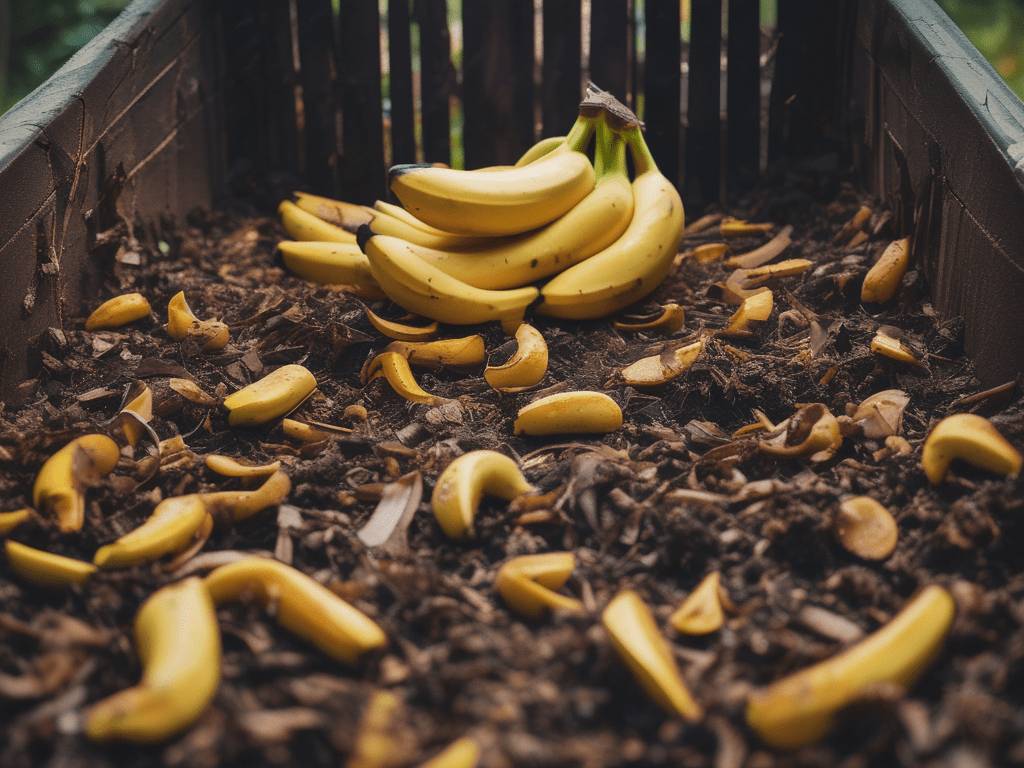
| Composting bananas and banana peels is not only possible but also highly beneficial. It’s a great way to reduce food waste, enrich your compost with valuable nutrients, and contribute to a healthier environment. Let’s delve into the details. This household gets through twenty-five bananas a week on average, and its popularity of consumption is right up there with eggs, which number around forty-eight a week. There is no waste from either component as both are used in many ways. The banana peel, a versatile component, finds its way into our compost and bokashi systems. If not destined for composting, the peels are cut up, flash frozen, and stored in the freezer. This resourceful approach allows us to use them as an ingredient in a worm-feeding mixture or as a treat for our worm farms. Worms love bananas – the soft fruit and the skins. I read recently that you can eat banana peels. While I knew that the peels could be boiled to make teas—both for humans and for the garden as fertiliser—I didn’t know about eating the skins. Did you know that the riper the banana, the sweeter and more nutritious its peel becomes? This not only helps in reducing food waste but also introduces a new batch of nutrients to your body, such as potassium, calcium, magnesium, fibres, fats, and oils. It’s a health-conscious choice that also benefits the environment. Yes, you can compost an entire banana, peel and all. However, it’s important to note that under normal composting conditions, it can take three to seven weeks for a whole banana to break down. This process can be expedited by cutting the banana into smaller pieces or blending it with other food wastes. The ‘norm’ is if the fruit was discarded into a cold compost heap with no turnings. However, the same fruit thrown into a hotter compost pile will decompose more quickly. This period is usually around two to three weeks, pending the heats you achieve. The easiest decomposition method, even as a hot composter, is to cut the peel into several smaller pieces or blend the bananas with other food wastes. Making all compost-added ingredients smaller ensures the decomposition process runs smoothly and faster. While more significant components will eventually break down, you give the whole heap a helping hand if the ingredients are more minor. It’s not just the fruit that’s valuable-the banana skins, being green, add a significant amount of organic richness to our compost mix. This enriches the soil and reduces our environmental footprint, making us feel responsible and knowledgeable about our gardening practices. |
Banana Peels Composting: Nutrient-Rich Solutions for Healthier Gardens
 Earthly Comforts
I also recently read where you can eat banana skins. Who knew! There are a lot of ifs, especially consuming large quantities of banana skins can cause digestive discomfort, but they also can be a nutritious and environmentally safe choice.
LikeLiked by 1 person
Oh yes, everything is best done in minimal quantities especially 1] banana skins and 2] banana skins as a new food to the digestive system we have.
LikeLiked by 1 person