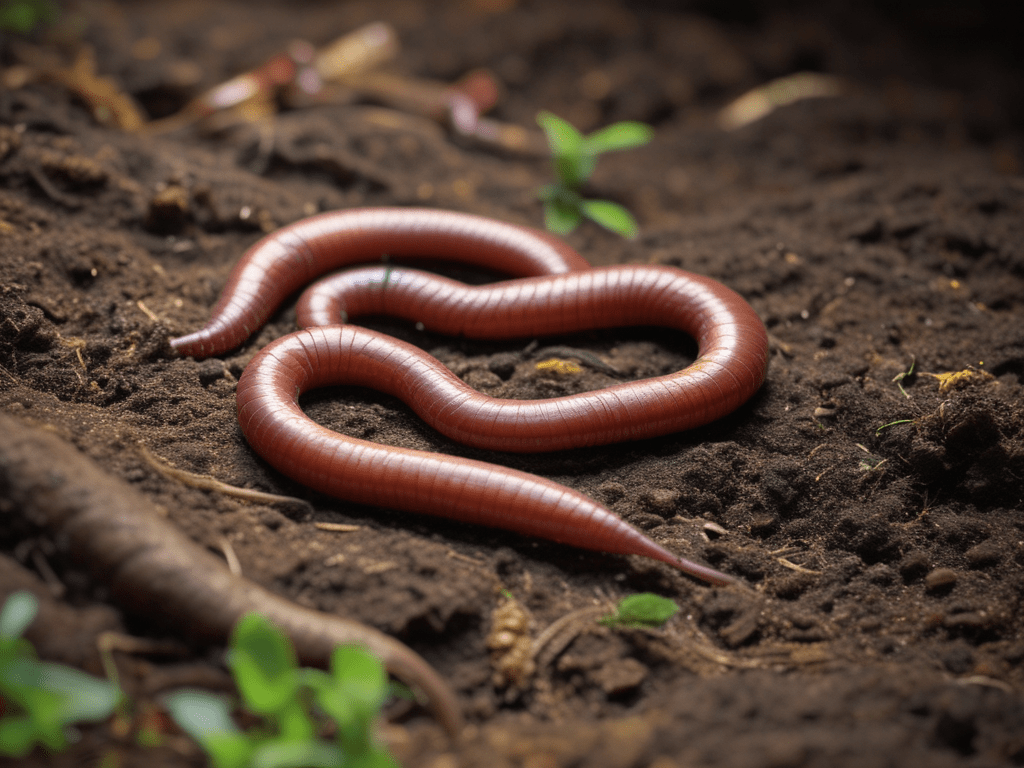
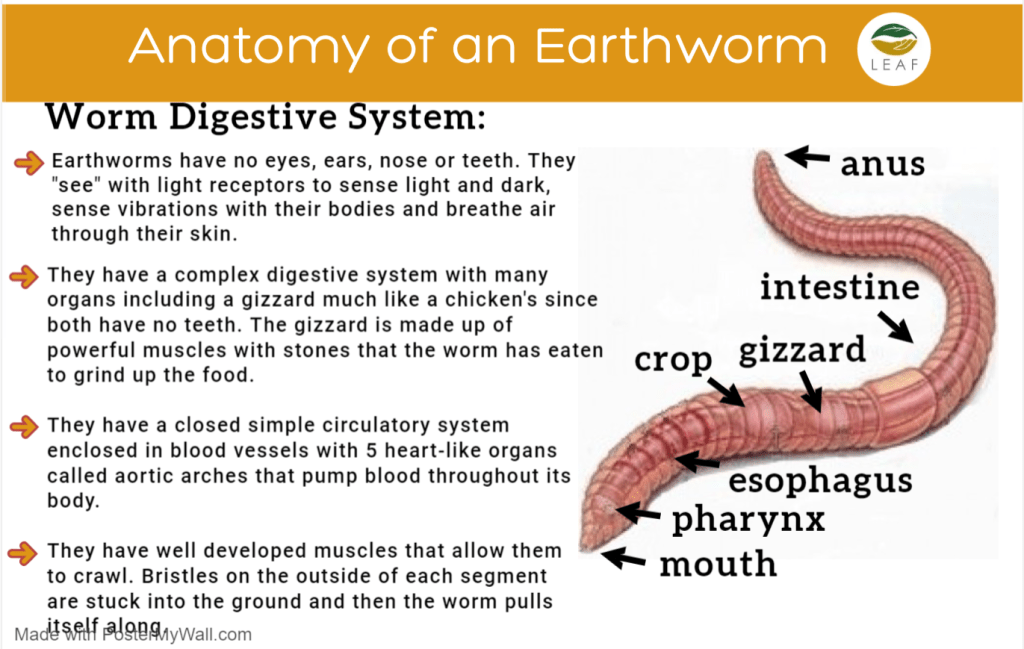
| They don’t have eyes, and they don’t have teeth. They do have a mouth, a brain, and a heart too. The brain, while not as complex as a human brain, plays a crucial role in coordinating the worm’s movements and responses. They don’t have legs, just in case you were ever curious … The prostomium is the very first section of an earthworm, and the mouth is found here. A sensory receptor above the mouth is tuned into everything around the worm and can be determined through sensation and vibration—light, dark, and alien bodies like liquids or chemicals. It will inform the earthworm whether it is above or below ground level. These receptors, a testament to the adaptability of earthworms, interpret the environment in which the worm moves. They transmit vital information to its brain, guiding and navigating it through the terrain. The receptors also play a crucial role in ensuring the worm doesn’t dry out in the sunshine and can sense any changes in the temperature and weather conditions. When l lift the lid off the farm during the day and expose the occupants to daylight, their cells sense this change and immediately dive under the bedding. Do worms have a mouth? Yes, they do. They don’t have teeth, though – they suck their food. They have a muscular mouth, and the prostomium, located at the front end of the worm, can help direct the food they consume into their pharynx or throat. The prostomium is also involved in the worm’s sensory perception, helping it to detect and respond to changes in its environment. The pharynx takes hold of the food, coats it with saliva, and pushes it further into the oesophagus crop for storage before it is digested into the gizzard. Once the food is in the gizzard, it is further broken down, enters the intestine, and is further broken by enzymes. The worm absorbs some of the nutrients, but the rest is discarded as waste through the anus and becomes poop-worm castings. In essence, an earthworm is one long, efficient digestive tube. It eats, digests, and poops, showcasing the marvel of its biological processes. Earthworms breathe through their skin, as they do not have lungs. Their skin needs to be moist at all times. A worm is covered in mucus, which helps them absorb oxygen. If their skin dries out, they will die. During warmer weather and excessive heat, one of the challenges I faced was keeping the farms moist but not wet to avoid unnecessary deaths through dryness. In the new Tower Farm setups, a dark bedding sheet is used as a top cover for the entire internal farm. The heat from the vast number of earthworms is sufficient to continually produce internal moisture and always keep the soils moist. An earthworm has five hearts that pump blood around it. The worm’s brain is not a complex organism but is connected to other organs and nerves that control its movements and responses. So there we go – do worms have mouths? Yes, they do. |
 Earthly Comforts
One thought on “Fascinating Earthworm Facts: Mouth, Prostomium, and Sensory Adaptations”