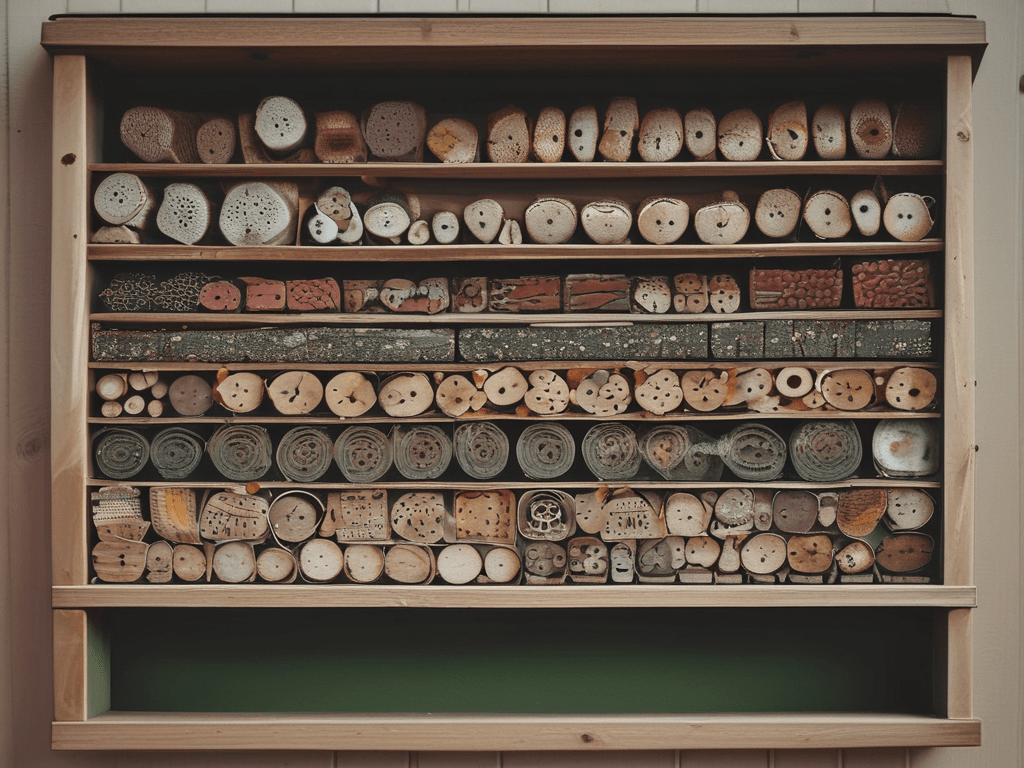
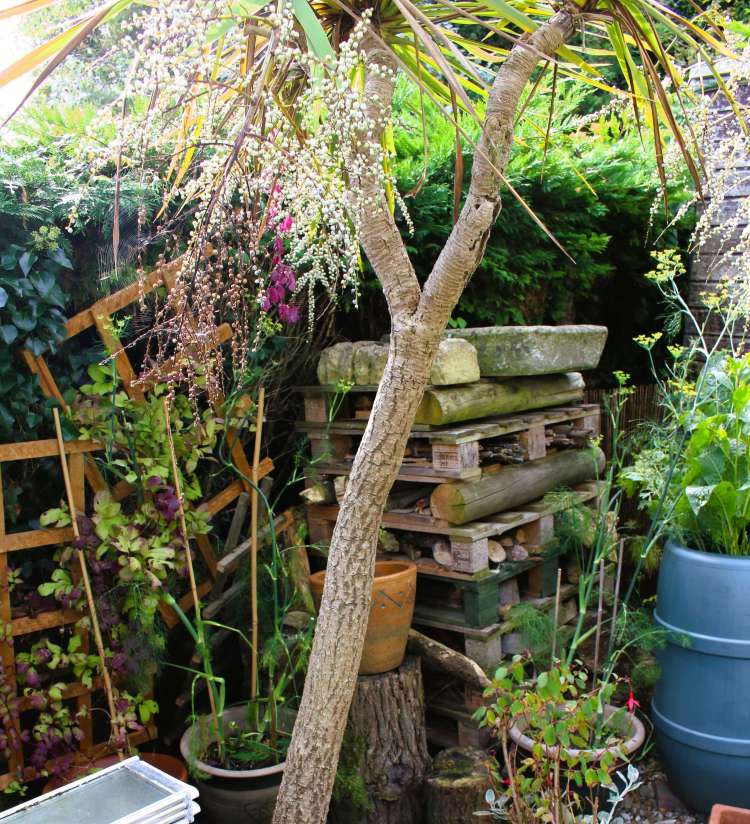
| The Kingsdown Bug Hotel 2017 – 2019 was pretty successful and appealed to frogs, toads, newts and a hedgehog, worms and beetles galore in the winter and whilst it had no bees of any species resident there, during the summer they loved to frequent the flowers. |
| Recently, I wrote about Dead Hedging, a form of alternative wildlife habitat designed to attract and house insects and small mammals and offer a haven to birds and amphibians. Dead Hedges, or Dead Walls, as they are also known, are ultimately a form of leafy bug hotel. This post is about the better-known Bug Hotel, which is also referred to under different names by different people. Other names include insect hotels, minibeast motels, insect refuges, Bugingham Palaces, Bee Zones, Hibernation Habitats, and the list goes on, but you get the jist. Although the names might have changed, it still comes back to being a bug hotel. Also, the term ‘hotel ‘needs to be more accurate; it suggests short-stay residency. The hotel is more of a seasonal and long-stay home to various insects and other creepy crawlies. While you don’t see too many dead hedges in people’s gardens, bug hotels are on the rise in popularity. While there are many for sale on the market in many different sizes, shapes, and materials, I believe it is easier and fairer on the insects to create your own if you can, especially the larger garden ones. So many small commercial designs could be better; instead of being a haven, they are deathtraps. If you are going to buy one, be wise, spend more on quality, and thoroughly research the subject matter. It’s not necessarily always a case of cuteness is beauty. Poorly constructed hotels often contain splinters and other inadequate materials that can injure insects. However, this isn’t just about purchasing a bug hotel; it’s about the joy of creating your own. Over the years, I’ve crafted a few bug hotels, and I can tell you, it’s a truly rewarding experience. There’s nothing quite like seeing the residents turn your creation into a permanent homestead. Having a bug hotel in your garden brings numerous benefits. Our green spaces rely on insects to thrive and survive. Without them, our lands could quickly become barren. Insects play a crucial role in pollinating our plants, flowers, and crops. They also help maintain the balance and are instrumental in the environmental breakdown of organic matter. Their contribution is truly invaluable. We have a duty of care to aid Mother Nature, who will help us back. I have dead hedging at the allotment for this reason. Insects benefit the production of the vegetables on the plot. For instance, I’ve noticed an increase in pollination and a decrease in pest damage since I introduced bug hotels and dead hedges. Insect numbers in the UK alone have declined significantly, as much as 60%, in the last twenty years, so I will always support anything we can do to assist recovery. So profound is my belief in this that l have recently decided to extend the length of my dead hedge from twenty-two to sixty feet and thirty to forty-two inches in depth whilst maintaining a four-foot height this coming winter. Our insects need as much help as they can get. As more and more damage is done to our countryside, more pressure is placed on our insects and their survival. Garden insects are vital, and they are the friend of many a gardener. They keep our green spaces healthy, vibrant and balanced. While out gardening and allotmenteering, l saw many different species of insects. The dead hedge on Plot 17 also has its fair share of residents already, and to name a few in and around the foliage – ladybirds, ground and soldier beetles, lacewings, hoverflies, parasitic and common wasps, springtails, many varieties of bees, centipedes, spiders, assassin bugs, dragonflies, butterflies, woodlice or pill bugs and rolypoly’s as some call them, ants and although not an insect, let’s not forget the worms. I find the worms usually at the bottom of the wall. I know that l already have small birds nesting alongside woodmice, and l also saw a vole the other day, and l believe l have a travelling hedgehog. These are all residents that have found a home in my dead hedge. I enjoy watching the toing and froing as well as the comings and goings, and hopefully, there will come a time when l can sit back and watch for a while with a coffee in hand and not have to race here and there. Watching, listening to and observing all the behaviours is a pleasure and a joy. |
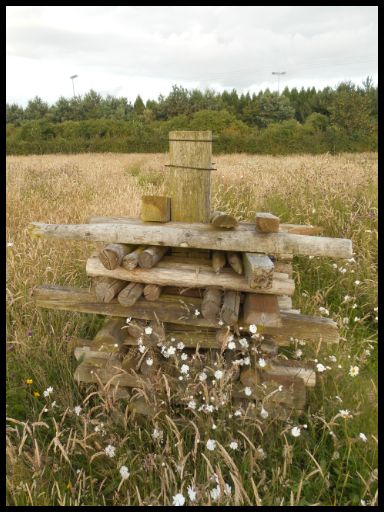
| This bug hotel was in a wildlife meadow in Canterbury, close to where we lived in early 2016; it mainly appealed to birds, rabbits, and wood mice. |
| Making your bug hotel is pretty straightforward. First, one consideration would be what you want to attract to the hotel. What types of insects—an all-rounder or something more specific? Singular or multifunctional—for bees or ladybirds, bumblebees all have their requirements. These are the usual visitors that frequent bug hotels: Mice, Hedgehogs, Bats, Moles Ants Ladybirds Frogs, Toads, Newts Bees, Solitary Bees, Bumblebees Slugs, Snails Centipedes Woodlice Lizards Butterflies Beetles Worms Slow Worms Snakes In the dead hedge, for instance, I have certain types of habitat for various insect species: pinecones and hollowed-out bamboo poles, small boxes and tubes, and half-coconut shells. I also have bundles of sticks and small nesting boxes for those looking for that. So, it pays to research what each species might like or what several species would find suitable. One of the real secrets to success is to be creative but keep in mind essential maintenance. The dead hedge is very simple to maintain. It is a loose foliage structure, so maintenance is restricted to ensure everything stays upright and in the designated shape. But a built structure like a hotel needs to be straightforward and not overly fussy, picky, or complex in case you have to repair something. Too much detail means you cannot access it without pulling things apart. Remember that anything too convoluted could introduce other problems, like parasites or mould diseases. Your two main concerns for a bug hotel are: Location Pick an area to construct the hotel that offers protection—shade, sun, and damp but not wet. You want the structure to be free of puddles of water, so ensure the area is free-draining. The internal area must be dry, while the hotel can be wet. [being outside and rained on]. If you consider having bees stay, one layer needs to be at least a metre off the ground. Materials You can be pretty imaginative here, but do not use materials that have held or had chemicals on them, as this will repel and kill insects. Pallets provide an excellent layering system, but again, be mindful of the woods being used. Look for old planks of wood, bricks or breeze blocks, or logs or trunk slices to raise the hotel off the ground. Remember hedgehogs, so think about the minimum height being a foot off the ground. You can go as high as you want with your hotel, but always consider the solidness of it and whether it will stand firm. A bug hotel’s overall height is between four and five feet Remember, your structure needs to be sturdy; otherwise, it could topple in the wind or, if on uneven ground, kill the occupants. If you are planning on drilling holes into wood or poles, then make sure each hole is splinter-free [rough edges can tear the wings of many insects or worse] Use wire netting to cover the entire structure to prevent birds from attacking the internal contents. Using organic materials means they will decompose through wear, tear and exposure to the elements, so don’t make the spaces between your layers too narrow. This way, you can re-energise new materials in a location without dismantling the entire structure. The overall effect you aim to achieve is one of residence, so lots of hidey holes are vital and encouraging. This means you can use sticks, pine cones, stones, small rocks, bark, log slices or rotting wood, branches, straws, dried flowers, hays, bracken, moss or brash, crumpled cardboard, leaves, weeds, etc. You can use alternative materials besides organic ones, such as recyclables, bricks, cardboard, old tyres, plant pots, burlap, old rope, toilet rolls, old ceramic drain pipes, etc. Remember to lid it—place a roof on top. Consider using old roof tiles or wooden planks. If you have access to any, even old unused turf rolls could be used to provide a roof. Make it appealing; you want to encourage visitors to the hotel. Place a couple of planters on the roof and plant some flowers or herbs, or surround the base with pots and plant some nectar-rich flowers there. That will attract pollinators and, at the same time, place your hotel on the map. These will also provide valuable cover and award further protection. Flowers and herbs such as lavenders, sage, rosemary, chives, mint, nasturtiums, assorted wildflower options, nettles, salvias, and ivies can all make superb and colourful additions to your bug hotel. |
| So there we have it – creating your bug hotel is not just fun from an individual viewpoint but also great fun for the entire family. |
 Earthly Comforts
One thought on “How to Build a Bug Hotel: Essential Tips for a Successful DIY Seasonal Insect Home”