| Clary Sage |


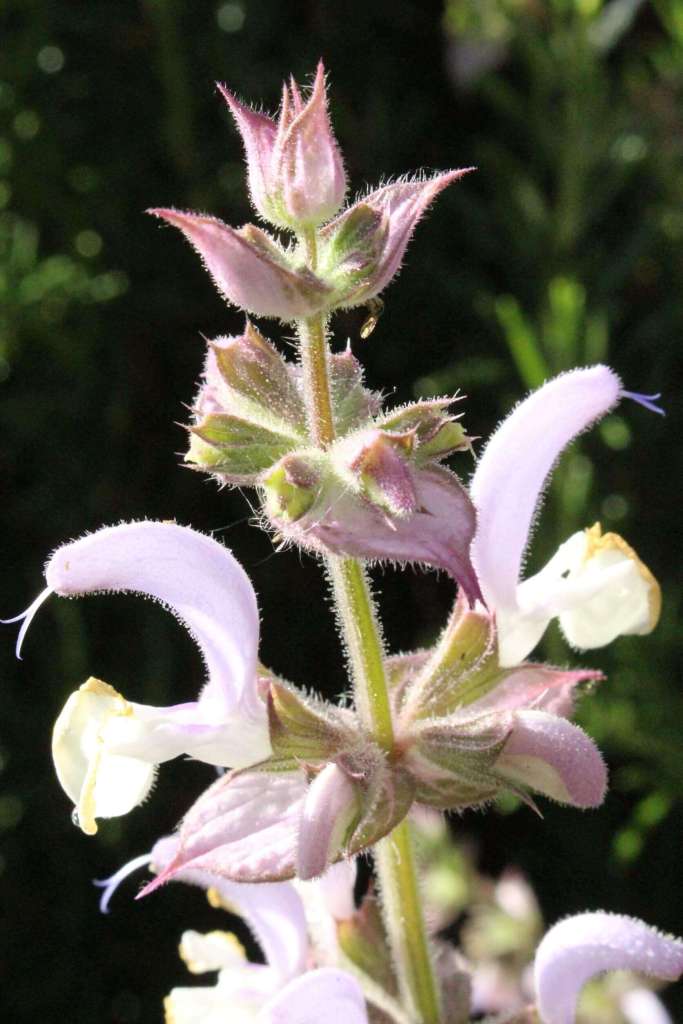
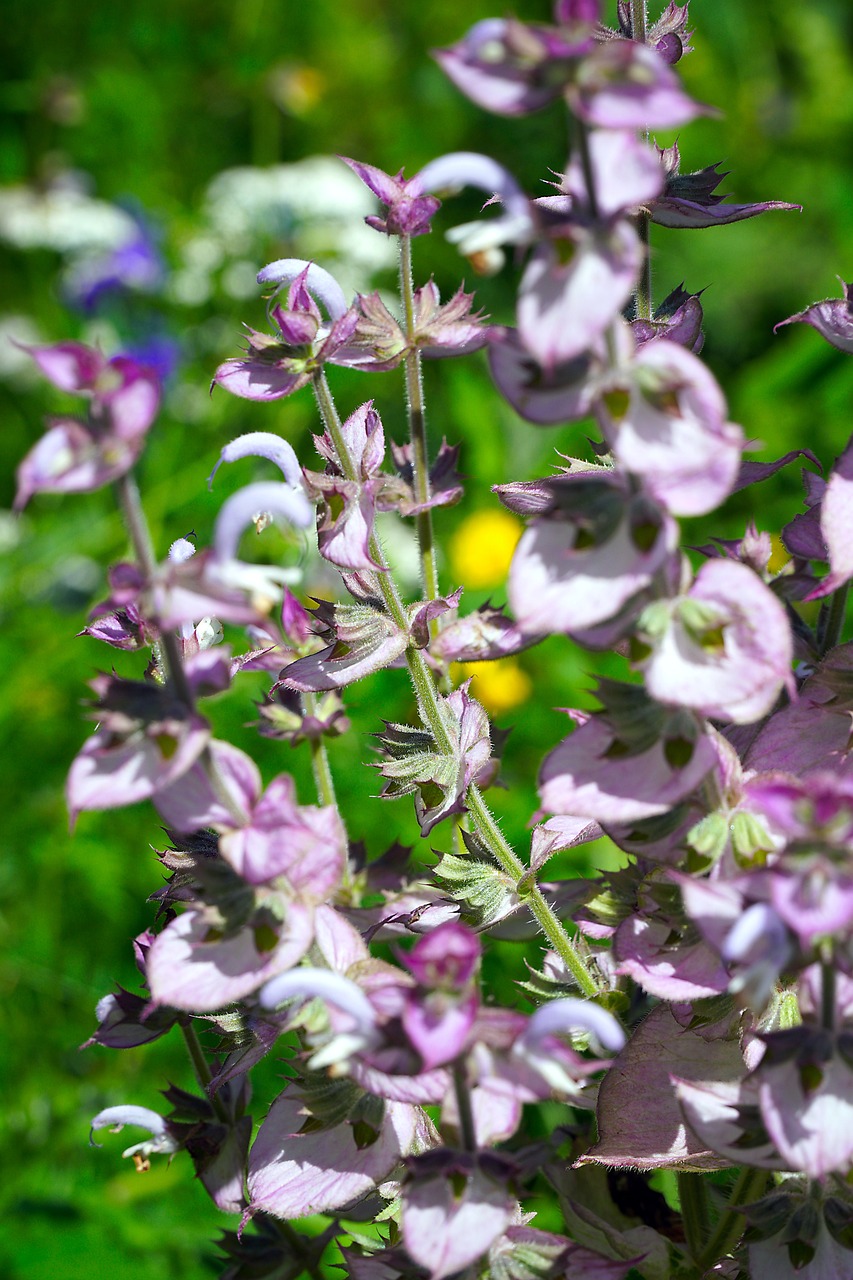
| I love this plant and have had it growing in numerous gardens over the last five years, although I don’t currently have any in the garden. Next year, I intend to plant some seeds into pots and grow my own, and I plan to have quite a bit in the allotment. Suze isn’t too keen on it due to its strange smell. I love it because, to me, the scent is quite divine, but admittedly, it does take some getting used to. Plus, everyone has a different reaction to it—to some, it smells of sickly sweet, if not sweaty, old socks, whilst to others, it can smell of musk or earthy oranges. I am in the latter camp. The word clary itself, in Latin, Clarus, means clear. The seeds produce a sticky secretion, once used to clear mucus from the eyes. Today, the secretion of oil is more commonly used in aromatherapy. It is excellent for clearing up dandruff, oily skin, and greasy hair. Clary Sage – salvia sclarea – is a biennial member of the Salvia family, which is, as mentioned, strongly scented with long-shaped leaves and beautiful mauve-pink flowers on bold spiky stems. It is also known as clear eye, herb clary, and clear eyes. It grows well in sand, clay and loam soils that are well-drained. Clary Sage is a versatile plant that can thrive in a variety of conditions. While it prefers a sunny spot, it can also tolerate some shade. Originating from the Mediterranean, it has adapted well to the UK climate. With the right conditions and care, it can grow into a multi-branched bushy foliage, reaching up to a metre in height after two years. This adaptability makes it a great choice for any garden. It does well in pots and borders and is relaxed about its garden style—Clary blossoms during the spring and summer seasons and displays foliage from the spring to the autumn. It tends to achieve a much fuller blossom in the second year. Sage is a welcome addition to herb gardens. It grows well in companion planting with yarrow, roses, carrots, strawberries, Rosemary, kale, kohlrabi, cauliflower, and broccoli. Sage doesn’t fare well when planted next to cucumbers, fennel, onions, leeks, garlic, shallots, or chives. All the pollinators love Clary Sage – butterflies, hoverflies, honeybees and bumblebees. It is, however, a hot favourite for slugs and snails, especially when young. It makes for a genuinely excellent flowering herb in any border boasting colour. |
 Earthly Comforts
It’s a beautiful plant, Rory, and thank you informing us of its many uses.
LikeLiked by 1 person
Pleasure Eugenia, hope you are keeping well 🙂
LikeLiked by 1 person
😊
LikeLiked by 1 person