
| Hemp Agrimony Eupatorium cannabinum |
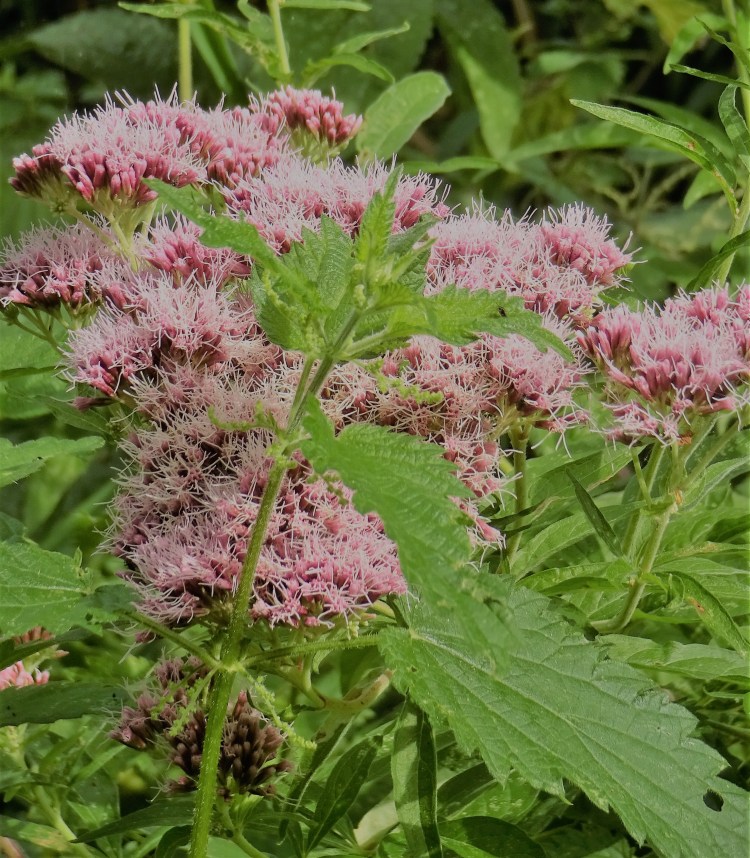

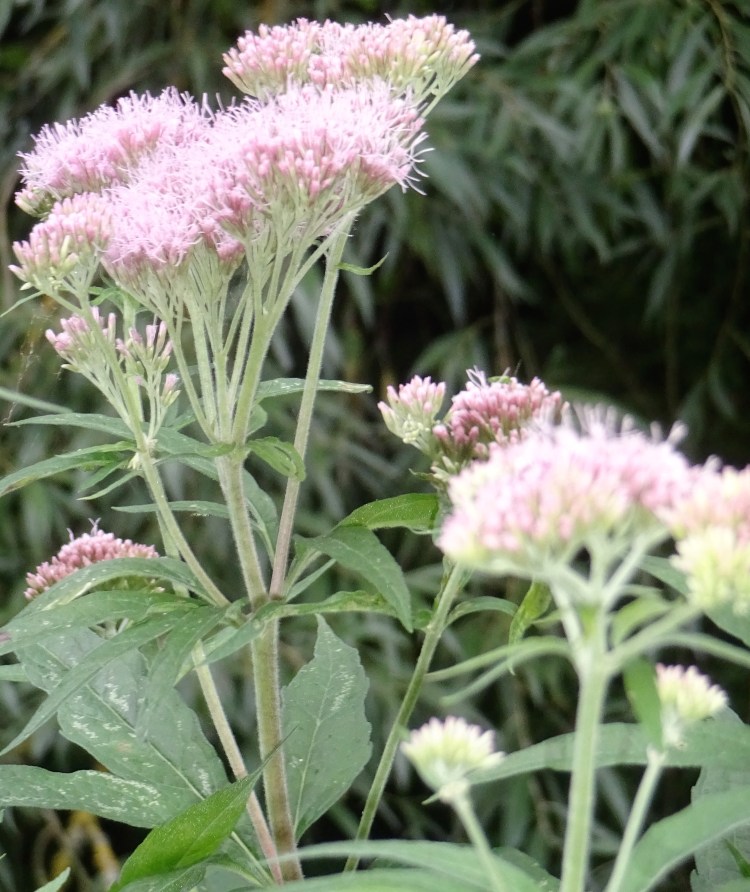
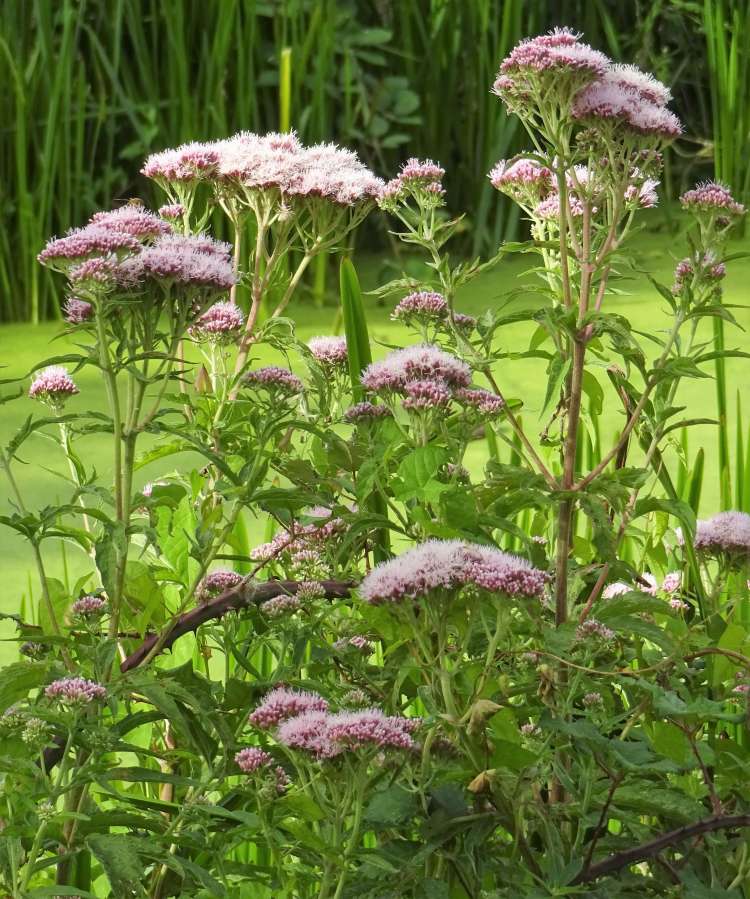

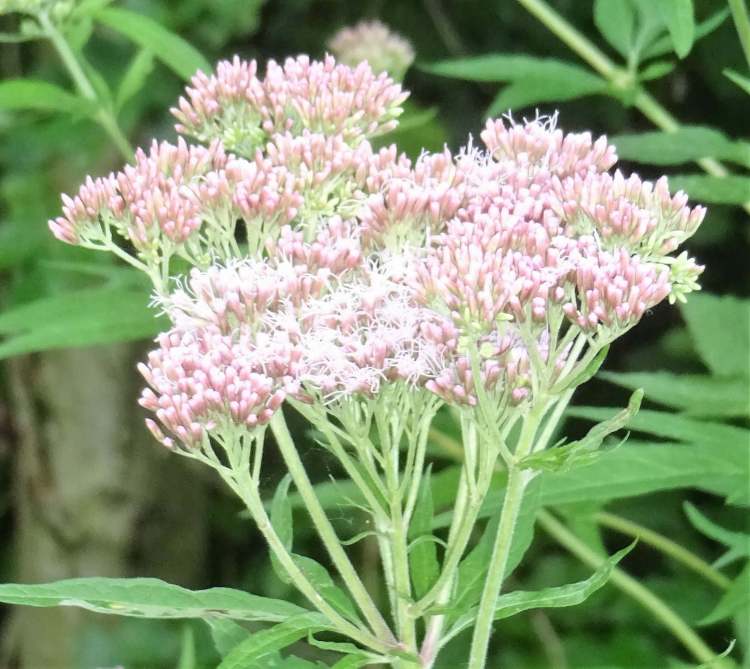
| Images my own. |
| Some see Hemp Agrimony (Eupatorium cannabinum) as a charming wildflower, others as a vigorous weed. This perennial from the daisy family (Asteraceae) is easily recognized by its soft clusters of dusty-pink flowers, which brighten riverbanks, wet meadows, and woodland edges across the UK. Its presence in the local nature reserve near my home delights the eye and highlights its value as a native thriving in damp, fertile ground. Despite its name, Hemp Agrimony is neither true hemp (Cannabis sativa) nor agrimony (Agrimonia eupatoria). Its leaves, though vaguely hemp-like, are not narcotic. The confusing name reflects centuries of folk classification, not botanical fact. Historically, Hemp Agrimony has been much more than an ornamental plant. The flowering tops have been harvested by herbalists for traditional medicinal purposes. Apothecaries once used it to prepare remedies for ailments such as scurvy, jaundice, fevers, digestive complaints, and skin conditions like warts. Its properties were also valued as a mild diuretic and detoxifying agent, and in some traditions, as a natural antihistamine. While these uses belong to the realm of traditional and professional herbal medicine, they demonstrate the deep cultural ties between people and this wild plant. In nature, Hemp Agrimony is a biodiversity powerhouse. Blooming from July to September, its nectar- and pollen-rich flowers attract bees, hoverflies, moths, and especially butterflies like the striking Red Admiral. Once seeds ripen and fall, birds feed on them, further weaving the plant into the local food web. As it grows, it provides habitat and food for slugs, snails, and aphids, sustaining predators higher up the chain. Sometimes called Holy Rope, the plant’s fibrous leaves and stems were once used for cordage. Its cultural heritage and ecological value make it both historically and environmentally significant. For gardeners, Hemp Agrimony offers a naturalistic beauty that suits wildlife gardens, meadows, and cottage-style Victorian planting schemes. Thriving in moist soils and full sun, it quickly establishes itself and can spread with ease. It typically grows to a height of 1.2–1.5 metres (4–5 feet), often needing support as it matures to prevent leaning. To maintain its good form, gardeners should cut it back at the end of the season, encouraging healthy regrowth the following year. Whether admired as a wildflower or seen as a weed, Hemp Agrimony reminds us how native plants enrich landscapes, support wildlife, and carry centuries of medicinal and cultural associations. |
 Earthly Comforts
One thought on “Hemp Agrimony (Eupatorium cannabinum): A Native UK Wildflower with Diverse Medicinal Uses”