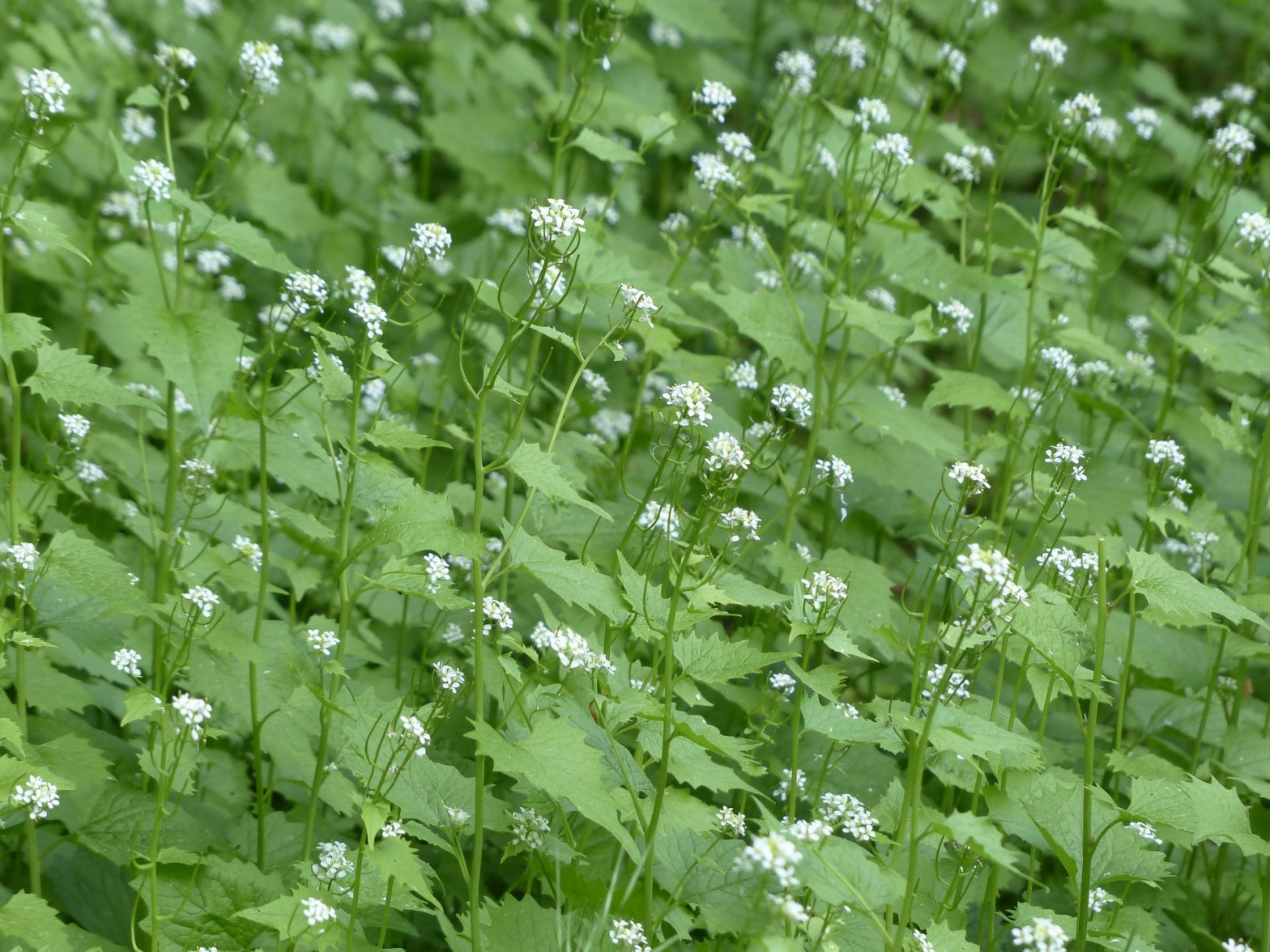
| Garlic Mustard Alliaria petiolata |
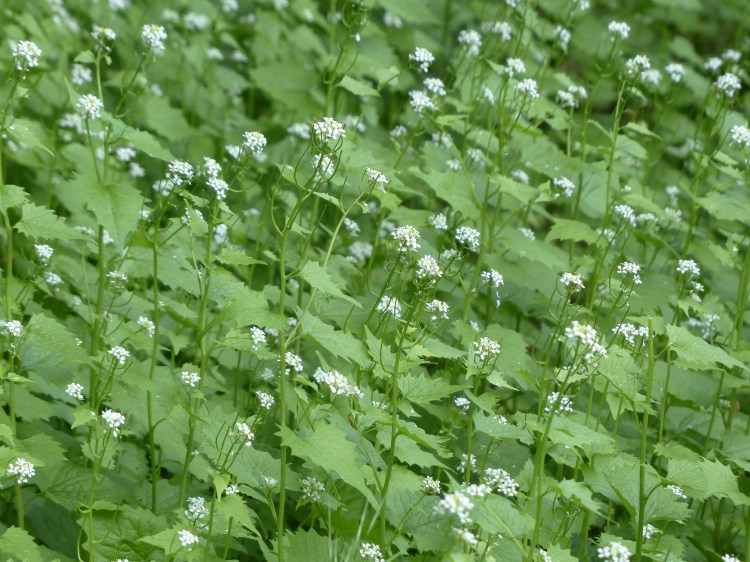

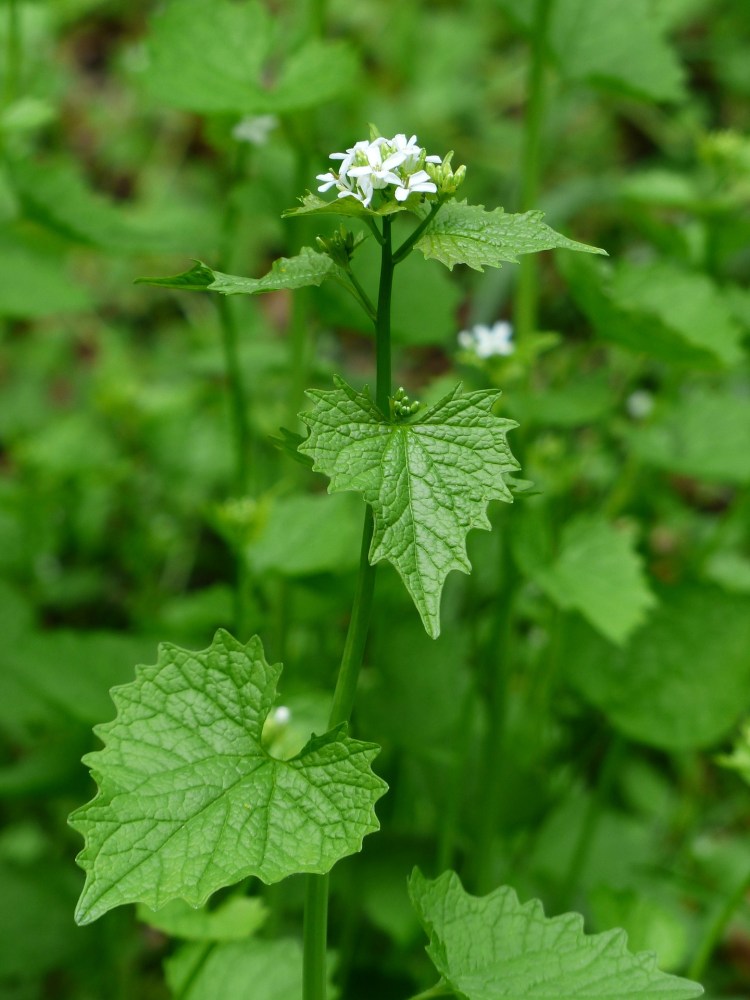
| Garlic mustard is classed as a wildflower and an herb, depending on who you talk to. It can be found in gardens, and I have seen it grown in wildlife gardens, but I often see it when walking in woodlands or wild, overgrown walks on farmland and grassland. It prefers to grow in shady, hidden places. In medieval times, herbalists and apothecaries often used garlic mustard for medicinal properties. Garlic mustard, with its unique taste, is a versatile ingredient that can be used in a variety of dishes. Salads and fish dishes add a distinct flavour to the meal. The best time to use the plant is when the leaves are young. Every part of the plant, from the leaves to the flower to the stem and the roots, can be used in cooking and flavouring. Garlic mustard, a plant that follows the rhythm of the seasons, starts to appear in September and continues to grace us with its presence through to April. The leaves of garlic mustard bear a striking resemblance to nettle leaves, minus the itch, of course! This visual similarity can help you identify the plant more easily. A few butterfly species benefit from this plant, which can also serve as a food source for caterpillars. Insects do not help with the pollination process as the herb self pollinates. But garlic mustard is a heavily foraged plant today for culinary requirements. |
 Earthly Comforts
Thank you for sharing this information, Rory! I always learn something new and interesting from reading your blog.😉
LikeLiked by 1 person
You are very kind Eugenia, many thanks 🙂
LikeLiked by 1 person
My pleasure, Rory.
LikeLiked by 1 person