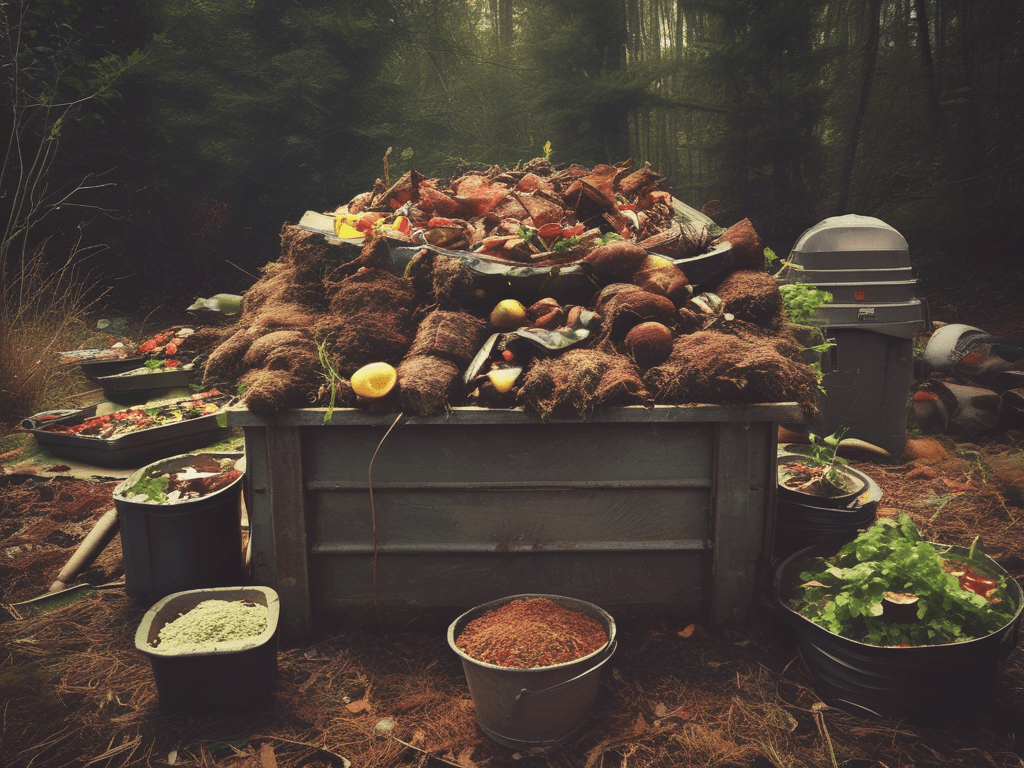
| I often hear from other composters the question, ‘Can you compost awkward waste products like meat, fish, and dairy products?’ Yes, you can. However, it’ll also depend on the compost type you maintain. I don’t always follow the golden rules of composting: What you can and should compost, compared to what you can’t and shouldn’t. I do not send everything to the landfill if it can be avoided. Composting meat, fish, and dairy products is not only possible, but it’s also a powerful way to reduce waste and enrich your compost. I’m not a huge meat eater, but I do take in kitchen scraps and waste from my neighbours who are bigger meat and fish eaters. So, my compost piles have occasionally added uncooked and cooked meat, fish, and dairy products, and the results have been rewarding. Hot composting, a method I use, is the key to handling ‘awkward ingredients’ like meats and fish, dairy products, and weeds. This process, which involves running hot compost batches at temperatures between 150 and 180 degrees Fahrenheit for 14-day periods, ensures that these ingredients decompose effectively and safely. Meat, dairy, and fish ingredients will burn quickly in the heating system. But if you are maintaining either a warm or a cold compost, you must be wary of attracting pests and vermin and may choose not to include awkward waste products. The secret to success is to bury the waste deep into your compost pile and not scatter the meaty ingredients on top of it. Meat and fish waste are organic ingredients and hold enriching nutrients for the soil and will decompose. However, unless specific actions are taken, there are problems with particular wastes. Pests The biggest one is attracting the unwanted attention of vermin, who are lured into the heap by the smells of the food waste. Certain pests, like rats, often choose compost piles as nesting grounds due to the heap’s security, dryness, warmth, and food availability. Bad Smells Not just associated with meat and fish products, but particular food wastes, if ‘not buried deep’, can create an unpleasant odour which, as mentioned above, can attract vermin and potential complaints from neighbours if your pile is in a built-up residential area. Decomposition breakdown Certain compost styles cannot break some food waste down efficiently, and the decomposition process is much slower, especially in unturned cold heaps. Meat left unattended can take a very long time to break down. Bones, especially, are of great interest to vermin and wildlife as well as domestic pets and can take considerably long periods to break down in ordinary composting set-ups. Dairy products also take longer to break down without assistance due to the fats and oils found in the ingredients. These fats and oils can seal the waste and prevent air and moisture from entering to activate the breakdown process. Harmful bacteria Whilst cooked meats are less of a problem, the composting of raw meats and fish products can create a hotbed of contaminants – like listeria, E.Coli and Salmonella – that can thrive in the structure of a compost pile with its fluctuating temperatures and humidity and also anaerobic heaps – non-aerated. While there are challenges, it’s important to remember that there are safe ways to compost meats and fish wastes. With the right knowledge and methods, you can compost these ‘awkward ingredients’ without compromising safety. The principal keys to success to remember are: Hot composting – keep the pile hot at temperatures between 130°-180° F for as long as possible. If in doubt, use a compost thermometer to check the temperatures of your heap. I work my heats for two weeks to be sure. I turn the heap once every three days and add water to maintain moisture and a handful of coffee grounds where I can to encourage and consistently keep high heat when I have meat, fish, or dairy products in the ingredients. Hot composting methods kill off dangerous pathogens. Be mindful of only composting small amounts of meat and fish products. I also ensure that the food items are buried deep within the core of the heap and surrounded by compost from all sides, bottom and covered on the top. I use New Zealand composters, but I have also cooked awkward waste in pallet systems and know of other composters who have successfully composted these wastes in tumblers. You could choose alternative composting methods such as vermiculture – worm farming or Bokashi fermenting. |
Efficient Meat and Fish Waste Composting: Tips for Odor and Pest Control
 Earthly Comforts
One thought on “Efficient Meat and Fish Waste Composting: Tips for Odor and Pest Control”