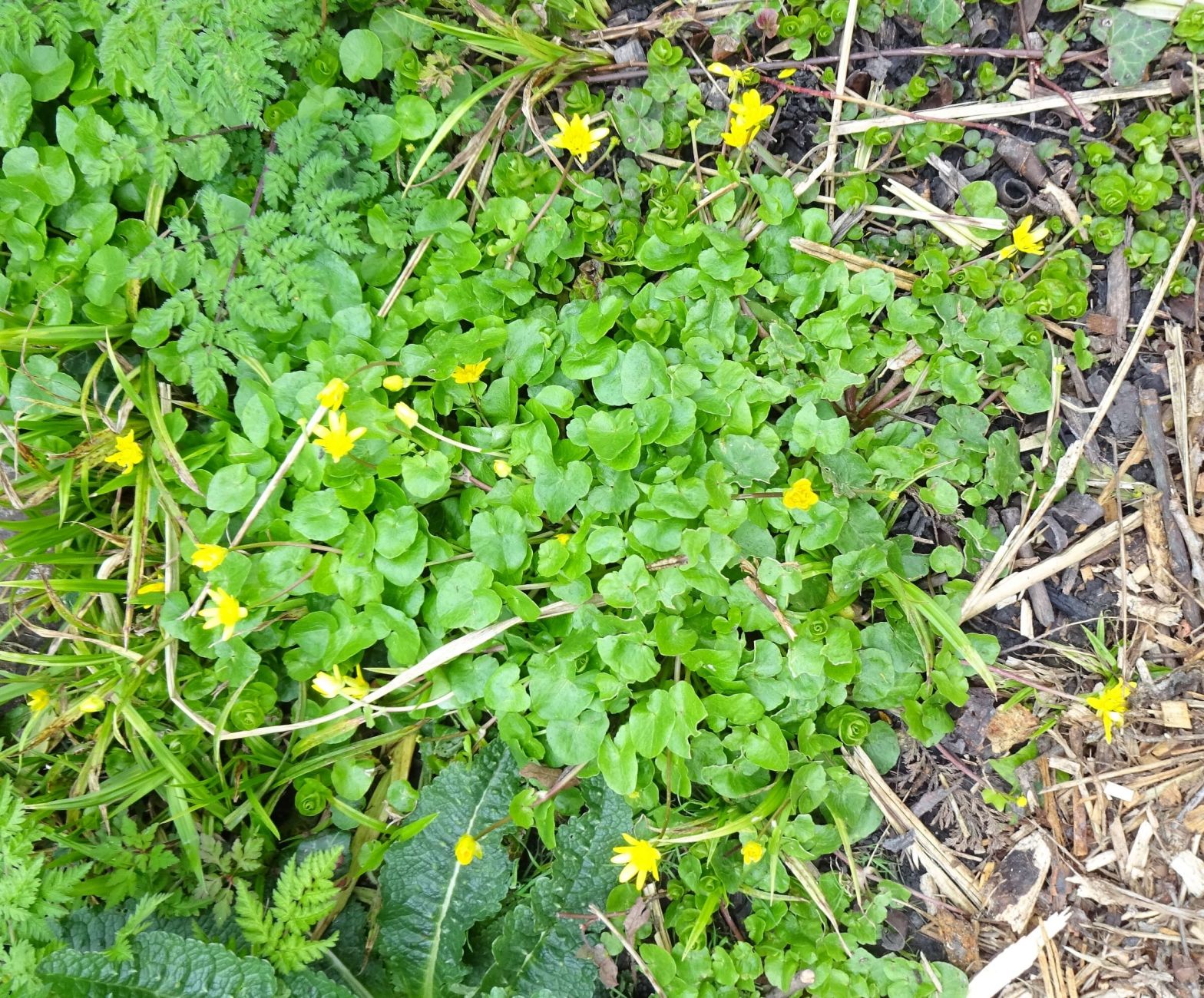
| Lesser Celandine Ficaria verna |
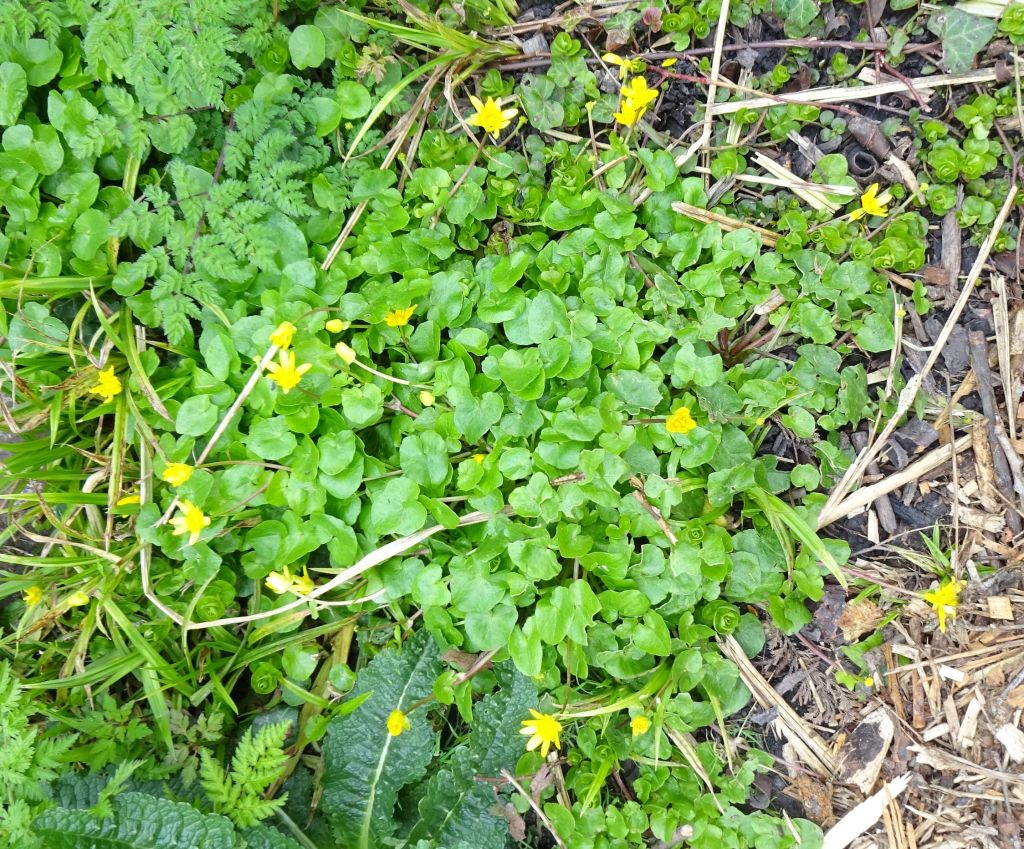
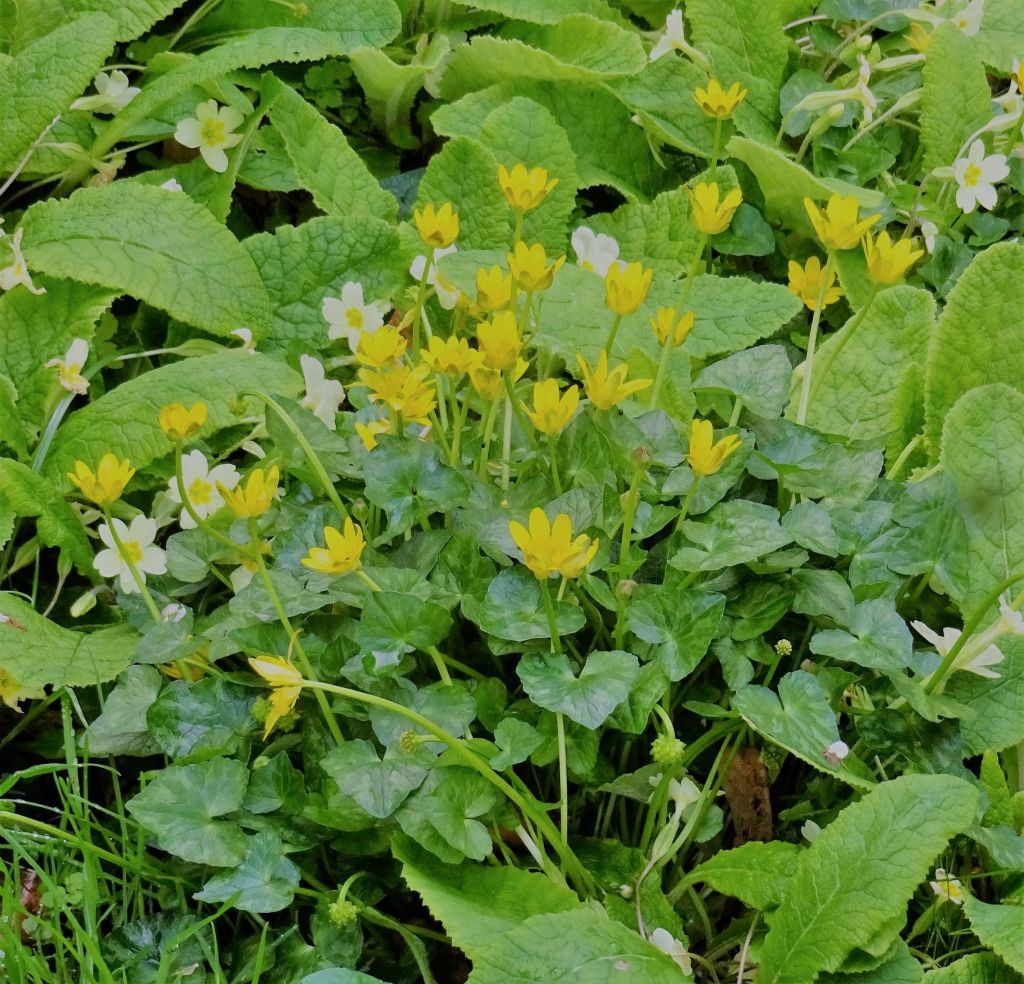
| Images my own. |
| Lesser Celandine is a sweet little plant with bright yellow flowers. For some, it’s a wildflower; for others, a weed; and for others, an older herb. It is a perennial member of the buttercup family and native to the UK. It is unrelated to Greater Celandine, a member of the poppy family. It can be invasive but is not aggressive with other plants. But not all gardeners love its presence. It is a small, low blanket covering type of plant regarding its growth style. It can be found in woodlands in the wild, on moist grounds like the banks of streams and still waters, beneath hedgerows and ditches, and even in shaded wasteground. I have seen it both as a pest in gardens and a guest in wildlife gardens. As lovely as it can be when included in some garden layouts, it does need to be maintained and managed in case it becomes a problem. Celandine is a low-growing plant that appears on the ground around the end of winter and early spring in February but can be gone by mid-May. Celandine Day is celebrated on February 21st as it is one of the first wildflowers to bloom before spring arrives. Another name for Lesser Celandine is’ pilewort’ because of the apothecary application when treating haemorrhoids. Due to its early arrival so soon after the winter months, Lesser Celandine also offers great value to early pollinators, who have recently emerged from hibernation with the nectar and pollen it provides. This ecological role underscores its importance in the natural world, making it a fascinating subject for nature enthusiasts. There is a mixture of views concerning including raw Celandine leaves in salads. Many say they are best cooked, and others say a few can be eaten raw. I would lean more towards cooking them because of the potential toxicity of Protoanemonin—once cooked. However, they can be added to stews. The leaves do have a high vitamin C count. |
 Earthly Comforts
I have always had this plant in my garden, and it has cheered me up many a time with its cheeky yellow flowers. Then last year, it vanished and I don’t know why…
LikeLiked by 1 person
Has the soil been disturbed at all Jaye?
LikeLiked by 1 person
are you kidding? my digging days are long gone…
LikeLiked by 1 person
Ah, right, got you, then p[erhaps natural soil subsidence over the year has caused a dieback.
LikeLiked by 1 person
Whatever the reason, I miss them. I keep hoping they will return one day…
LikeLiked by 1 person
I have seen it many times but I did not know the name 😉
LikeLiked by 1 person
Hey Ribana, same can be said for so many don’t you think? 🙂
LikeLike