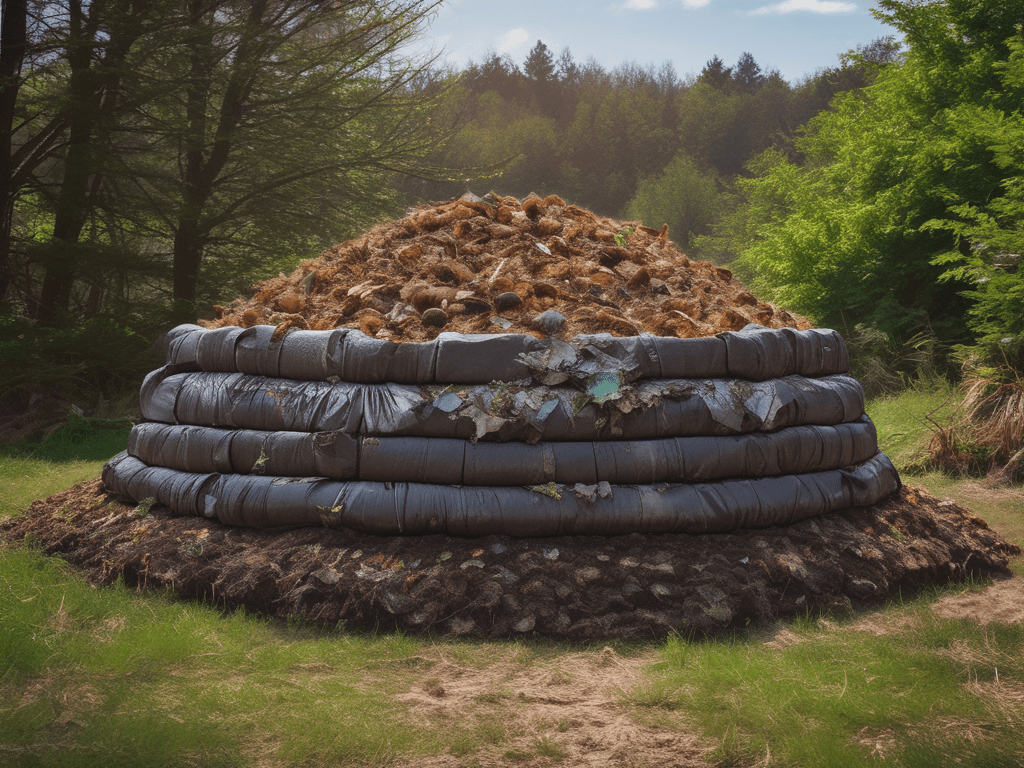
| The opinions shared here are based upon my own experiences working with compost and may not be shared by all. Is it okay to compost cardboard? [and paper] |
| Composting enthusiasts often find themselves in a lively debate about the inclusion of cardboard in their compost pile. Let’s delve into this topic and discover the benefits that can empower your composting journey. For the record, I include cardboard, although I have a few restrictions: When it comes to cardboard, it’s crucial to be selective. Opt for matt-like brown cardboard stripped of sellotape and labels. Avoid plastic-coated, glossy, or heavily dyed cardboard, as well as decorative paper and shiny magazine paper. These materials are best sent off to the recyclers, showing our responsibility towards sustainable waste management. I will use toilet and kitchen roll tubes, plain egg cartons, and plain uncoated takeaway boxes like pizza boxes. I will also compost kitchen paper and newspapers, although they are all shredded first, where possible. Recycling centres don’t like to accept contaminated cardboard or paper, so I will add it to my compost pile as long as it is not [restricted by specific guidelines]. However, if it contains food contaminants, I will compost it as it will break down with the high heat. I will use the brown boxes from Amazon, but where l can I remove the branded tape. To remove the branded tape from Amazon boxes, you can use a sharp knife or scissors to carefully cut it off. Also, I will use paper. 75% of all cardboard is shredded with a shredder. The remainder is either used whole on raised beds in winter as soil protectors, where it will decompose naturally, and what is left will then be added to the compost, or I will leave cardboard outside in giant bags exposed to the elements and then use my hands to tear pieces off and add those into the heaps. If I were a licensed commercial composter in the UK, I would face more challenges regarding what I could and would add to the composting systems. Therefore, I might opt for the more straightforward method of not adding anything but green garden and kitchen waste. Ideally, all paper and cardboard waste products must be classified as clean paper waste commercially, as opposed to contaminated waste—ingredients mixed with industrial [plastic/steel/printing dyes], green and food waste. However, I am not producing compost on a commercial level. Breakdown periods: Understanding the breakdown periods of different materials in composting can help you plan your composting process effectively. For instance, shredded newspaper and cardboard typically take a month to break down in a turned compost, while a torn dry card can take four to six weeks. A wet or damp card, on the other hand, breaks down in three weeks in a frequently turned compost. This knowledge equips you with the patience and preparation needed for successful composting. Cardboard and paper, either wet or dry, torn or shredded in a cold compost pile, take considerably longer to break down, with a time frame of ten to fifteen months. Shredded cardboard and paper can also be added to a vermiculture bin [wormery] – worms love cardboard. Cardboard is a significant carbon source. Composting relies upon two leading ingredient families: [green materials, which are high in nitrogen and include things like grass clippings and kitchen scraps, and brown materials, which are high in carbon and include things like cardboard and leaves]. Suppose no natural carbon ingredients were available for your compost construction. In that case, Brown and woody materials such as fall leaves, bark chips, twigs, shredded branches, and sawdust would be great gap fillers. Shredded paper and cardboard can also be added to your heaps all year round. |
 Earthly Comforts
Some of the paper I use, doesn’t burn and I suspect it isn’t real paper, can that be composted?
LikeLiked by 1 person
What type of paper is it Jaye?
LikeLiked by 1 person
computer paper A4, it doesn’t burn, so I’m thinking it has been doctored in some way…
LikeLiked by 1 person
Well if it doesn’t burn Jaye, then l think it should just be added to your paper recycling as it most likely is holding some kind of toxin to it and not ideal for composting either.
LikeLiked by 1 person
That’s what I though, Rory…
LikeLiked by 1 person