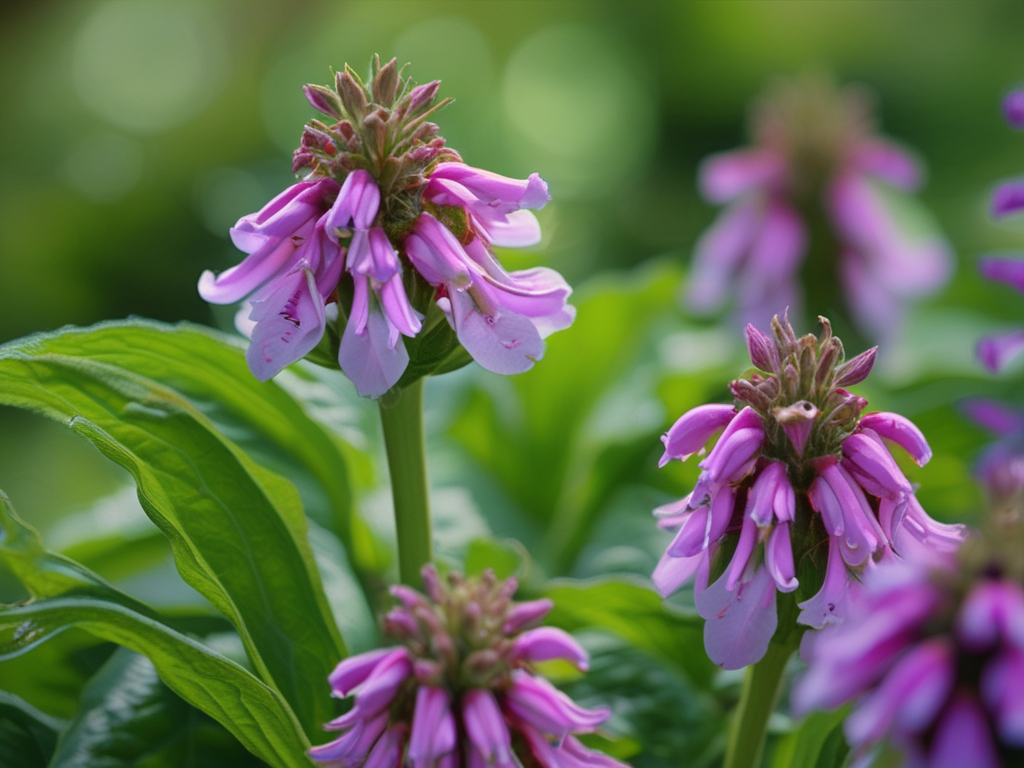
| Comfrey |
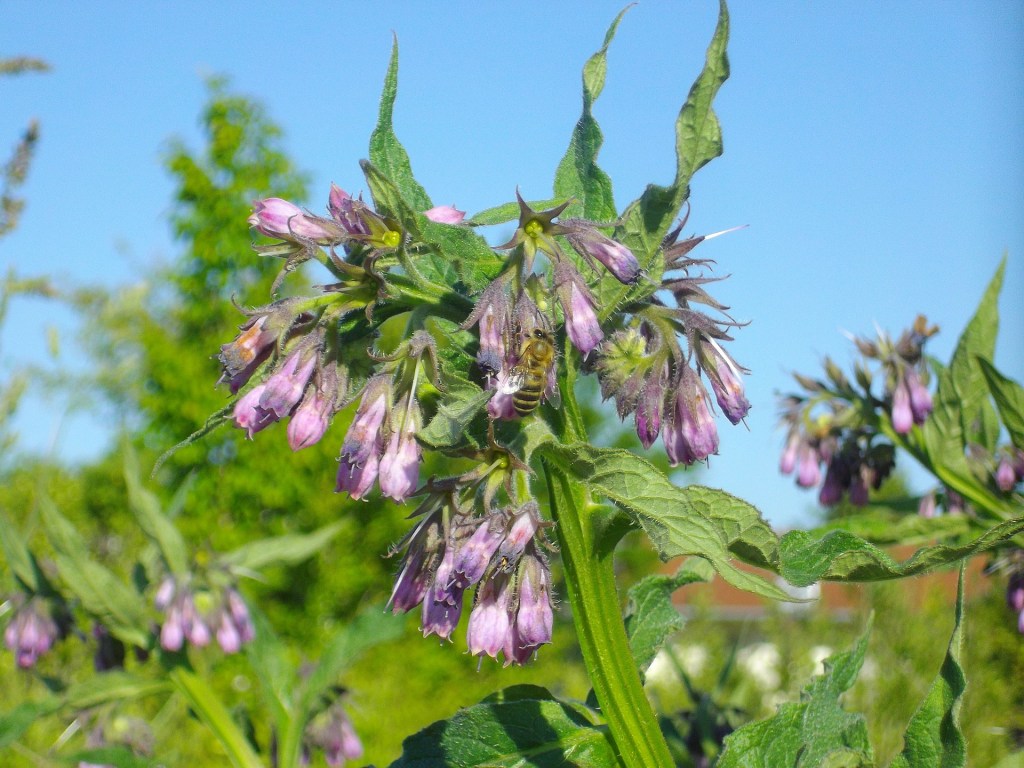

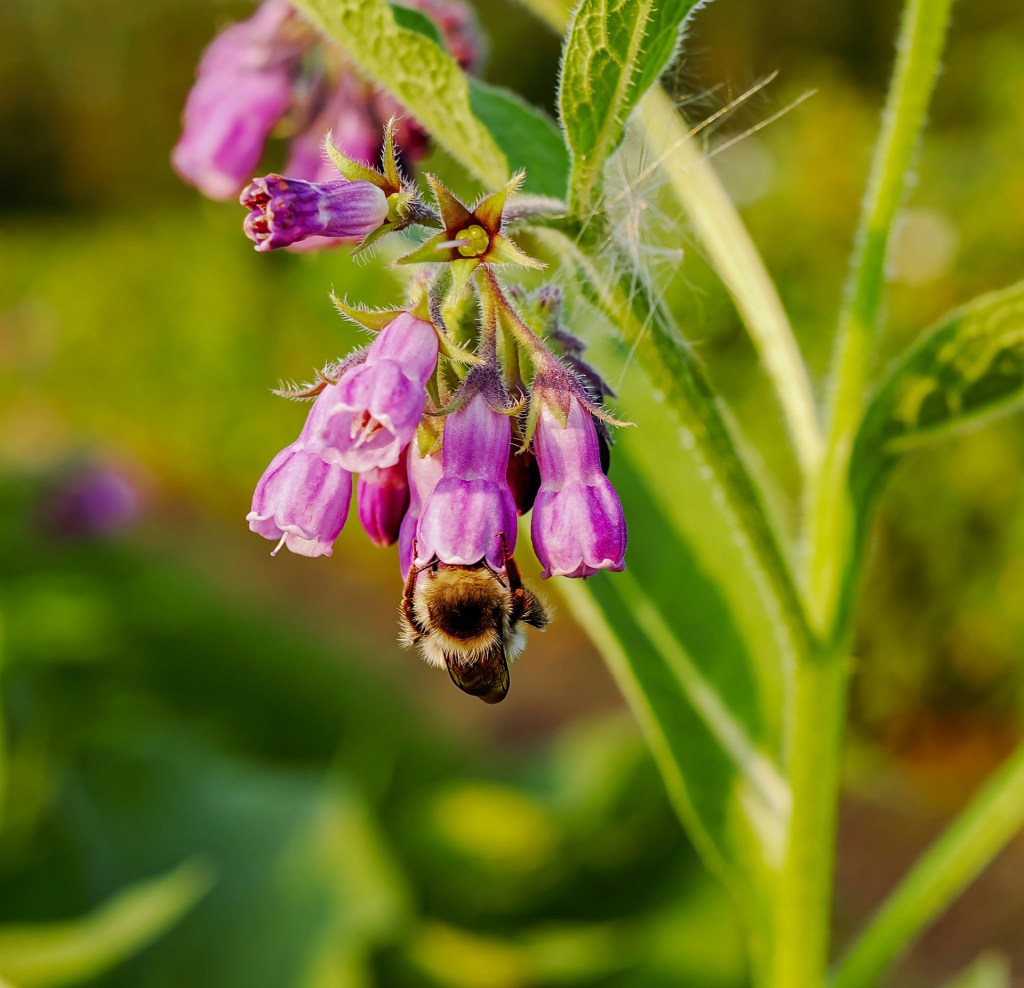
| I have been growing comfrey as a herb since 2018. I introduced the plant to a previous garden as a trial because l had heard it had many benefits for gardening and composting. Comfrey, a plant you may need to become more familiar with, is a true powerhouse in the garden. It is known for its dual roles in organic gardening and organic medicine. This versatile plant can be used for mulching, soil enrichment, fertilisers, composting activators, accelerator primers, and gardening teas. Its abundance of uses is truly inspiring! With the living plant, you can harvest the leaves and chop them up to dig into the soil as a soil enrichment and solid fertiliser or lay the leaves on top of the earth near plants as a mulcher. Either a living mulcher in green leaves or a dead leaf mulcher. You can gather the leaves, dry them, and then shred or crush them as a nutritious leaf mould potting compost material. Comfrey leaves are renowned for their high potassium content, nearly three times that of farmyard manure – a truly extraordinary fact! But that’s not all, they are also rich in phosphorus and nitrogen. When these three nutrients are combined, they create an ideal growing medium for plants. This high nutrient content is a key benefit of comfrey that every gardener should know about. The other beauty of the comfrey is that it can be harvested progressively during the season, and the leaves will regrow. |
| Digging it into the soil Dig a trench in your flower beds, vegetable beds, or even raised beds. Comfrey leaves can be laid on the bottom of the trenching, covered with soil, and planted on top. Over time, the leaves will leech nutrients into the ground and the plant roots. |
| Adding it to your compost as an activator Dead, ageing or fresh comfrey leaves can be added to your compost pile at any stage or layer level. As they decompose, they will encourage the heating up process and, as such, help speed along with the composting. If you are maintaining ‘leaf mould’ production, adding the leaves will play a crucial role in the process of leaf decline and destruction. This particular form of leaf mould is ideal for potting composts, and your knowledge of this process will enhance your gardening skills. |
| Comfrey Compost Tea Making comfrey tea is no different from making other teas. Harvest the plant leaves, chop them up, or add them whole to a watertight bin or container. I use rubbish bins and add sufficient water to cover the leaves themselves. Leave to steep for 4 – 8 weeks, and hey presto—your comfrey tea will be ready! However, a word of warning: when making fertiliser/compost tea, have your containers outback somewhere—they can produce quite noxious and nauseous smells! There is no need to dilute this mixture—you can either add the rotted leaves to your compost and dig over them or continue to add fresh leaves to the container, leaving the old ones where they are. |
| Mulcher Leaves: Nature’s Weed Reducer Bumblebees are particularly drawn to the presence of comfrey, and I’ve also observed bees and butterflies making a pit stop. This exciting discovery can add a new level of vibrancy and life to your garden. |
 Earthly Comforts