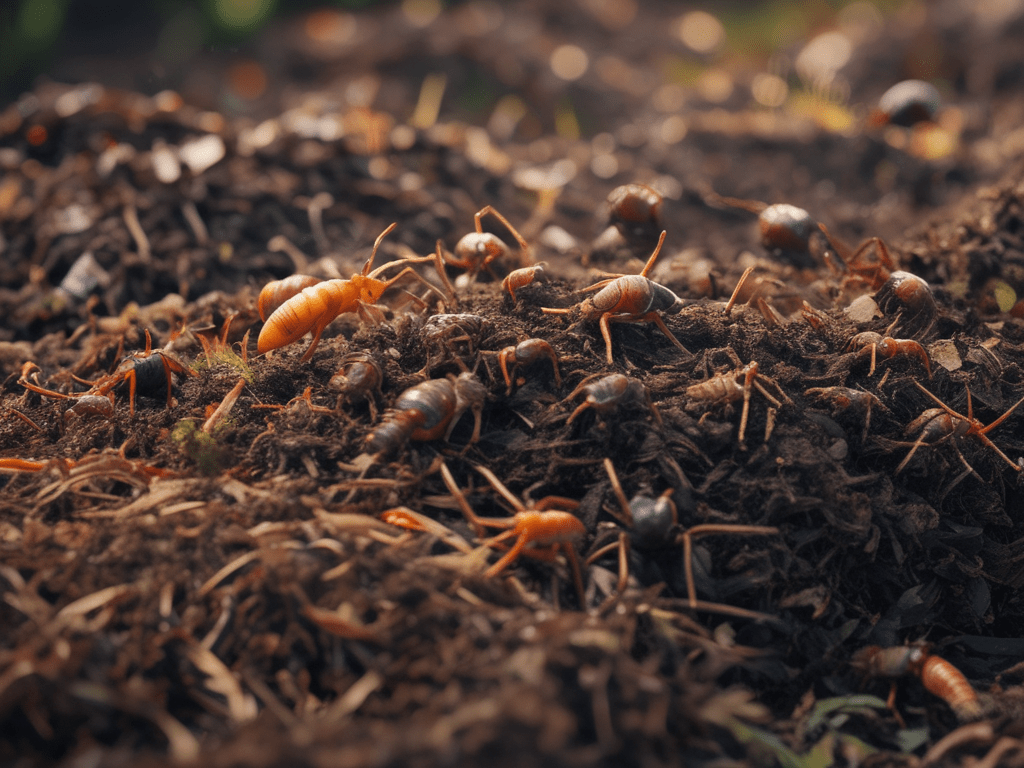
| It’s important to remember that bugs in the compost heap are not a sign of a problem, but rather a natural part of the process. Just as we see bugs in gardens and worms in the soil, bugs in composting are a common occurrence. Every compost heap open to the elements will have insects. Bugs within the decomposition process are acceptable and required. Only on some occasions will they get out of hand, and this is usually if the heap conditions are either too wet or too dry. Those new to composting will only sometimes get it right when they start, but this is the learning curve, like anything new. We have all been there; the pile is too wet or sloppy and too green or has too much kitchen waste on top, overrun with houseflies and stinks, or the complete opposite, and the earthen materials within are too dry and crumbly. Ants nest and make elaborate tunnel systems, while spiders create fancy lattice works! Don’t fret it out and let it worry you. The simple answer is to maintain a healthy pile or heap; that way, you will get a balanced ratio of compost bugs. However, getting to know and understand the composting process takes time, as it takes time to understand the basics and the complexities of decomposition. Every compost environment will be visited and frequented by critters ranging from millipedes and cockroaches to ants, flies, earwigs, and beetles. Spiders live in the heap, as do woodlice, slugs, snails, worms, and mites. When it comes to composting, bugs are not just visitors, they are essential contributors. Earthworms, slugs and snails, soldier flies, woodlice, and other isopods are among the beneficial bugs that aid in the decomposition process. Even ants, spiders, millipedes, cockroaches, and houseflies, often seen as harmful, play a valuable role in breaking down and decomposing the compost materials. If you find your compost pile attracting unwanted guests due to the addition of dairy and meat products, there’s a simple solution. Dig that content down to the core of the heap and cover it up. This will effectively hide and mask the smells, discouraging bugs from being attracted to your compost. If there are too many ants in your heap, ask yourself if the earth within is too dry, which is why the ants are there. If yes, add moisture – water, green materials, or kitchen scraps. But also, at what stage is the heap? Has it just started, or is it near the end? What season are you in—spring and summer or the winter months? The bugs and compost critters will differ depending on the weather and the climate and whether you have just started adding materials or are getting ready to use the finished product. There will be a much higher percentage of good and bad bugs in the early stages of the decomposition process; however, as time passes and the materials break down, you will see fewer insects and other visitors. If you run a hot pile, you will also see fewer bugs because it is too hot for them to thrive and survive. When your compost process is nearing completion, there will be less life within because there will be less food and, therefore, less benefit to decomposition foragers. They have completed their tasks. The easiest thing is not to overthink the wildlife within compost; they are there to perform a job for you, and that is to make gardener’s gold. The whole process of decomposition is an attractive feast to those who love nothing more than feeding on rotting materials. If you have visits from mice and rats or others pending where you are in the world, they are attracted to the insects, the waste foods and the security a warm or warmish pile offers. They have food, warmth and protection. If you wish to cease that activity, turn the pile often. Rats, for example, don’t like disturbance. It might be tempting to pour boiling water into your heap, as some suggest, but consider this: While that method will kill off the offenders, it will also kill off the bugs that you need, so my advice is DON’T do that. Ants might seem offputting, but they, too, serve a purpose in the soil. I have found them to be present more towards the end of a composting process rather than at the beginning. Ants encourage biodiversity in the heap. But ants are a sign that the compost is too dry and lacking moisture—ideally, the compost needs to be damp but not wet, like that of a wrung-out sponge and not a drenched mop head. Swarms of flies, be they household or fruit, can be a nuisance, especially if your compost heap is near neighbours. If this is the case, then cover or lid your heap. The cause is usually too much wet decaying food too close to the top of the soil—cover or bury the content deeper into the mound. Shredding food waste is an efficient way of ensuring that the decomposition process speeds up, and processing the food waste differently can also help. I use the bokashi system, which ferments and pickles the food and adds the mixture to my heap as I turn the compost. Every bug, whether we perceive it as friendly or not, plays a crucial role in the composting process. They are all valuable components, acting as recyclers and regulators in this miniature world within your compost heap. So, let’s appreciate their work and not see them as a threat, but rather as essential contributors to our gardening success. All you need to do is appreciate the insects, critters, and bugs that work their magic and not be put off by them or see them as a threat. |
Embracing Compost Critters: The Key to Successful Composting
 Earthly Comforts
Insects have their place in the environment, Rory. They ward off other unwanted creepy crawlies and critters.
LikeLike