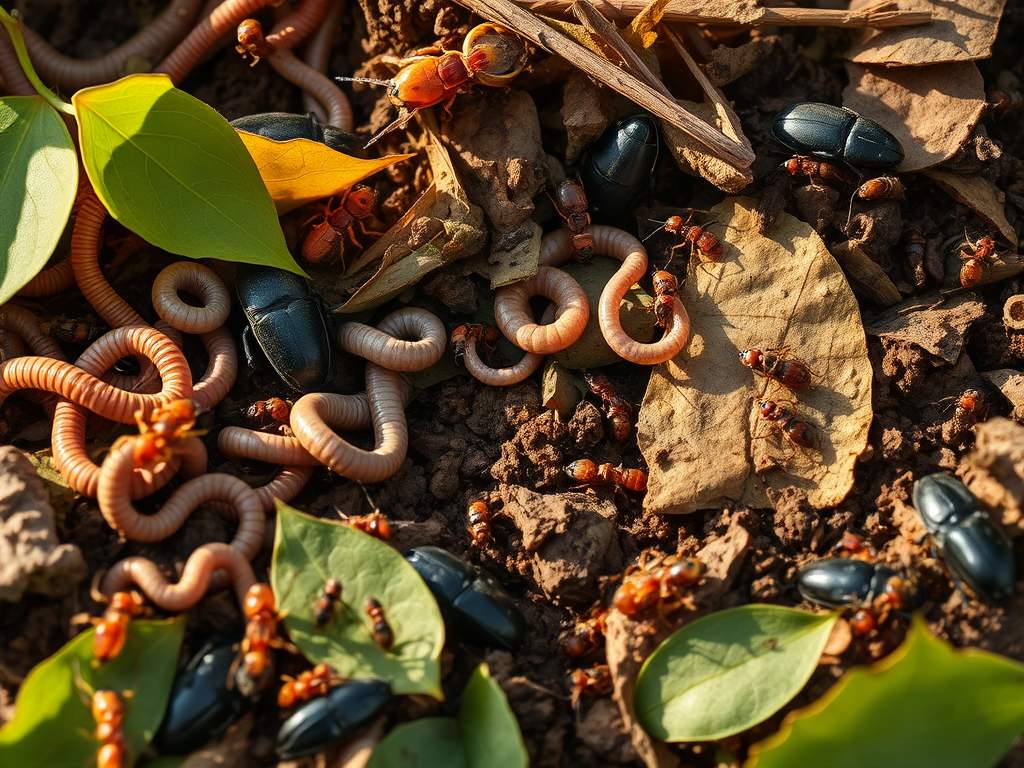
| The compost pile is a bustling hub of life, teeming with a diverse array of micro and macro organisms, both beneficial and harmful bacteria. The sheer variety of life forms present during decomposition is a marvel, with some bugs even visible to the naked eye. These larger life forms are just the tip of the iceberg, as countless others can only be observed under a microscope. We are talking about millions of microorganisms in the tiniest amounts of compost soil—bacteria, fungi, and actinomycetes. Their presence is within mere grams of compost soil. A handful—well, you are potentially cupping an entire galaxy of life—so you should NEVER eat raw compost! I remember reading a few years ago that there are various levels of microbe decomposers – the first are the tiny ones. Next, you have marginally more significant life forms. Then you have the much bigger macros and are probably too well aware of most of these. To make it easier to understand – let us look at it like this : Microorganisms – like bacteria, fungi and actinomycetes – are at the minor level of breaking down materials. This lot is found at the end of the decomposition process and primarily in the humus’s final product level. Your next stage upwards would involve nematodes, mites, springtails, and protozoa, which eat the organic matter of your waste products. They will predate the smaller organisms previously mentioned. After these, and going upwards again, we have the more commonly known first-line decomposers, which you will know well, more so if you are a gardener and, of course, a composter. These bugs are the first ones to attack and start on the waste products of your compost heap. You see these visual insects with your naked eye: worms, flies, ants, slugs, snails, woodlice, spiders, beetles and centipedes. I have seen all of these first-hand at various stages of the process. This lot tends to start the breakdown process; they crunch, munch, munch, suck, tear and chew and every other variation of ‘eat’ the organic waste matter you provide them, and they relish their job. So, as you can see, you are never alone when composting; more importantly, it’s not just you doing all the work. As composters, we move the content around, flip it, turn it, mix it, air it, heat it, cold compost it, calm it down, and then wash, rinse, and repeat. But this buggy gang is responsible for all the hidden, detailed work. I remember a conversation with a chap who said he would spend an entire week attending to the bug life and eradicating them from his heap! He would not think they are all valuable to the decomposition process. But many also need help understanding the absolute importance of the bugs in their bins and their roles in the decomposition process! I have even seen some new composters panic at the presence of bugs in their heaps. Over the years, I have encountered my fair share of infestations, each serving as a valuable learning experience. These lessons have taught me the importance of balance in composting: not too wet, not too dry, not too much of this, not too much of that. Composting is a constant endeavour to maintain this delicate equilibrium, and we must ensure it. One of the significant infestations I have experienced is ants. The conditions were just right for them at the time. The hot processing stage had not finished long, and there was very little moisture in the heap. The first time I experienced it, I had only been composting for one season and was a little concerned, but after some research online, I had nothing to be unduly worried about. There are benefits to having ants invade … They build tunnels with their nests, which helps airflow, encouraging quicker breakdown times. Their waste products aid the fertility of the compost. They introduce nutrients in the form of minerals. Ants and smaller organisms feed on compost scraps. In addition to their tunnelling behaviours, they also aid in distributing the healthy bacteria through the heap, making for a more evenly balanced end product. I learned that the heap was cooling down after the hot composting period. This would mean that the worms present during the cold composting stage were not threatened by food competition from the ants and that, if anything, the heap required turning, sifting, sieving, flipping, and dampening down. I have a special fondness for worms and always strive to keep them content. These humble creatures are some of the most reliable allies in the initial breakdown of a compost pile. They consume the waste, digest it, and then excrete it in highly nutrient-rich castings, essential for composting. In addition, their tunnelling activities help aerate the heap and distribute these valuable nutrients. I am not a great lover of flies, but they are still more welcome than mosquitoes! Admittedly, I have not had much hassle with them, mainly because my compost heaps are covered, but flies are also an essential part of the decomposition process. However, I see the annoying tiny flies, especially when I have put fresh kitchen scraps in. These are the fruit flies and the fungus flies or gnats. You can decrease this annoyance by increasing your carbons—like cardboard, paper, or leaves—on top of your moist waste content. I have only occasionally seen a few millipedes when composting. However, occasionally, I see centipedes, which are significant indicators to me, especially if they are present in higher quantities, as that means my compost might be too wet, damp, or moist. I see them more often during the cold composting process. However, they contribute to the overall responsibility by predating insects, tiny spiders, dead slugs, etc. They are also excellent scavengers. Depending on your location, Woodlice, pill bugs, and sowbugs have several names. The typical woodlice are the ones that curl up into a tight little ball, whereas the others do not. But these are also always welcome. They eat leaf matter, vegetable waste and rotting down wood and twigs. I don’t want the snails eating my garden, but I am not averse to putting them into my heaps—they scavenge through waste matter and feed on bacteria and fungi. In addition, when the snail produces its waste, the springtails and mites will eat it, further aiding the whole breaking-down process. Nothing is ever wasted in a compost heap. Like the snail, l prefer the slug working with me instead of against me. I am not into cutting these blighters with scissors, but I will deposit them into my compost heaps. Slugs like snails will feed on living matter but are also highly proficient fungi and decaying matter feeders. [They are also known to eat worms, so l never deliberately place them into my actual worm farms] I encounter a lot of spiders in the compost heap, and more so when l have added a lot of leaf matter to the bins, and the prime species l encounter is the ‘wolf spider’. Spiders are superb with population control, and they will feed on insects and springtails and keep balance to the order of life in the compost bin. When l had the pallet set up instead of my units of today, l tended to see more web-building spider species. Of course, as l have mentioned before, there are other visitors to the compost bins who themselves work like the spiders in so far as keeping order and balance in a heap – these being the likes of frogs, toads, newts and slow worms, and on occasion sleeping and sungrazing grass snakes – so always be aware that you are not the only one attending to your heap, especially with some the more giant feeders like just mentioned – take care when turning your soils over. |
Essential Microorganisms for Effective Composting
 Earthly Comforts
One thought on “Essential Microorganisms for Effective Composting”