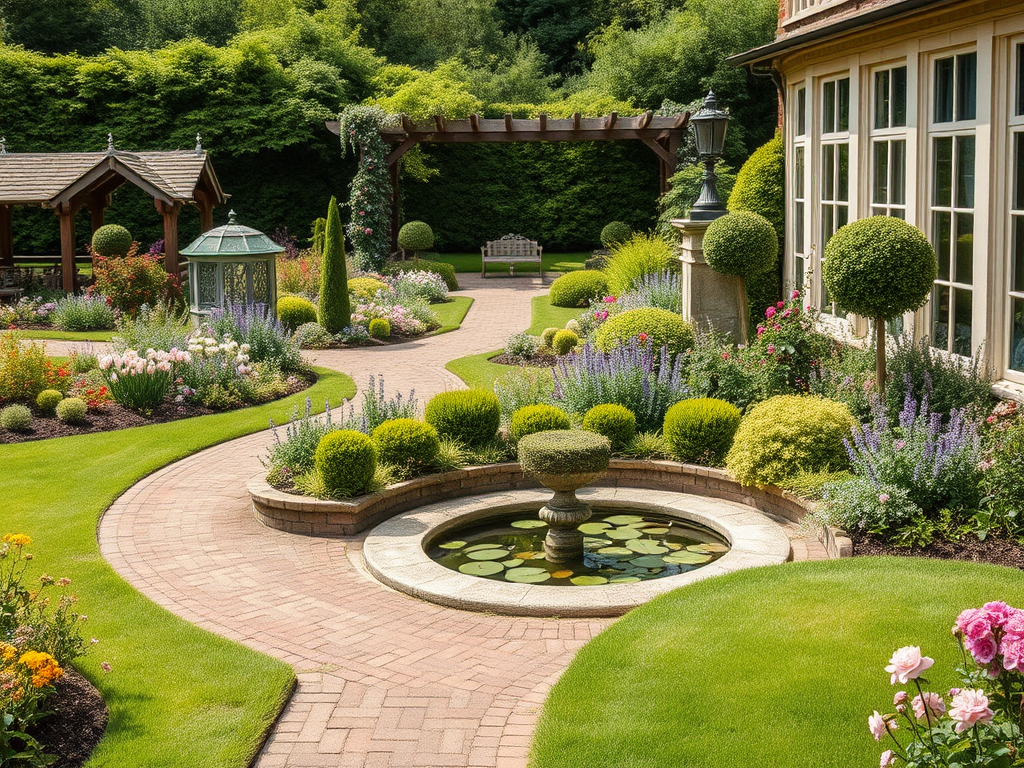
| I recently visited a 1.7-acre Edwardian Garden client in Finglesham, Kent—so l thought l would tell you a little about them. Edwardian gardens, which thrived between 1901 and 1910 during King Edward VII’s reign, were a continuation and evolution of Victorian garden design. They reflected the era’s growing preference for more natural, informal landscapes in contrast to Victorian gardens’ rigid formality. These gardens were heavily influenced by the Arts and Crafts movement, a cultural force that emphasized harmony with nature, craftsmanship, and traditional design principles. This influence is clearly visible in their design. |
| Key Features of Edwardian Gardens: Formal Structure with Informal Planting Unlike the strictly geometric designs of the Victorian era, Edwardian gardens often had structured layouts softened by lush, flowing planting schemes. Garden rooms—separate areas with distinct themes or purposes—became popular. Terraces and Paved Walkways Many Edwardian gardens featured elegant terraces, often near the house, providing a transition from indoors to outdoors. Paved brick, stone, or gravel pathways led through different garden areas. Ornamental Flower Borders Inspired by Gertrude Jekyll’s work, herbaceous borders were filled with colourful perennials arranged in artistic colour schemes. Cottage garden plants, such as delphiniums, hollyhocks, roses, and lupins, were widely used. Water Features and Ponds Small pools, fountains, or reflective ponds added to the romantic feel of the garden. Water lilies and other aquatic plants were common. Topiary and Sculpted Hedges Though less rigid than in previous eras, shaped hedges and topiaries were still used to frame different garden areas. Pergolas and Arbors Wooden pergolas, often covered with climbing roses, wisteria, or clematis, created shaded walkways and seating areas. Lawns and Open Spaces Expansive, well-manicured lawns were a key feature, providing a sense of openness and space for leisure activities. Rock Gardens Inspired by alpine landscapes, rock gardens with small flowering plants became fashionable in country estates. Walled Gardens and Kitchen Gardens Many Edwardian estates retained productive walled gardens filled with fruit trees, vegetables, and herbs. Climbing plants like espaliered fruit trees were trained against walls. Wild Gardens and Woodland Walks Naturalistic planting and meandering woodland paths reflected a love for the untamed beauty of nature. Influences on Edwardian Gardens: The Arts and Crafts Movement: Promoted handcrafted materials, natural beauty, and traditional gardening styles. Gertrude Jekyll: A famous garden designer known for using colour theory and informal, painterly planting. Edwin Lutyens: A celebrated architect who often collaborated with Jekyll to create harmonious garden layouts. The Italian Renaissance and Classical Styles: Grand gardens incorporated elements like balustrades, terraces, and statues. |
| Edwardian gardens were a refined mix of structure and informality, balancing classical elegance with a more complementary, artistic approach to planting. They remain a source of inspiration for gardeners who seek a timeless and romantic landscape. |
 Earthly Comforts
Very beautiful, I love gardens and anything from that era to be honest. And Kent is quite lovely.
LikeLiked by 1 person