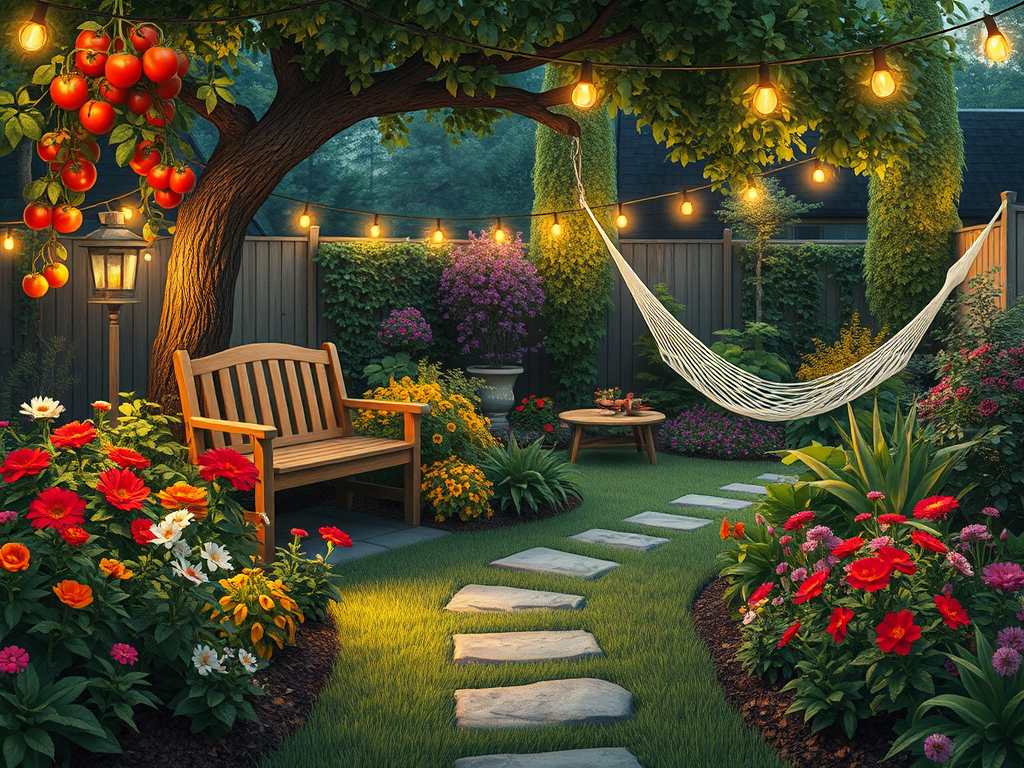
| How can we create a beautiful and functional garden that provides food, flowers, and a space for relaxation and recreation? |
| 1. Start with a plan Sketch out your space, even if it’s just a small yard or balcony. Think about how you want to use the garden—where you’ll grow food, where flowers will go, and where you’ll sit or play. Look at how the sun moves through the day and how much space you have. |
| 2. Mix beauty and function You don’t have to separate things. Grow herbs and vegetables alongside flowers—this looks nice, but many flowers (like marigolds or nasturtiums) also help keep pests away. To make a natural green screen, you can train beans or cucumbers on a trellis near a sitting area. |
| 3. Choose the right plants Go for a mix: Edibles: Tomatoes, lettuce, herbs, strawberries, fruit trees or bushes. Flowers: Pick some that bloom at different times so there’s always colour—like tulips in spring, roses in summer, and asters in fall. Low-maintenance: Native plants or perennials that keep coming back every year. |
| 4. Create cozy zones Designate spots to relax. A bench under a tree, a hammock, or a small patio with comfy chairs can turn your garden into a retreat. For evenings, add some lighting, like string lights or solar-powered lanterns. |
| 5. Think about movement and flow Use paths (gravel, stepping stones, mulch) to guide people through the garden. This makes it easier to move around and adds structure and charm. |
| 6. Keep it sustainable. Compost your food scraps and garden waste. Collect rainwater if you can. Mulch to keep moisture in the soil. These little habits make your garden healthier and more eco-friendly and make you a responsible and eco-conscious gardener. Composting your food scraps and garden waste reduces waste and enriches the soil with nutrients. Similarly, mulching helps to retain moisture in the soil, suppress weeds, and improve soil quality. These sustainable practices make your garden healthier and more eco-friendly. |
| 7. Make it yours 7. Make it yours add personal touches—like a bird feeder, wind chimes, art, or a small fountain. This makes the garden feel like your space, not just a collection of plants. Personalizing your garden will give you a sense of ownership and pride in your creation. |
 Earthly Comforts
One thought on “Designing a Sustainable and Relaxing Garden Retreat”