
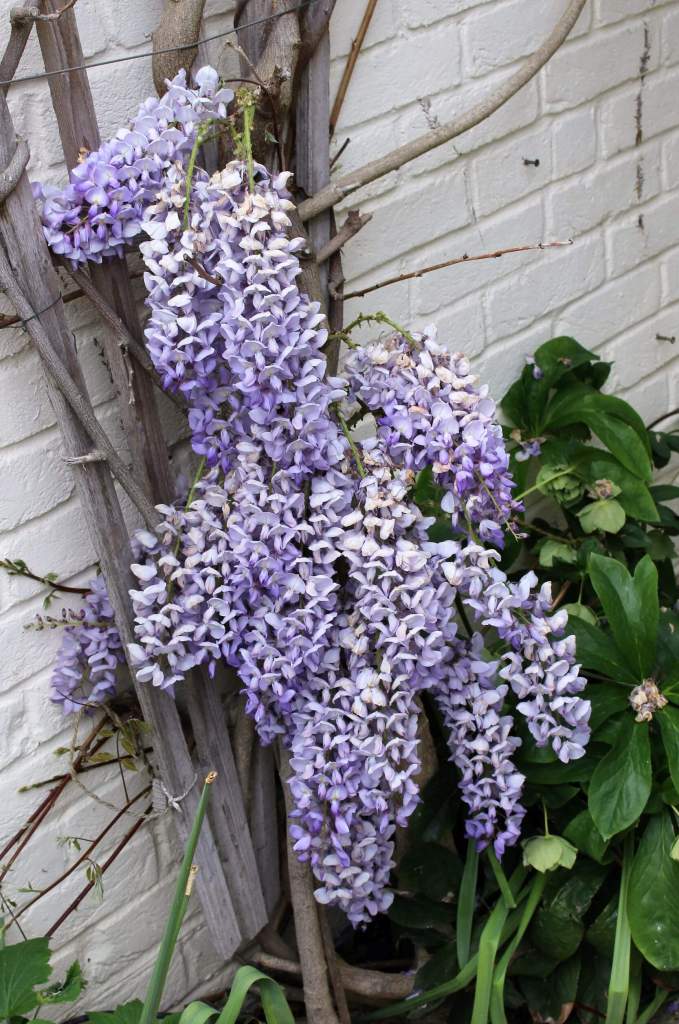

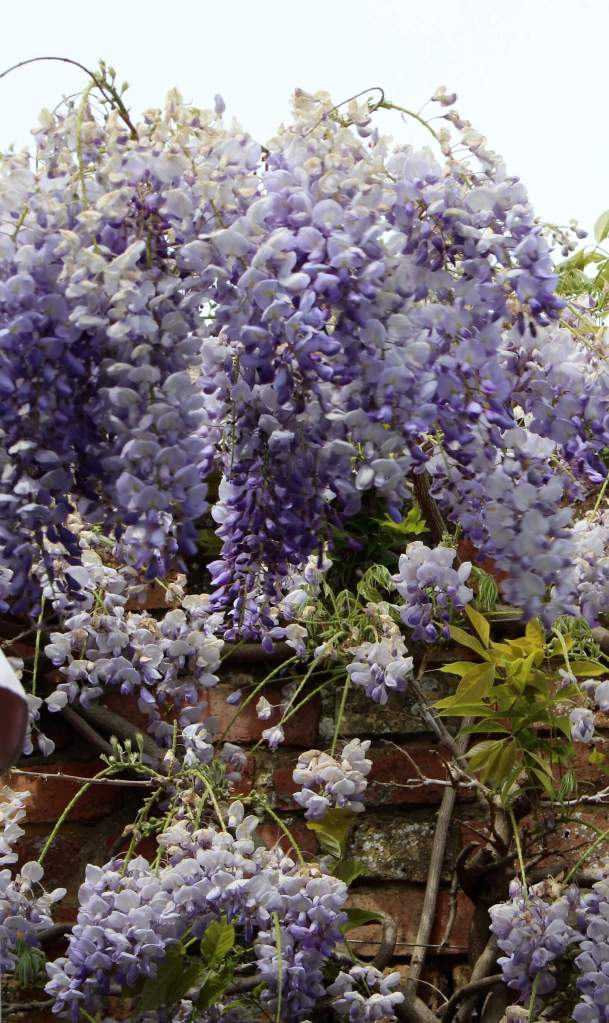

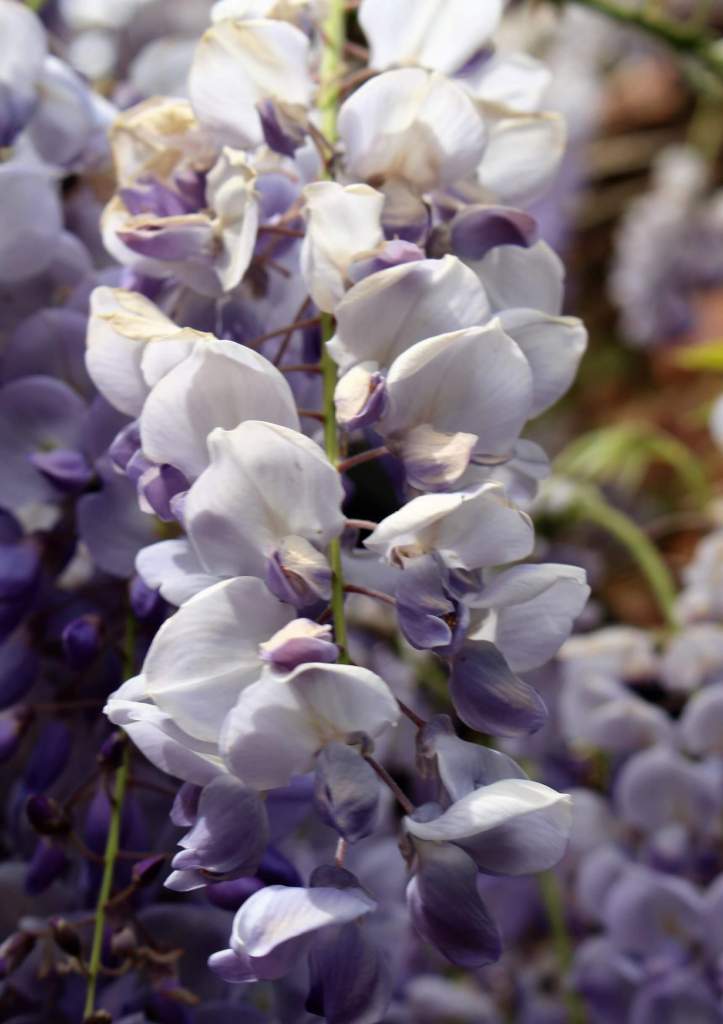
| Wisteria in the UK: A Complete Guide Wisteria is a beloved sight in British gardens, especially in spring when its elegant, fragrant flower clusters cascade down house façades, pergolas, and archways. It is a plant that demands thoughtful care. Its romantic appeal and vigorous growth make it a classic in traditional and modern UK landscapes, but it requires our commitment to thrive in the British climate. |
| Overview & Best Types for the UK Wisteria belongs to the pea family and includes several varieties, but these are best suited to UK conditions: Wisteria floribunda (Japanese wisteria): Long flower clusters (racemes), twines clockwise, blooms slightly later. Wisteria sinensis (Chinese wisteria): Shorter clusters, twines anticlockwise, often blooms earlier. Wisteria frutescens (American wisteria): More restrained growth — ideal for small gardens. Best UK Cultivars: ‘Macrobotrys’: Long, lilac-blue racemes ‘Alba’: White-flowering variety ‘Amethyst Falls’: A compact, reblooming variety — perfect for patios |
| Growing Conditions in the UK Wisteria grows well in most of the UK, though flowering is best in warmer, sunnier areas of southern England and sheltered city gardens. Sunlight: Needs full sun (6+ hours daily) for reliable flowering. South- or west-facing walls are ideal. Soil: Prefers moist but well-drained soil, with a slightly alkaline or neutral pH being best. Exposure: Protect young plants from strong winds; once mature, they are hardy (RHS H5 or H6, down to -15°C or lower). |
| Pruning in the UK Wisteria grown in the UK climate benefits greatly from two prunings a year to encourage blooming and keep the plant under control: Summer (July–August): Trim-long whippy shoots back to 5–6 leaves. Winter (January–February): Prune those same shoots again to 2–3 buds. This technique concentrates the plant’s energy into flower production rather than leafy growth, resulting in more abundant and beautiful blooms. |
| Support & Training Wisteria is vigorous and needs strong support in UK gardens: Use heavy-duty trellises with arched pergolas, or train it up brick or stone walls (a classic feature in English cottage gardens). Tie in young stems and train carefully — they’ll become woody and permanent within a few years. You can train it as a free-standing tree (standard form) for smaller spaces or formal gardens. |
| UK Growing Tips & Tricks Choose grafted plants from a reputable UK nursery (like RHS-licensed centres) to ensure earlier flowering. Root pruning can help reluctant plants bloom: cut a circle into the soil 2 feet out from the base in late autumn. Avoid overfeeding: Use a low-nitrogen fertiliser (such as 5-10-10 or similar slow-release flower formulas) in March. Water well during dry spring weather — crucial while developing flower buds. |
| Common Issues in the UK No flowers? It could be:Too much shade Immature or seed-grown plant Overfeeding (too much nitrogen) Pruned at the wrong time Pests/Disease: Generally pest-free, though young plants may suffer aphids or mildew in wet summers. Invasiveness: Wisteria is not invasive in the UK climate; however, Chinese and Japanese varieties still require management to prevent structural damage. |
| In Summary Wisteria is a spectacular, long-lived climber that brings romantic drama to UK gardens — especially in May and June when it blooms. With a sunny spot, regular pruning, and firm support, it will reward you with decades of stunning floral displays. Just give it a bit of patience and structure, and you’ll have a true garden showpiece. |
 Earthly Comforts
Thanks for the pruning tips, Rory. I have been doing it all wrong…
LikeLiked by 1 person
Well we all learn by our mistakes Jaye, l have learned the same way 🙂
LikeLiked by 1 person
They do say that it is the best way to learn…
LikeLiked by 1 person
Very much so Jaye 🙂
LikeLike
I love Wisteria! Wonderful post, Rory.
LikeLiked by 1 person
Pleasure Eugenia 🙂
LikeLiked by 1 person