
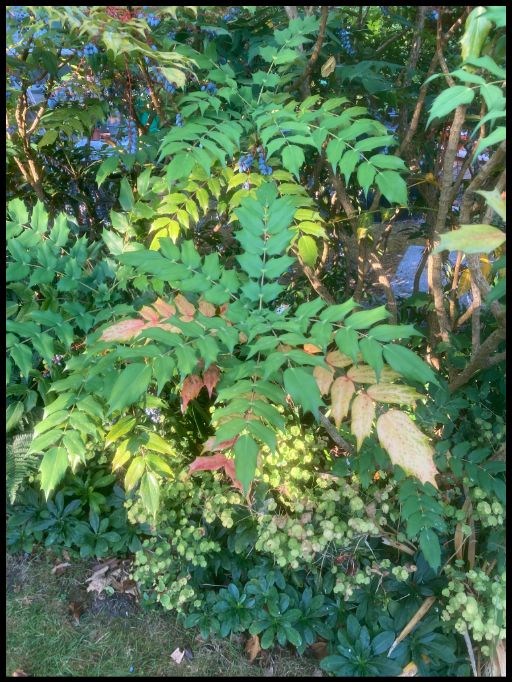
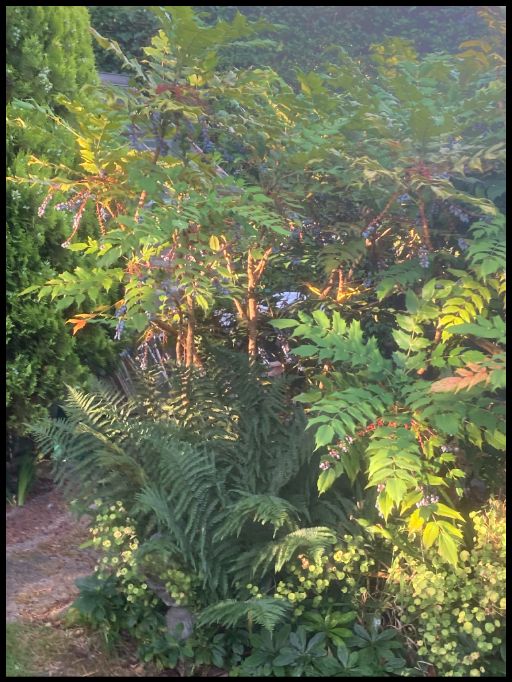
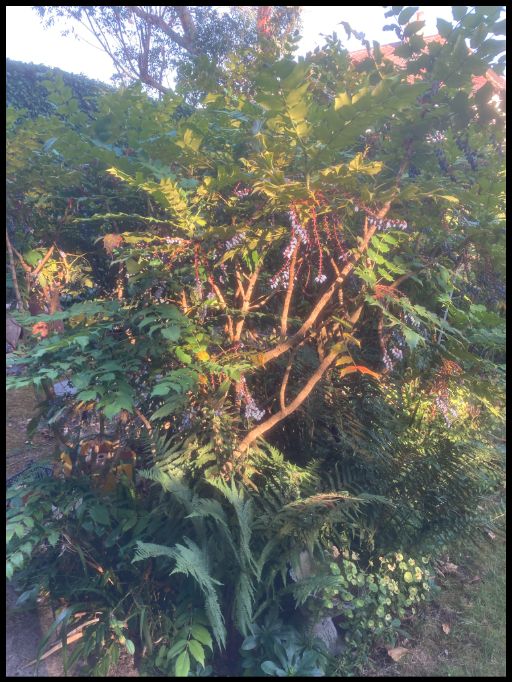
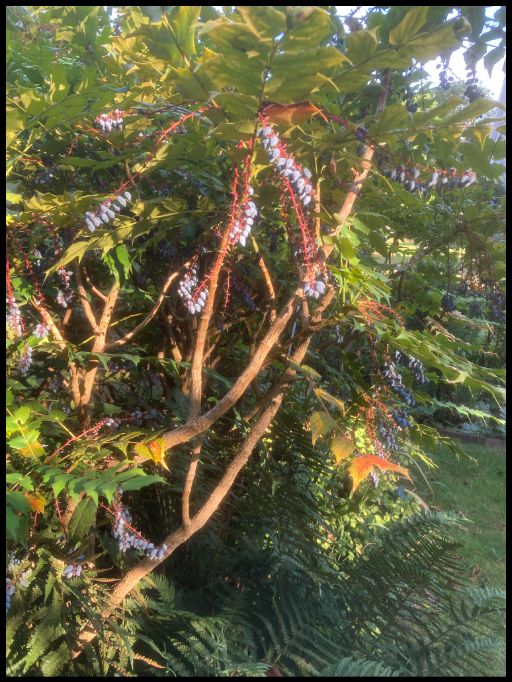
| Of the many plants I work with in many of my clients’ gardens, I occasionally bump into Mahonia, which, trust me, is not the shrub you want to brush up against like you might do with others! Despite its spiky nudge, I have found it to be a very versatile and attractive plant, although pruning is a bit harder, and good protective gloves are an absolute must! Mahonia The Spiky Gem of Winter Gardens If you want to add year-round structure, wildlife value, and winter colour to your garden, Mahonia ticks every box. With its bold evergreen foliage, cheerful yellow flowers, and deep purple berries, Mahonia is a versatile, low-maintenance shrub that’s especially welcome when little else is in bloom. |
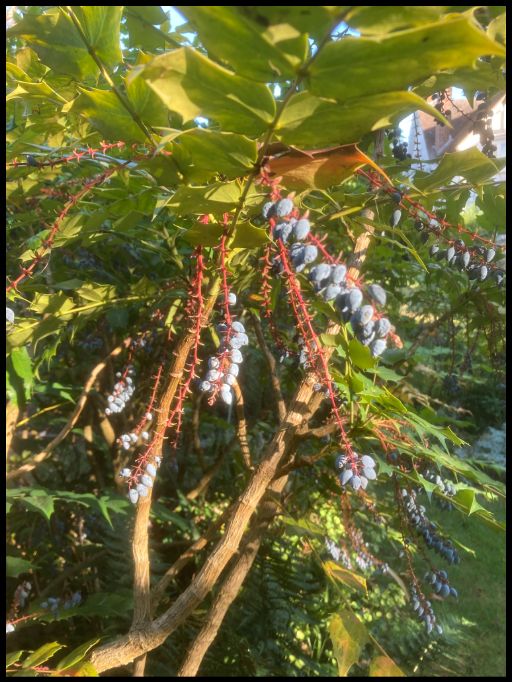
| What Is Mahonia? Mahonia is a genus of evergreen shrubs and small trees from the barberry family (Berberidaceae). Known for their spiny, holly-like leaves, fragrant yellow flowers in late autumn and winter, and grape-like berries in spring, they are striking, resilient plants that thrive in shade and bring texture and brightness to darker corners of the garden. Popular Species & Latin Names Mahonia x media – A garden favourite. Includes cultivars like ‘Charity‘, ‘Winter Sun‘, and ‘Lionel Fortescue‘. Upright and architectural. Mahonia aquifolium – Also called Oregon grape. Compact, spreading habit. Mahonia japonica – A key parent of Mahonia x media. Spreads more horizontally. |
| Planting & Growing Guide When to Plant Best planted in autumn or early spring when the soil is moist and workable. Where to Plant Partial to full shade preferred. Tolerates full sun in cooler regions but may suffer leaf scorch in hot, dry spots. Ideal for north-facing walls, woodland gardens, or under tree canopies. Soil Conditions Moist, well-drained soil is ideal. Grows well in loam, clay or sandy soils. Slightly acidic to neutral pH is best, but Mahonia is adaptable. Planting Steps Dig a hole twice as wide as the rootball and the same depth. Mix compost or leaf mould into the backfill soil. Set the plant in the hole with the root collar at soil level. Firm in gently and water well. Mulch with compost or bark to conserve moisture and suppress weeds. Aftercare Water regularly in dry spells during the first year. Apply mulch annually in spring. Light pruning after flowering keeps the shape neat. Cut back hard if leggy – Mahonia rejuvenates well. Pruning Tips Prune just after flowering (late winter/early spring). Remove spent flower spikes. Cut stems to 30cm for older, sparse plants to encourage bushy regrowth. |
| Flowers, Berries & Seasonal Interest Bright yellow flower spikes appear from late autumn to early spring – a vital nectar source for winter-active pollinators. Followed by blue-black berries that feed birds in spring. Some varieties offer purple-tinged winter foliage. |
| Mahonia grows very well in the UK — in fact, it thrives in typical British garden conditions and is a fantastic shrub for low-maintenance, year-round interest. UK Growing Conditions That Suit Mahonia Shade tolerance – Ideal for the UK’s often overcast skies and shady garden corners. Moisture preference – Likes cool, damp conditions common in many UK regions. Cold hardy – Most Mahonia species (especially Mahonia x media) are fully hardy in the UK (RHS Hardiness Rating H5 or H6), meaning they can tolerate frosts and cold winters without damage. Low maintenance – Requires little care once established. Urban & coastal tolerance – Withstands pollution and salt-laden winds, making it great for towns or coastal gardens. Typical UK Climate Suitability: Handles cold, wet winters Tolerates grey, cloudy conditions Survives occasional drought once established Thrives under tree cover or in semi-shaded urban gardens Particularly Well-Suited For: Shady town gardens Woodland-style borders North- or east-facing sites Low-maintenance wildlife-friendly gardens Mahonia is an excellent, reliable choice for UK gardeners, especially those looking to add structure and winter colour without the fuss. |
| Companion Planting Guide Mahonia pairs beautifully with plants that enjoy similar conditions and complement its bold foliage and seasonal interest. Best Companion Plants CompanionWhy It Works Hellebores’ Winter blooms harmonise with Mahonia’s flowers. Ferns have a Soft, feathery contrast to spiky leaves. Snowdrops, Early bulbs brighten the base in late winter. Heuchera adds foliage contrast and ground coverage. Hostas are Broad-leafed shade lovers with summer interest. Japanese Anemones: Late summer blooms extend seasonal colour. Brunnera Heart-shaped leaves and spring blue flowers. Spring Bulbs Crocus, daffodils and anemones fill gaps and add cheer. Wildlife Companions Combine with berry shrubs like Skimmia or Viburnum for birds. Include nectar-rich perennials and bug hotels to support pollinators and beneficial insects. Structural Companions Try with Camellia, Cornus (dogwood), or Aucuba for foliage and winter stem contrast. Useful in understory plantings beneath trees or larger shrubs. What Not to Plant Nearby Avoid drought-tolerant, sun-loving plants like lavender or rosemary – Mahonia prefers cooler, moister conditions. Steer clear of highly alkaline soil plants if your soil leans acidic. |
| Fun Facts About Mahonia Mahonia aquifolium is the state flower of Oregon, USA. Berries are edible (though tart) and used in jams, jellies, and traditional remedies. The root contains berberine, a bright yellow alkaloid with medicinal properties. Mahonia’s scent is sweet and citrus-like – a welcome surprise in winter. Its dense, spiny foliage can double as a natural deterrent beneath windows or as a wildlife-friendly boundary. |
| Final Thoughts Mahonia is one of those underrated garden heroes. It asks little but gives a lot – from evergreen structure and seasonal colour to shelter and food for wildlife. Whether you’re refreshing a shady border, planning a low-maintenance winter garden, or want a resilient shrub that earns its keep year-round, Mahonia is a brilliant choice. |
 Earthly Comforts