





| History & Origins Trumpet creeper is a vigorous deciduous climber native to the southeastern US, now popular in sunny UK gardens for its nectar-rich flowers. In the US, it’s called hummingbird vine for feeding these birds, or cow itch for its mildly irritating sap. It was grown at Monticello in the early 1800s. It is quite popular over here, although it’s not right for all gardens. |
| Botanical Profile Family: Bignoniaceae Genus: Campsis (Greek kampe, “curvature,” referring to the stamens) Species & Relatives: Campsis radicans – the hardy American trumpet creeper. Campsis grandiflora – Chinese trumpet vine. Campsis × tagliabuana ‘Madame Galen’ – hybrid with peach-orange flowers, vigorous but hardy. |
| Growth & Habit Type: Deciduous woody perennial climber. Height: 10–12 m (30–40 ft) if unrestricted. Spread: 2.5–5 m, more with suckers. Climbing method: Aerial rootlets that grip rough surfaces (can damage old mortar). Root system: A deep taproot and spreading underground runners. Speed: Rapid — several metres in one growing season once established. |
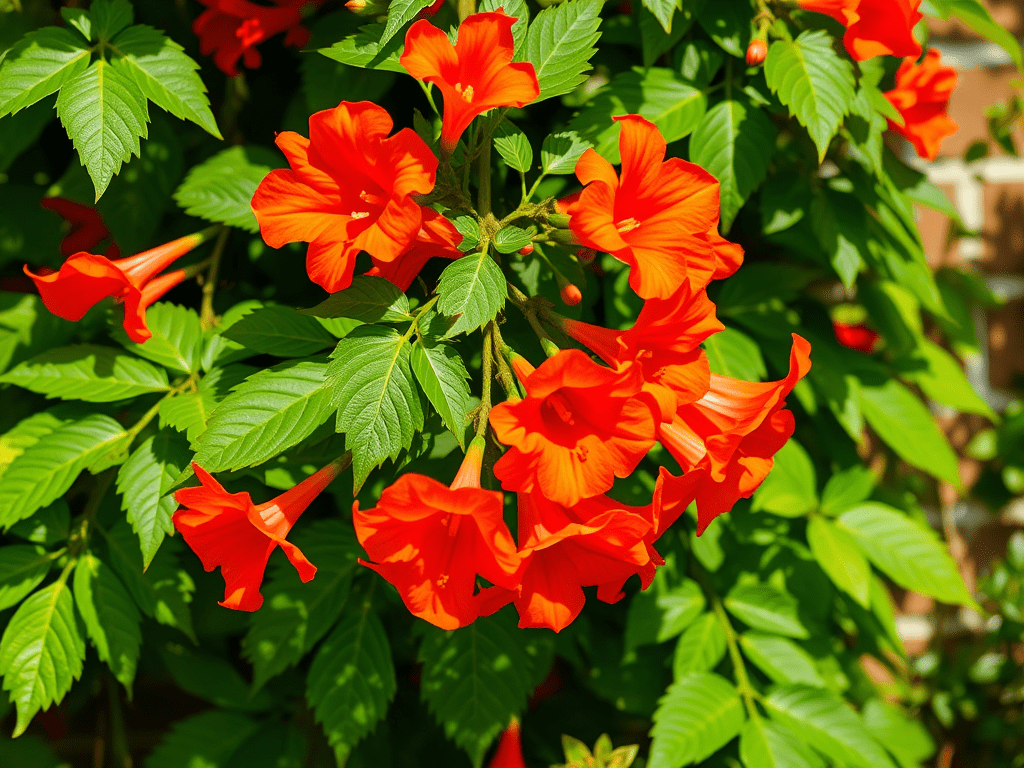
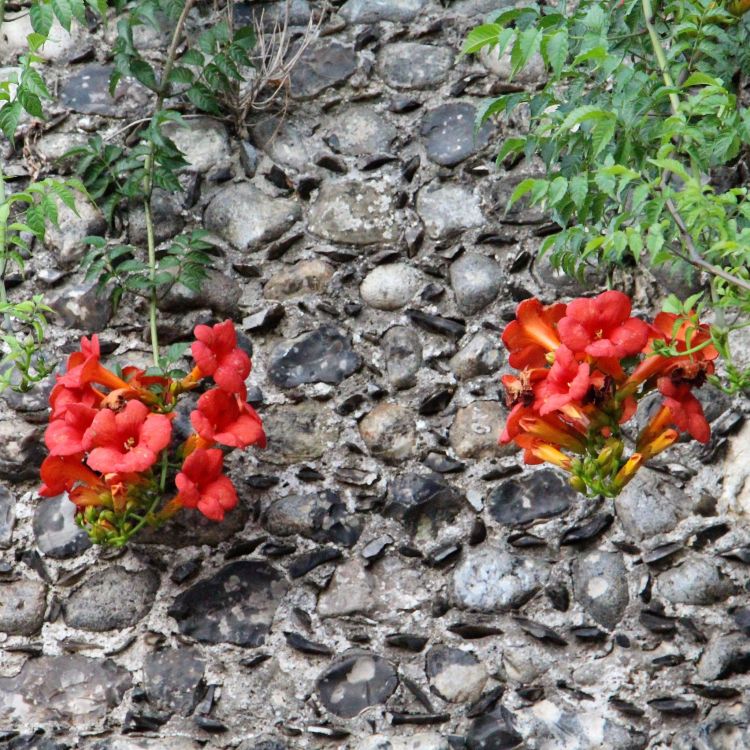
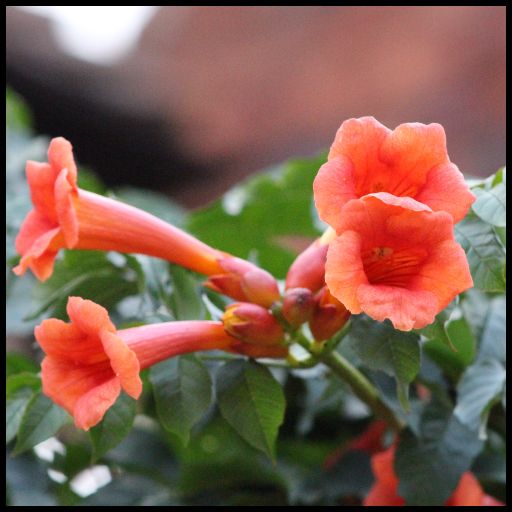
| Flowers Shape & size: Trumpet-shaped, 5–7 cm long. Colours: Typically red-orange, orange, or yellow in certain cultivars. Bloom time (UK): July–September. Pollinators include large bees, hoverflies, and occasional butterflies. In the United States, hummingbirds are the main pollinators. The flowers have minimal fragrance; pollinators are primarily attracted by colour and shape. |
| Foliage & Fruit Leaves: Pinnate with 7–11 serrated leaflets, lush green in summer. Autumn: Turns yellow before leaf fall. Seed pods: Long, bean-like capsules releasing winged seeds in late autumn. |
| Seasonal Cycle in the UK Winter: Fully dormant, woody stems bare. Spring: Bud break occurs in April, followed by rapid green shoot growth by May. Summer: Flowers appear from July; growth continues vigorously. Autumn: Yellow foliage, seed pods form and split. |
| Growing Conditions Light: Full sun (6+ hours/day). Soil: Fertile, well-drained, but adaptable. Moisture: Moderate; drought-tolerant when established. Hardiness: RHS H5–H6 (down to –20°C). |
| Garden Uses Covering large walls, fences, or pergolas. Creating shade or privacy screens. Trained as a flowering standard (“trumpet creeper tree”). Adding late summer colour to wildlife gardens. |
| Containment & Control Install a root barrier (45–60 cm deep) when planting. Site at least 30–45 cm from structures. Hard prune annually in late winter. Remove suckers immediately. Avoid excess nitrogen fertiliser. |
| Cultivars to Try Madame Galen’ – Large peach-orange flowers. ‘Flava’ – Yellow blooms. ‘Indian Summer’ – A compact variety, ideal for smaller gardens. |
| Pros & Cons Summary Pros Stunning, exotic flowers Hardy and drought-tolerant Excellent pollinator plant Quick coverage for large spaces Cons Very vigorous; can be invasive. Can damage walls. Takes 2–3 years to bloom. Suckers are far from the main plant. Needs regular maintenance. Sap may irritate the skin. |
| Strange & Interesting Facts “Cow Itch”: Sap can cause mild skin irritation in sensitive people and animals. Pollinator trickery: In the UK, bees sometimes pierce the flower tube to steal nectar without pollinating it (nectar robbing). Natural glue: Aerial rootlets secrete a sticky substance that allows them to cling to surfaces. Patience required: May take years to flower — some gardeners wait up to 7 years. Tree hazard: Can climb and strangle young trees if unchecked. Root persistence: Even small root fragments can resprout for years after removal. Dual reputation: Ornamental treasure in the UK; stubborn weed in parts of the US. |
| Month | Care Tasks |
|---|
| January – February | Plant in mild spells. Hard prune last year’s flowering shoots to 2–3 buds. Remove suckers from the root zone. |
| March | Mulch with compost or well-rotted manure. Apply balanced fertiliser (e.g., Growmore). Check ties/supports for stability. |
| April | New shoots appear — tie in to the framework. Remove suckers. |
| May | Vigorous growth begins — continue training. Water if dry. |
| June | Shape lightly, avoiding the removal of flower buds. Keep growth on the intended structure. |
| July – August | Main flowering period — enjoy blooms. Deadhead for tidiness (optional). Water in a prolonged drought. |
| September | Flowering slows. Stop feeding to harden growth before winter. |
| October | Light tidy. Collect seed if desired. |
| November – December | Leaf drop. Minimal care — sucker control and support checks. |
 Earthly Comforts