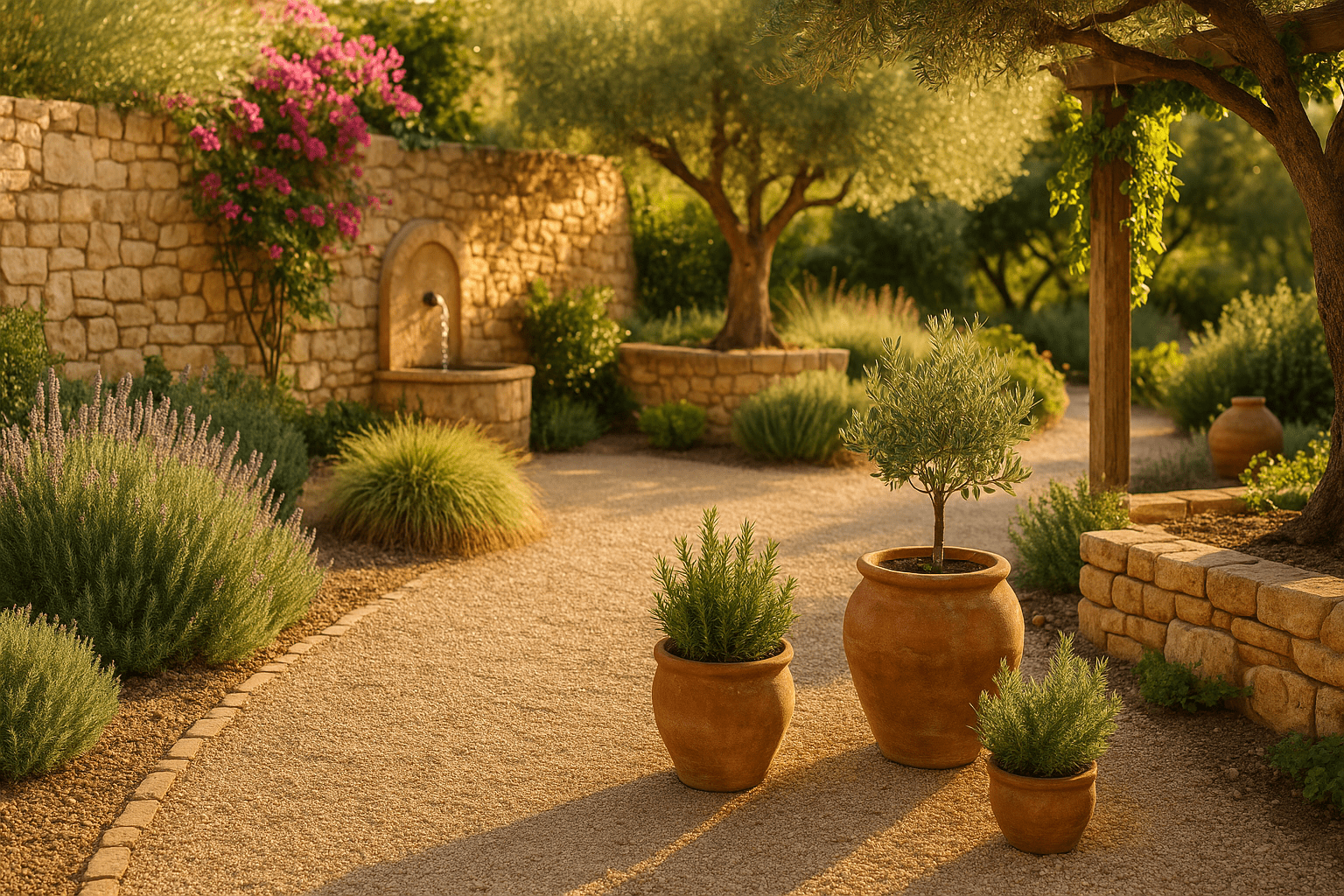
| I work with many different garden styles, but one that’s proving especially resilient to the recent heatwaves here in Kent is the Mediterranean garden. I genuinely believe that, in years to come, more gardens will need to adapt and evolve towards styles that can cope with hotter, drier summers. A Mediterranean garden is like a good friend — warm, generous, and happy to let you just be. It’s a space that works hard in the background while inviting you to take life slowly, just as the Mediterranean ethos encourages. Whether you want a full redesign or just a few Mediterranean touches, this style effortlessly brings sunlit tranquillity and lasting comfort to Kent gardens, offering a little slice of holiday every day. Mediterranean Gardens – A Sunlit Retreat at Your Doorstep Step outside and breathe in the heady mix of lavender, rosemary, and sun-warmed earth. Light bounces off stone paths, and the day seems to move at a gentler pace. That’s the heart of a Mediterranean garden — a space that wraps you in scent, colour, and warmth. It’s not about rigid symmetry or endless hours of maintenance. It’s about texture under your feet, the fragrance of herbs as you brush past, and a sense of ease that comes from a garden designed to be lived in. Inspired by the sun-drenched landscapes of Greece, Italy, southern France, and Spain, this style can be reimagined to sit comfortably in a British setting, bringing a touch of the Mediterranean to even the coldest corners of the UK. |

| Why Choose a Mediterranean Style? Mediterranean gardens grew from the practical wisdom of living in hot, dry summers and mild, wetter winters. Every choice is intentional — plants that thrive on little water, materials that weather beautifully, and spaces created to be savoured, not slaved over. For anyone with a full diary or a love of gardens that require minimal maintenance, this style is a quiet treasure. It sips water sparingly, asks little in return, and rewards you with year-round scent, texture, and charm. |
| Plants with Staying Power The planting palette is bold in scent, subtle in colour, and utterly reliable. Fragrant herbs: Lavender, rosemary, thyme, sage, and oregano — all sun-lovers, all easy-care. Architectural showpieces: Olive trees, figs, citrus in large pots, and upright cypress or yew. Splashes of colour: Bougainvillea, pelargoniums, and salvias for vibrant blooms against softer foliage. Groundcovers and accents: Creeping thyme or low grasses to soften edges and fill gaps. These plants aren’t needy. Once established, they thrive on sunshine and occasional watering, making them perfect for a climate-aware garden. |
| The Warmth of Natural Materials Hard landscaping is as much a part of the style as the planting. Think gravel paths that crunch underfoot, terracotta pots weathered by the years, and stone walls holding heat into the evening. The colour palette leans towards warm neutrals — honey, sand, and clay — which makes the greens and purples of the plants stand out. Pergolas draped in vines or jasmine add dappled shade, while reclaimed tiles or cobbles bring texture to the ground. It’s rustic in the best possible way: honest, tactile, and timeless. |
| Structure and Flow A Mediterranean garden typically unfolds in a series of small spaces, each with its own distinct character. You might wander into a bright courtyard that catches the first sun of the day — perfect for coffee — then follow a path to a quiet, shaded corner where the heat feels far away. Low stone walls, neatly clipped hedges, or cascades of climbing plants mark the boundaries, giving each spot its own character without shutting off the view or the breeze. A small water feature — perhaps a stone bowl fountain or a wall spout — can be a focal point, adding sound and a sense of coolness without wasting water. |
| Living the Mediterranean Way This style isn’t just about planting and paving; it’s about how you use the space. A table under a pergola becomes the heart of summer evenings. A simple bench in the shade invites you to sit with a book. Planters of herbs stay within arm’s reach of the kitchen door for cooking. It’s about bringing life outside — eating, resting, and connecting with nature at a slower pace. |
| UK-Friendly Mediterranean Tips While Kent isn’t Tuscany, you can still capture the essence. Choose hardy varieties of Mediterranean plants that can handle frost, such as cold-tolerant lavender or rosemary. Research plant labels or seek local advice to ensure selections withstand British winters. Place more tender Mediterranean plants, like citrus or bougainvillea, in pots. This allows you to move them to a sheltered spot indoors or into a greenhouse over winter, protecting them from frost in the UK climate. Use mulch, such as bark or gravel, to help conserve water during warm, dry summers in the UK and to protect plant roots from cold, damp winter conditions. Position seating and paths to catch the best of the morning and evening light, taking into account the typical light angles and shade patterns in UK gardens. |
| Why It Works Now More Than Ever As summers get warmer and water becomes more precious, this planting style makes sense. It’s climate-resilient, wildlife-friendly, and reduces the need for constant watering or mowing. Additionally, it offers year-round interest, featuring evergreen foliage, sculptural shapes, and winter fragrance from herbs. |
 Earthly Comforts
A Mediterranean garden sounds lovely. That would be my choice, if I had a garden.
LikeLiked by 1 person
They are quite nice, l have two over here 🙂
LikeLiked by 1 person
It’s bizarre to think of plants I see all the time, growing in England.
We had trumpet vine, honeysuckle and jasmine growing together on a lattice for shade. The scent was wonderful.
LikeLiked by 1 person
Hey Grandma 🙂
I think the main significant feature Angie is that is displays all too clearly how the climates are now changing – the last twenty years especially has seen much hotter temperatures present on a day to day week by blah blah basis to the point now that we had four major heatwaves this year and nature is now in extreme distress because of it.
So with shifting hardiness zones more and more plants can now be grown.
I watched a newsclip last night that said the England are now able to grow a much broader selection of grape varieties because the weather is getting hotter.
Sign of the times l feel.
how are you keeping? 🙂
LikeLike