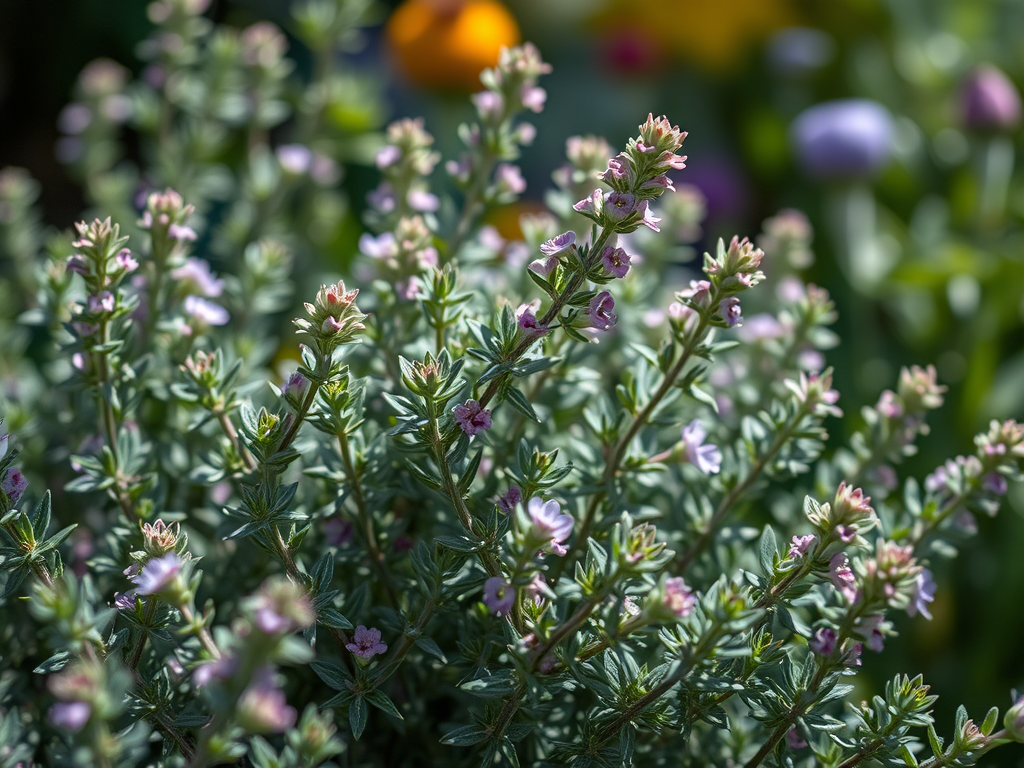
| Thyme might be small, but don’t let that fool you—it’s a total powerhouse. |

| This little herb, known officially as Thymus vulgaris, has been around forever, doing many incredible things. People have used it for cooking, healing, and even old-school rituals like smudging or as an offering to deities. It grows near the ground, like a scruffy little green mat, with tiny greyish-green leaves and delicate flowers that pop in soft purples or pinks. And the smell? Unmistakable. Earthy, a little minty, and fresh, making you want to take another sniff. When it comes to food, thyme is one of those must-have herbs. It goes with everything—soups like chicken noodles, stews like beef bourguignon, roasted meats like lamb, and veggies like roasted potatoes. You’ll see it a lot in Mediterranean and French dishes. It’s great because it can handle heat like a champ, so that you can toss it into the pot early, and it’ll keep that cosy, herby flavour the whole way through. Thyme, however, is not just a culinary delight. It has a rich history as a natural remedy, dating back centuries. It has been used to soothe sore throats, calm coughs, and even boost the immune system. Its essential oil, thymol, is a potent fighter against bacteria and fungi, making it a valuable asset in the past for cleaning wounds and freshening up spaces. This deep-rooted history connects us to our ancestors and their traditional uses of this versatile herb. And here’s something magical: during the Middle Ages, people believed thyme gave you courage. Knights would carry little sprigs of it into battle. How cool is that? Thyme is one of those herbs that might look humble, but it’s full of character—packed with flavour, history, and even some ancient wisdom. Its unique qualities, from its rich history as a natural remedy to its use in ancient rituals, make it a fascinating subject to explore. |
| Fascinating Facts About Common Thyme Ancient Symbol of Bravery In ancient Greece and the Middle Ages, thyme was thought to give people courage. Knights carried it into battle, and women embroidered it onto scarves as a token of protection and bravery. “You Smell of Thyme” Was a Compliment In ancient Greece, telling someone they smelled of thyme wasn’t shady—it was a high compliment! It meant they were stylish, elegant, and full of grace. Used in Mummification The ancient Egyptians used thyme in the embalming process. Its potent antibacterial properties helped preserve bodies and smelled nice, too—bonus. A Natural Air Freshener (Before It Was Cool) During plagues in Europe, people burned bundles of thyme in rooms and on the streets to ward off disease. They believed it purified the air—honestly, they weren’t entirely wrong. Surprisingly Tough Plant Despite how delicate it looks, thyme is a hardy little plant. It can survive dry soil, full sun, and even frost. It’s a survivor with style. A Favourite of Bees Bees love thyme flowers. If you plant thyme in your garden, you’re inviting a bee party—and that’s great for pollination and the planet. Used in Love Potions In folklore, thyme was sometimes used in love spells and potions. It was believed to attract love and promote affection. Romantic little herb, huh? It Can Be a Mood-Booster Thyme’s scent is thought to have a calming, uplifting effect. It’s sometimes used in aromatherapy to relieve stress or fatigue. Has Been Used as a Smoke Herb People have dried and burned thyme-like incense for ritual cleansing and spiritual practices, especially in Mediterranean and pagan traditions. It’s a Chameleon in the Kitchen. Depending on how it’s cooked, thyme can bring out different flavours. It can taste citrusy, minty, woodsy, or even a little floral, depending on what you pair it with. Growing thyme in the UK is relatively easy—it thrives in well-drained soil and loves sunshine, making it well-suited for many parts of the UK, especially during spring and summer. Here’s a simple guide to growing thyme successfully: |
| Best Way to Grow Thyme in the UK Choose the Right Variety Common thyme (Thymus vulgaris) is perfect for culinary use. Lemon thyme (Thymus × citriodorus) has a citrusy twist—great for teas and fish dishes. Creeping thyme is more ornamental but still edible. Planting Time Sow indoors: February to April. Transplant or sow outdoors: After the last frost, usually late April or May. Sunlight Thyme LOVES full sun. Aim for at least 6 hours of direct sunlight per day. Soil Well-drained, light soil (sandy or loamy). Slightly alkaline to neutral pH (you can add lime if your soil is acidic). Avoid heavy clay or overly rich soils. Watering Water sparingly! Thyme prefers dry conditions. Let the soil dry out between waterings—too much water will rot the roots. Growing Indoors Use a sunny windowsill. Use pots with drainage holes and light compost or cactus mix. Pruning Trim after flowering to keep it bushy. Regular light pruning encourages new growth and stops it from getting woody. Harvesting Pick leaves as needed once the plant is well-established (usually mid-summer). The best flavour is just before it flowers. You can dry or freeze the excess for winter use. Overwintering (UK climate tip!) Hardy, but in very wet or frosty spots, protect it with cloches or bring pots indoors. Avoid soggy roots in winter—well-drained soil is key. |
| There are over 300 different varieties of thyme worldwide! Thyme belongs to the genus Thymus, and while only a handful of varieties are commonly used in cooking or gardening, the genus itself includes hundreds of species and cultivars, each with slightly different flavours, aromas, and appearances. Here are a few popular ones: Culinary Thyme Varieties Common Thyme (Thymus vulgaris): Classic kitchen thyme. Lemon Thyme (Thymus × citriodorus): Has a citrusy scent and flavour. French Thyme: A more delicate, slightly sweeter version of common thyme. English Thyme: Another cultivar of Thymus vulgaris, often used in cooking. Ornamental or Speciality Thyme Creeping Thyme (Thymus serpyllum): Low-growing, great for ground cover. Woolly Thyme (Thymus pseudolanuginosus): Soft and fuzzy, not typically edible. Caraway Thyme (Thymus herba-barona): Slightly spicy, used in cooking and edging. Orange Balsam Thyme: Citrus-flavoured, used more for aroma. |
 Earthly Comforts