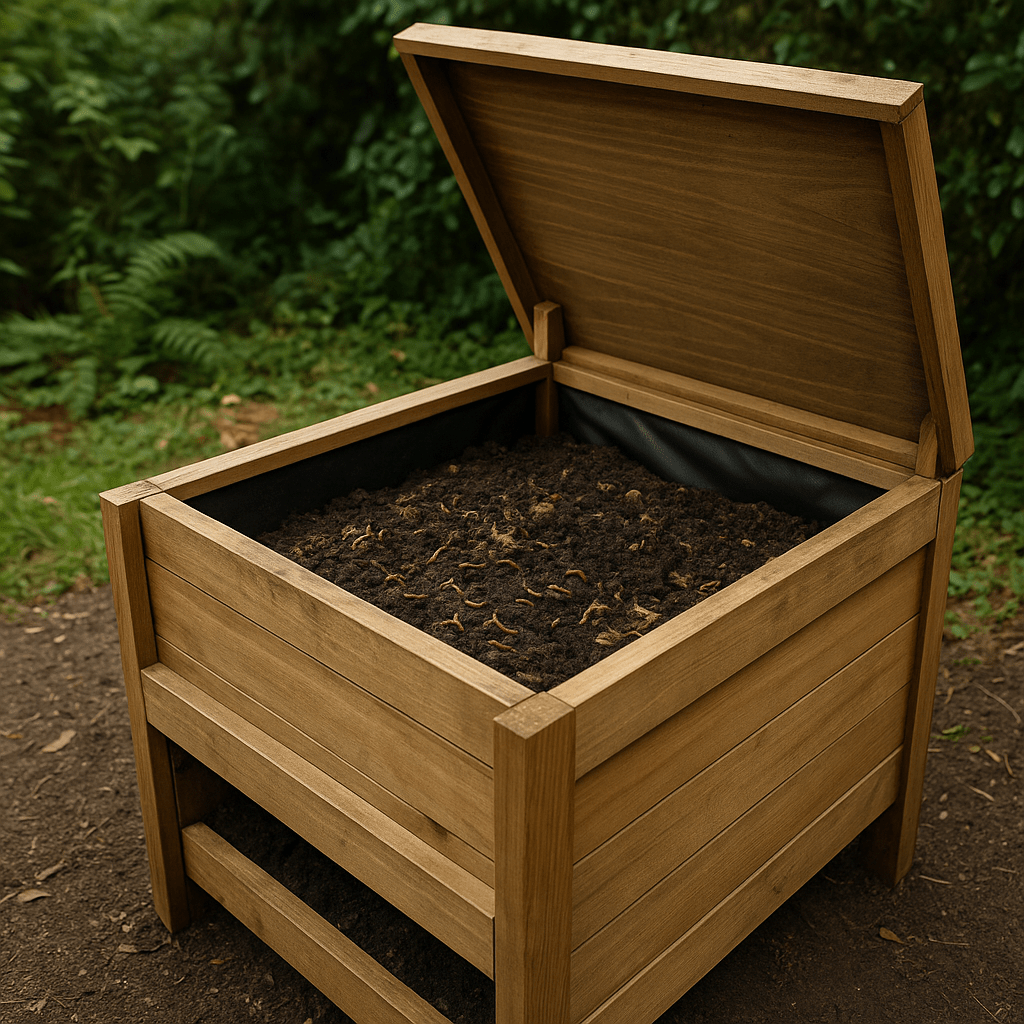
| Of course, it’s not my first experience with worm farming. I recently closed down the two large worm farm beds that were located on Plot 17 last year, and I was sad to see them go; however, I have continued to research this subject and have now decided to opt for a continuous-flow bin. Worms may be overlooked in gardening, but they’re among the Soil Builder’s Hub Club’s most valuable workers. |
| The Continuous Flow Worm Bin At the Hub, we will use a continuous flow system. Here’s how it works: Fresh food scraps, shredded greens, and coffee grounds are added at the top. A lively colony of composting worms (mainly Eisenia fetida, the red wriggler) slowly eats its way upward. At the bottom, finished worm castings are harvested. Worm castings are the nutrient-rich waste produced by worms as they digest organic matter. This material is dark, crumbly, and resembles soil. A mesh base and angled floor make sure castings can be collected easily while worms stay inside where they belong. That means this system keeps going—waste goes in, castings come out, and the worms just keep working. |
| Worm Comfort: Keeping Them Happy Year-Round Since we’re based in East Kent, winters can occasionally get cold enough to make life hard for worms if they’re left exposed outside. To look after them, we’ll make sure the bin is: Insulated with natural materials (wood, straw, or rigid insulation panels). Fitted with a light at the top — worms don’t like light, so this gently discourages them from escaping upwards. Designed to hold steady moisture levels (worms breathe through their skin, so too much dryness or wetness stresses them out; moisture levels refer to how wet or dry the bedding in the bin is kept). That way, even when the weather isn’t so friendly, our worms stay busy. |
| Why Worm Castings Are Gold Dust Worm castings aren’t ordinary compost. They’re loaded with plant-available nutrients, beneficial microbes, and natural growth hormones. They improve soil structure, boost water retention, and help plants resist pests and disease. In short, this is a supercharged compost, and gardeners are always looking for more. |
| How Much Will We Produce? Our continuous flow bin will measure 6ft long × 3ft deep × 2ft wide (1.8m × 0.9m × 0.6m). With the right feeding and care, this system could generate: Around 200–300 litres of worm castings every month, or Roughly 2.5–3.5 tonnes per year. I have considered having two of these farms. That’s more than enough to provide a steady stream of castings for client gardens, adding a premium soil builder into the Hub’s cycle. |
| What Will They Eat? Our worms aren’t fussy, but we will keep their diet balanced to make sure they’re healthy and productive. Here’s what goes into the mix at the Soil Builder’s Hub: Garden Waste – shredded cuttings and clippings, pre-composted so they’re soft and easy to digest. Coffee Grounds – full of nitrogen and loved by worms, these also help keep moisture steady. Fruit & Veg Scraps – peelings, cores, and leftovers, but never anything greasy or processed. Bokashi-Treated Food Waste – pre-fermented scraps that break down quickly in the bin. Cardboard & Paper Bedding – torn into strips, this balances moisture and gives the worms structure to wriggle through. Crushed Eggshells – just a sprinkle, to provide grit and help balance acidity. We’ll avoid meat, dairy, oily foods, and large amounts of citrus or onion — they don’t sit well in the worm world. By keeping this balance, the worms stay active year-round, and the castings they create are richer, cleaner, and more consistent. |
| Closing the Loop The worms fit perfectly into the Soil Builder’s Hub system: Shredded green waste is pre-composted—meaning it is partially broken down before being added—so it’s safe and palatable for the worms. Coffee grounds are added regularly (worms love them). Finished worm castings are stored separately in a dedicated bay, ready for sieving and eventual use in client gardens. The result? Waste that would’ve gone to landfill instead becomes one of the richest soil improvers available — all thanks to the quiet work of thousands of tiny recyclers. |
 Earthly Comforts