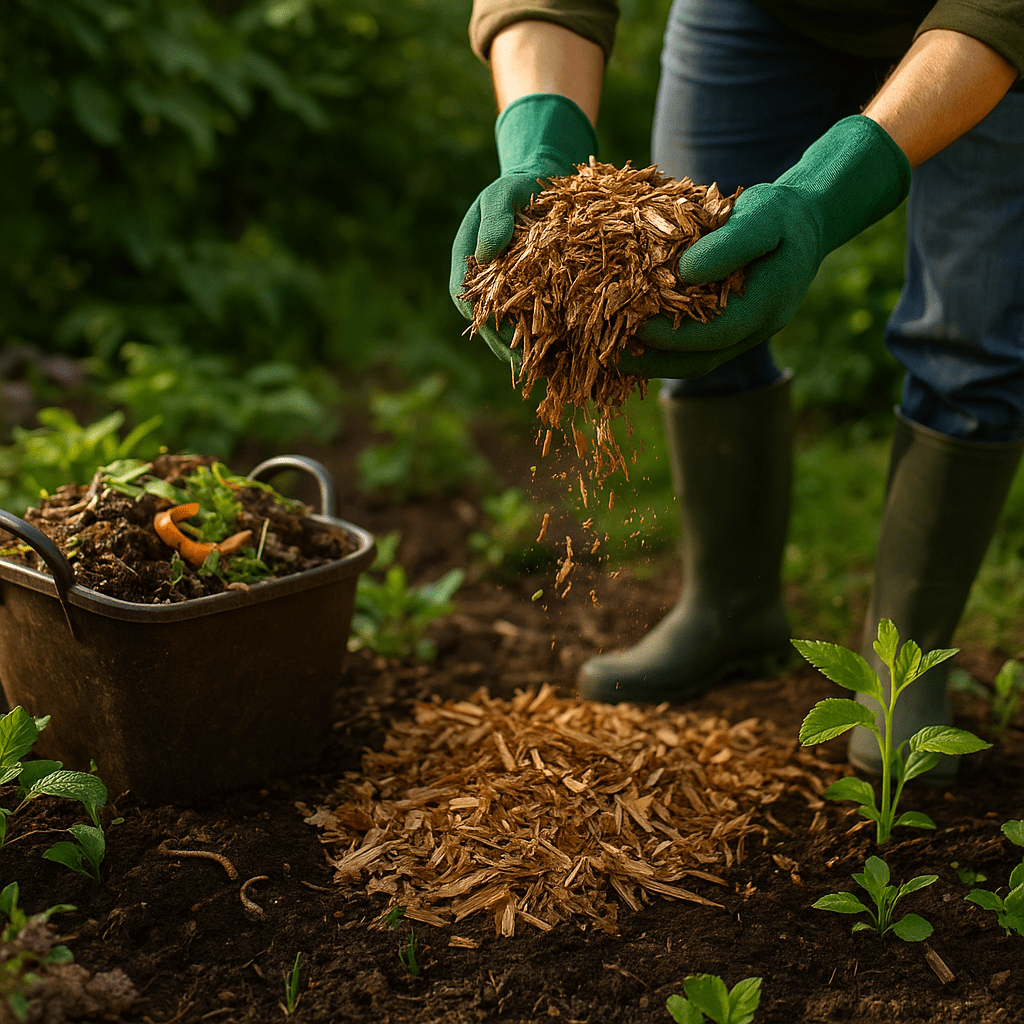
| In every thriving garden, life begins — and continues — in the soil. The secret to keeping that soil alive lies in two simple, natural practices: mulching and composting. Together, they build structure, restore nutrients, and create the conditions that sustain countless forms of life — from the tiniest soil microbes to the largest garden visitors. Mulching and composting aren’t just about neatness or waste management; they’re about participating in nature’s own recycling system. When we return organic matter to the soil, we help build a living ecosystem beneath our feet — one that feeds itself, balances itself, and supports the web of life above. Composting is one of the most powerful ways to give back to your garden. It transforms everyday organic waste into rich, dark humus — the lifeblood of healthy soil. In nature, nothing is wasted. Leaves, branches, and fallen fruit break down to feed new growth. A compost heap simply speeds up that natural cycle by gathering organic materials together, giving microorganisms warmth, air, and moisture to work their magic. A well-balanced compost system includes: Greens: Moist, nitrogen-rich materials such as grass clippings, fruit and vegetable peelings, and fresh weeds. Browns: Dry, carbon-rich matter like leaves, cardboard, straw, and twigs. The right balance keeps the compost heap warm and active. Over time, bacteria, fungi, worms, and insects decompose the material, leaving behind nutrient-rich compost that improves soil fertility, structure, and life. Using homemade compost reduces waste, limits reliance on chemical fertilisers, and creates a closed loop within your garden — what grows there, stays there. Mulching is the companion practice to composting. Where compost feeds the soil, mulch protects it. A layer of organic material spread over the surface of the ground acts as a natural shield — conserving moisture, suppressing weeds, and regulating temperature. But beyond these practical benefits, mulch creates an environment where life thrives. Beneath it, soil-dwelling creatures stay warm in winter and cool in summer. Fungi spread their mycelial networks through decomposing material, connecting plants and exchanging nutrients. Common types of organic mulch include: Composted bark or wood chips – long-lasting and visually tidy. Leaf mould – light, airy, and perfect for woodland borders. Straw or hay – great for vegetable beds and soft fruit. Grass clippings or shredded plants – quick to break down and ideal for feeding the soil. Each type slowly decomposes, enriching the soil beneath — a living blanket that both nourishes and shelters. Together, composting and mulching create conditions for biodiversity from the ground up. Microbes, beetles, worms, and fungi thrive in decomposing material, while amphibians and birds feed on these small creatures. The process supports a natural chain of life — one that reduces pests, stabilises soil, and strengthens plant health. Healthy soil doesn’t just grow better plants; it supports an entire miniature world. A handful of rich compost contains more living organisms than there are people on Earth — each playing a part in maintaining balance. By returning organic matter to the soil, you’re inviting that life back in. Over time, this living system becomes self-sustaining — resilient through droughts, floods, and changing seasons. Mulching and composting don’t just improve the soil — they reduce your garden’s environmental footprint. Composting diverts green waste from landfills, where it would otherwise release methane, a potent greenhouse gas. Mulching locks carbon into the soil and reduces the need for frequent watering. Even small-scale composting — a single bin or a simple heap — makes a difference. It’s a form of quiet environmental activism, turning kitchen scraps and garden waste into a renewable resource. These practices remind us that sustainability begins at home, in the soil beneath our boots. Start small but be consistent. Add compostable materials regularly to keep the heap active. Turn the compost Every few weeks to aerate it and speed up decomposition. Keep it moist, not soggy. A compost heap should feel like a damp sponge. Mulch in spring and autumn. Apply a 5–8 cm layer around plants, trees, and beds, keeping it clear of stems. Use what you have. Garden trimmings, leaves, and even shredded paper all play a role. A garden that’s regularly composted and mulched soon becomes self-sufficient. The soil becomes rich and spongy, the plants strong, and wildlife abundant. Birds scratch through mulch for insects, worms thrive in the compost, and the cycle continues. This approach transforms gardening from a series of tasks into a rhythm — a partnership with nature’s processes. Mulching and composting aren’t quick fixes; they’re quiet, ongoing acts of care that turn gardens into living ecosystems — places of renewal, balance, and beauty that endure from season to season. |
Mulching & Composting for a Living Ecosystem
 Earthly Comforts