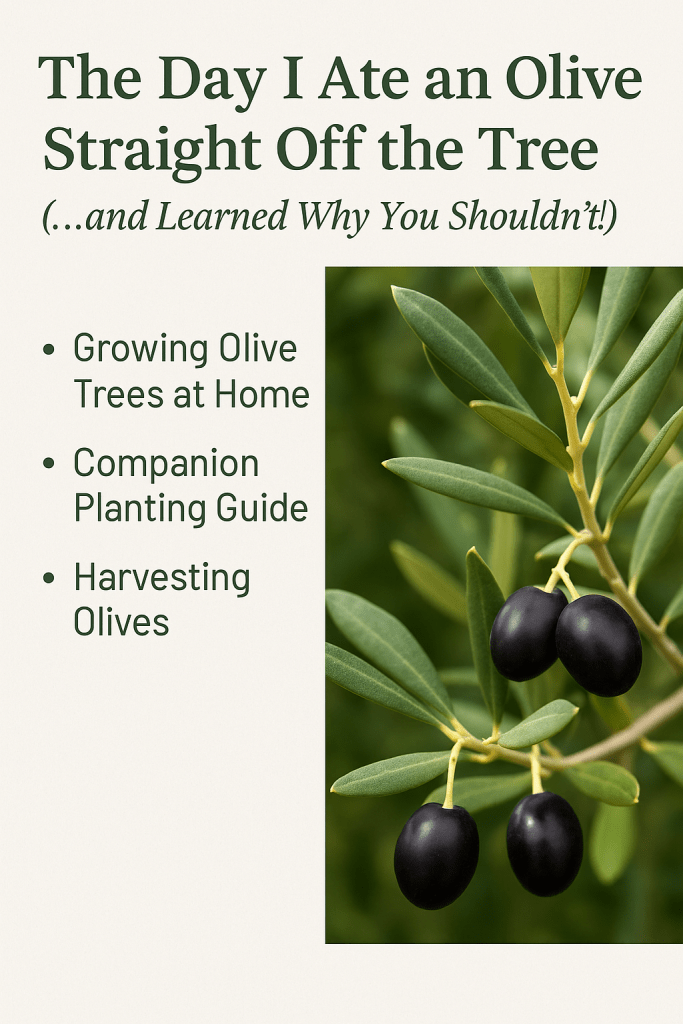
| The Day I Ate an Olive Straight Off the Tree (…and Learned Why You Shouldn’t!) Yesterday curiosity got the better of me in a client’s garden. Admiring an olive tree and the crop that needs harvesting, I picked a glossy olive and popped it into my mouth. Instant regret. Immediate, overwhelming bitterness. The kind of flavour that feels like the tree itself is scolding you. My client [JG] turned around just in time to see the expression on my face. She was mortified—not at the olive, but that I, a gardener, didn’t know better! With a wicked little smile she said: “If only I had a blog of my own, I wouldn’t be able to resist writing about this.” Fair enough. So, what can I say except: we know what we know, and every day we learn what we don’t. Gardening keeps us humble, and every plant has something to teach us—including olives. That unforgettable bite set me on a journey to learn about olives, starting with their surprisingly complex chemistry. |
| Why You Can’t Eat Olives Straight Off the Tree Raw olives contain extremely bitter compounds called oleuropein, a natural chemical found in the fruit and leaves, and phenolics, which are plant-based compounds that affect taste. These make fresh olives practically inedible. This bitterness is Nature’s way of saying: “Nice try, but not yet.” That delicious, salty, buttery olive flavour we know only develops after curing. Curing methods include: Brine fermentation Water curing Lye curing Dry salt curing Oil curing Every shop-bought olive has gone through one of these processes before reaching your plate. Now that we’ve explored the why and how of eating olives, what about growing your own—especially here in the UK? |
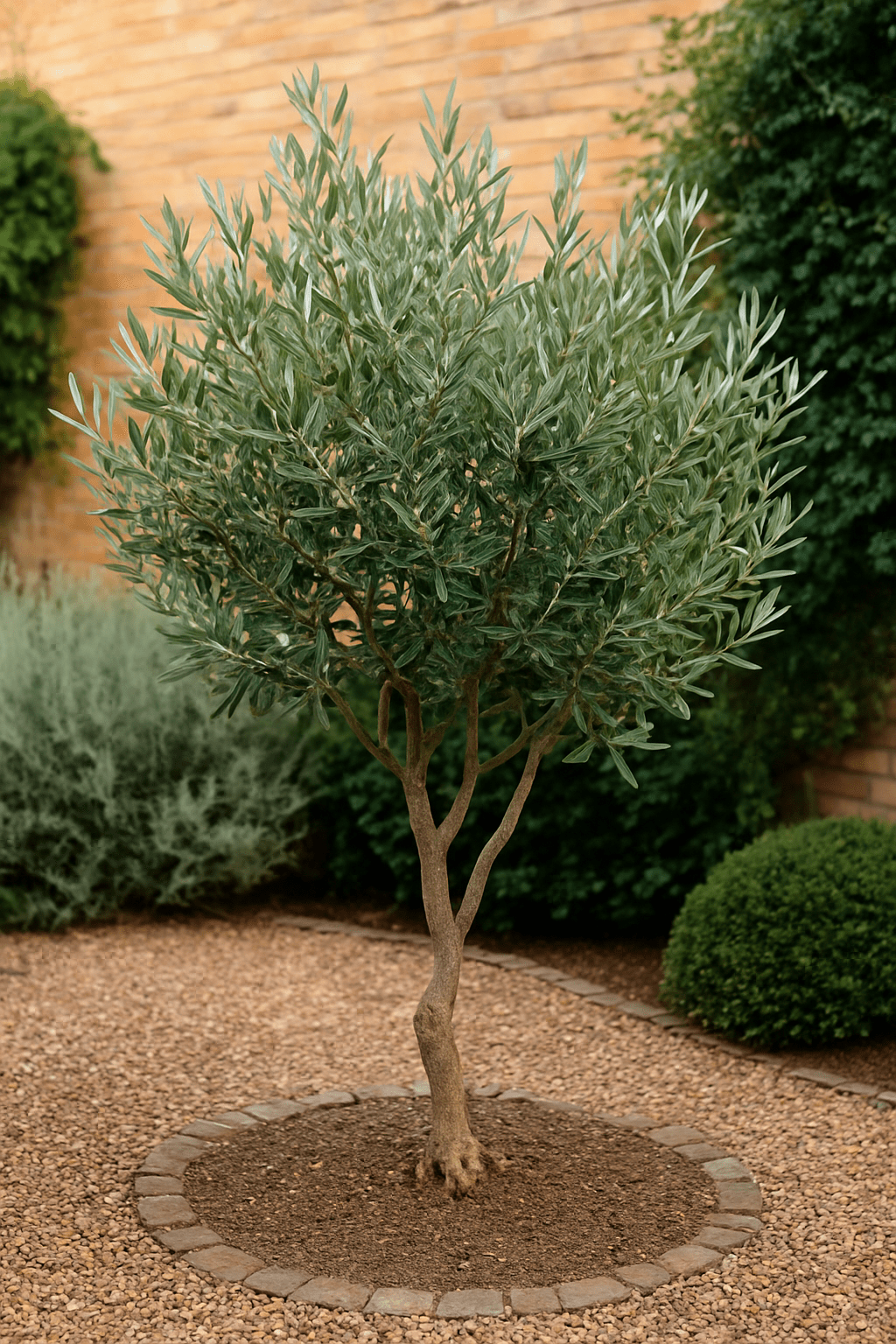
| Growing Olive Trees: A Proper UK Guide Despite my mishap, olive trees are fantastic plants to grow in UK gardens—especially in the South and coastal areas where winters are milder. Choosing the Right Variety Some of the best olive cultivars for the UK include: ‘Arbequina’ – compact, fragrant, ideal for pots ‘Picual’ – hardy and productive ‘Koroneiki’ – excellent cold tolerance ‘Frantoio’ – upright, elegant, great fruit quality Planting Position Olives thrive with: Full sun (6+ hours a day) Shelter from cold winds South-facing walls or courtyards Free-draining soil If you have heavier clay soil, consider: A raised bed Planting on a mound Growing olives in containers Growing Olives in Containers Olives are superb container plants. Ideal pot size: 40–50cm diameter to start, with excellent drainage holes. Potting mix: 40% multipurpose compost 40% grit/perlite 20% John Innes No. 3 Optional: a handful of lime for alkaline balance Repot every 2–3 years or refresh the top layer annually. Watering & Feeding Water deeply in the summer, allowing the soil to dry between waterings. Feed with a tomato or Mediterranean plant feed from April to August. Reduce feeding in autumn to help harden the tree for winter. Pruning Prune lightly in spring to: Open up the canopy Improve airflow Maintain a bowl-shaped structure. Olives fruit on last year’s wood, so avoid over-pruning. Overwintering In the UK: Mulch the base Protect pots with fleece or wrap. Move the container of olives into a sheltered spot. Avoid waterlogging in winter. Pests & Issues Olives are low-maintenance but may suffer from: Scale insects Woolly aphids Root rot (overwatering) Leaf drop from stress or cold Peacock spot in damp conditions Good drainage and airflow help prevent problems and set the stage for successful companion planting. Speaking of which, let’s look at some plants that make ideal partners for olives. |
| Companion Planting Guide: What Grows Well with Olives Olives pair beautifully with other sun-loving, drought-tolerant plants. Mediterranean Herbs Rosemary Thyme Sage Oregano Marjoram These thrive in the same hot, dry, free-draining conditions. Ornamental Plants Lavender Santolina Verbena bonariensis Agapanthus Echinops Architectural Plants Phormium Cordyline Yucca Hardy succulents (Sedum, Sempervivum) Grasses Stipa tenuissima Festuca glauca Pennisetum alopecuroides |
| Harvesting Olives: A Guide for UK Gardeners Once your tree begins fruiting, here’s how to harvest your olives properly—no taste-testing required this time! When to Harvest Green olives – September–October Black olives – October–December (sometimes later in mild areas) Green olives are simply unripe; black are fully ripe. How to Harvest 1. Hand-Picking Twist gently Best for small batches Least damage to fruit 2. Branch Raking Lay a cloth or tarp underneath. Use fingers or a small comb to rake the branches. Faster, great for larger trees How to Handle Harvested Olives Within 24 hours: Sort damaged fruit Rinse gently Begin curing (brine, salt, water, lye, or oil curing) You can refrigerate them for up to 3 days or keep them submerged in water for temporary storage. Expected Harvest in the UK Young trees: small handful Mature trees in warm summers: up to several kilos Even small harvests feel incredibly rewarding. |
| Final Thoughts Yes, I learned—right in front of a client—not to eat olives straight from the tree. That moment opened the door to learn more about these remarkable trees. Gardening is a journey of curiosity, humour, mistakes, and growth. We grow plants, and plants grow us. |
 Earthly Comforts
Interesting post, and a cute story to go with, whether fact or fiction. I didn’t know olives were so bitter before curing.
LikeLiked by 1 person
Hey Eugenia, bitter doesn’t even come close – if l didn’t know olives could be edible, l could have sworn l had just eaten something that would kill me, it was that fowl 😦 Ooops 🙂
LikeLiked by 1 person
🤢Yikes!
LikeLike