
| Autumn Mulching & Soil Conditioning Tips Preparing your garden for winter starts beneath your feet — in the soil. Autumn is the ideal time to focus on mulching and soil conditioning, helping your garden conserve moisture, regulate temperature, and build long-term fertility. With a little attention now, you’ll set the stage for healthier plants, fewer weeds, and stronger growth when spring returns. |
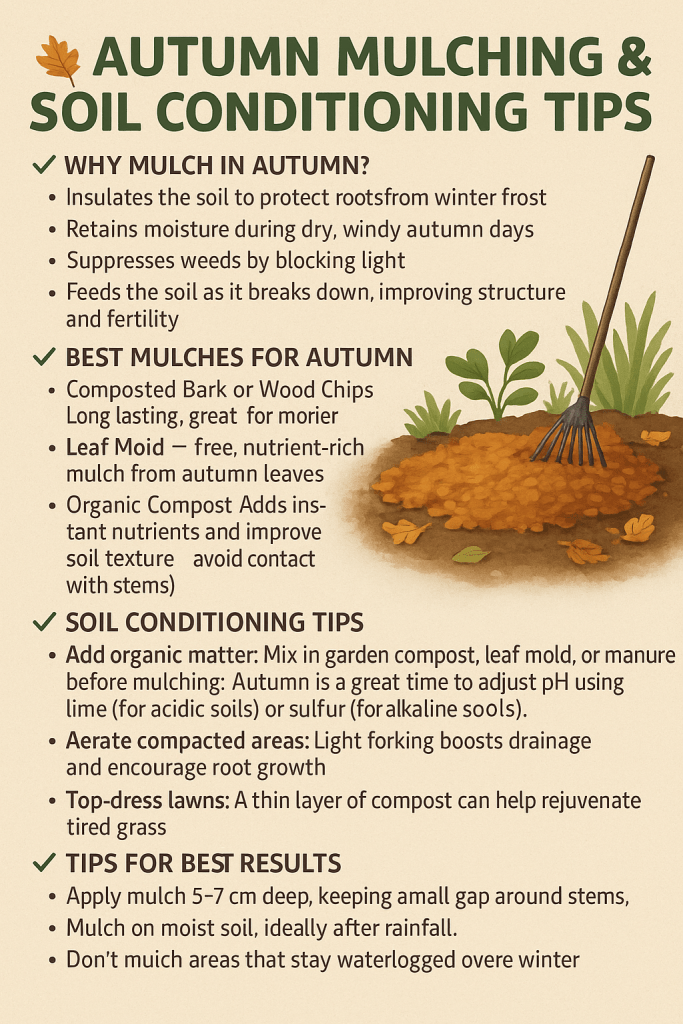
| Why Mulching in Autumn Matters Mulching isn’t just about making borders look tidy — it’s a powerful tool for creating a more resilient and wildlife-friendly garden. In autumn, mulch plays extra roles: Protects Roots From Frost A thick, even layer of organic mulch acts like an insulating blanket. As temperatures drop, it shields roots from sudden frost and temperature swings. Helps Retain Moisture Autumn winds can be surprisingly drying. Mulch helps slow evaporation, keeping moisture where your plants need it. Suppresses Overwintering Weeds By blocking sunlight, mulch helps prevent weed seeds from germinating, which reduces the need for work next year. Provides Habitat for Beneficial Wildlife Mulch encourages worms, fungi, and microorganisms — all key players in building healthy soil. The Best Mulches to Use in Autumn Choosing the right mulch depends on your soil type, the plants you have, and your goals. Organic mulches enrich soil as they decompose, making them excellent for autumn. Leaf Mold (Leaf Compost) Free and easy to make Boosts soil structure and water retention Perfect for woodland gardens, borders, and shady beds Composted Bark or Wood Chips Long-lasting and attractive Slower to break down, so ideal around established shrubs and trees Garden Compost Adds nutrients quickly Improves soil structure and microbial activity Good for vegetable beds, perennials, and fruit bushes Well-Rotted Manure Rich in nutrients and organic matter Best for vegetable plots, fruit trees, and very poor soils Must be well composted to avoid burning plant roots Straw or Mushroom Compost Great for allotments and soft fruit Holds moisture extremely well |
| Soil Conditioning: Preparing Ground for Next Year’s Growth Mulching is most effective when combined with thorough soil preparation. Autumn is the ideal time to strengthen your soil before winter sets in. 1. Add Organic Matter Dig in compost or leaf mold to a depth of 5–10cm. This boosts: soil structure fertility drainage earthworm activity Clay soils benefit especially, becoming lighter and easier to work. 2. Check and Adjust Soil pH Most garden plants thrive in neutral to slightly acidic soils (pH 6–7). Autumn is the best time to: Add garden lime to raise pH. Add sulphur to lower pH. Improve nutrient availability for next spring. 3. Aerate Compacted Soil Use a garden fork or an aeration tool to gently lift and loosen compacted areas. This allows: water to drain more freely roots to explore deeper oxygen to reach soil life Particularly important in high-traffic areas or heavy clay. 4. Top-Dress Lawns Spread a thin layer of compost or finely sieved soil to: stimulate root growth thicken thinning patches improve drainage A great companion to autumn lawn scarifying and aeration. 5. Add Mycorrhizal Fungi (Optional but Powerful) Sprinkling these beneficial fungi around trees, hedges, and perennials helps plants access nutrients more efficiently. |
| Where Mulching Makes the Biggest Difference Some areas benefit more than others when mulched in autumn: Around Perennials & Shrubs Keeps roots warm and encourages better spring growth. At the Base of Hedges Helps retain moisture through winter and reduces competition from weeds. Vegetable Beds Post-Harvest Mulch protects bare soil, prevents nutrient leaching, and prepares it for next year’s planting. Around Fruit Trees & Bushes Mulching helps control weeds and maintains consistent moisture for the development of healthy roots. New Autumn Plantings Fresh trees, hedges, and container-grown plants benefit from a stabilising soil environment. |
| Mulching Best Practice To get the most from your autumn mulch: Apply a layer 5–7cm deep for a meaningful result. Keep mulch away from direct contact with stems to prevent rot. Mulch after rain or watering to lock in moisture Avoid mulching waterlogged beds, where moisture can cause rot. Ensure mulch is well-composted; fresh chips can steal nitrogen from the soil as they break down. Eco Tip: Make Your Own Leaf Mold Collect fallen leaves Place in bags with holes or a simple wire cage Moisten if dry Forget about it for 6–12 months. It turns into a beautifully crumbly, nutrient-rich soil improver — a true gardener’s gold. Final Thoughts Autumn mulching and soil conditioning are quiet, steady tasks that pay off all year. By giving your soil a little care now, you’re protecting your plants through winter, encouraging healthier spring growth, and creating a more sustainable, eco-friendly garden. |
 Earthly Comforts