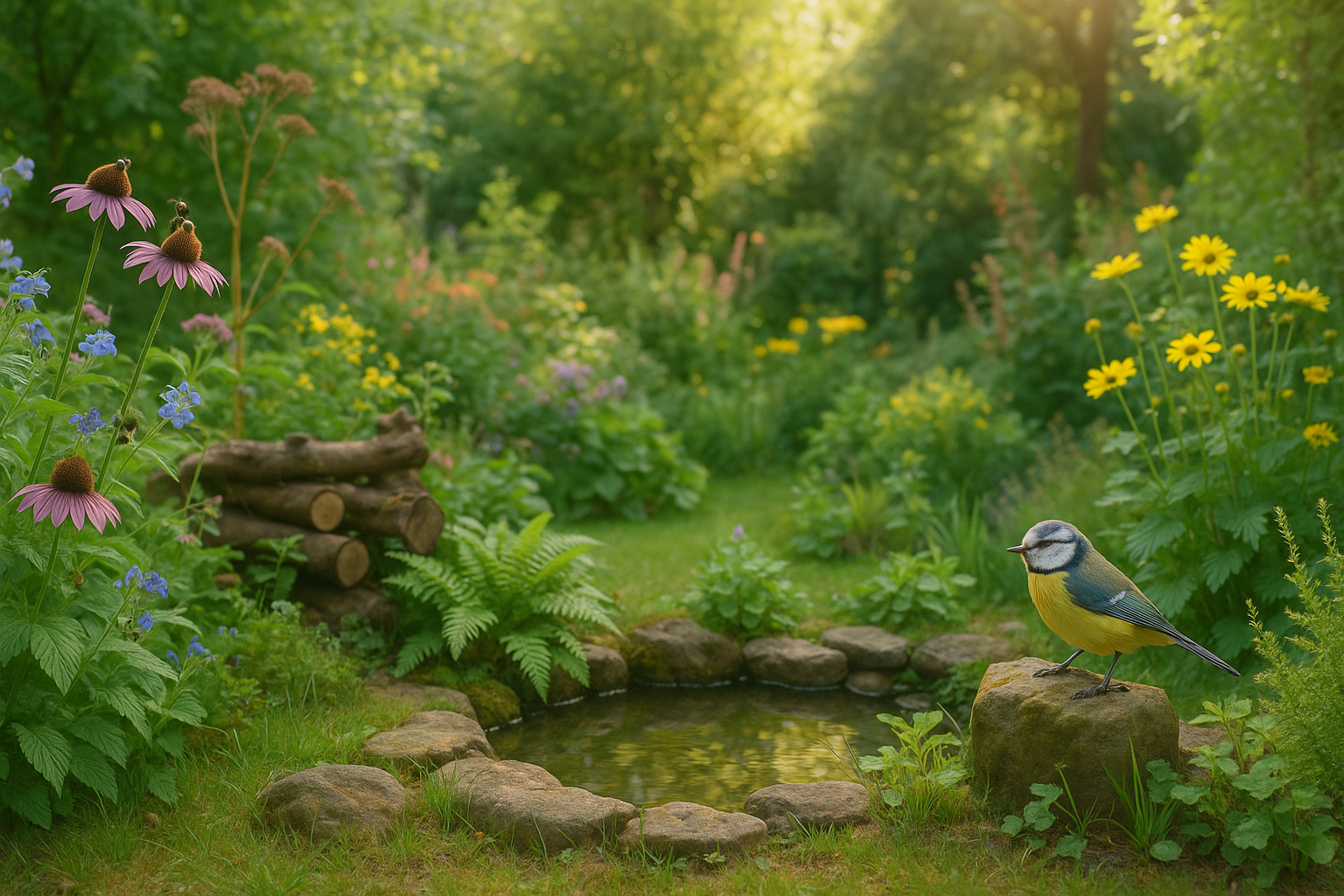
| A wildlife-friendly garden is more than a collection of plants — it’s a living ecosystem, humming with connection and purpose. When you garden with wildlife in mind, every leaf, flower, and log becomes part of a wider web of life. Bees pollinate fruit trees, birds control insects, frogs eat slugs, and worms enrich the soil. This gentle partnership between people and nature benefits the creatures that share our gardens — it benefits us, too. It creates balance, beauty, and resilience while restoring a little of what the wider landscape has lost. When your garden supports wildlife, it becomes stronger and more self-sustaining. Pollinators like bees, butterflies, and hoverflies keep plants reproducing. Birds and hedgehogs reduce pests without the need for chemicals. Frogs, toads, and beetles eat slugs, while predatory insects such as ladybirds and lacewings keep aphids in check. The result is a garden that looks after itself — one that thrives through diversity instead of depending on sprays and fertilisers. Every creature plays its part, keeping the system in balance. Wildlife-friendly gardening begins with healthy soil, which comes alive when left to its own rhythms. Worms, fungi, and microbes break down organic matter, releasing nutrients and improving structure. Leaving leaf litter, mulching, and composting all feed this underground world, supporting everything above. Even small steps — like avoiding chemicals or letting part of the garden go wild — help keep the soil vibrant and fertile. Healthy soil means more vigorous plants, and stronger plants mean more wildlife. It’s a cycle that sustains itself. Pollinators are essential to life. Many fruits, vegetables, and flowers depend on them, yet their numbers have declined sharply. Gardens can make a real difference. Planting nectar-rich flowers like lavender, foxglove, marjoram, and wild thyme ensures bees and butterflies have food from spring through autumn. Avoiding pesticides keeps them safe, and providing shallow water dishes or damp patches helps them drink and cool off. Even a window box or small border can become a lifeline for pollinators in urban areas. Wildlife gardening encourages visitors of every kind. Birds find seeds, berries, and insects among your plants. Hedgehogs roam safely through connected gardens, finding shelter in log piles and leaf heaps. Frogs and toads keep insect numbers balanced in ponds or damp corners. By offering water, safe hiding places, and corridors to move through, your garden becomes part of a living network — a small but vital patch in the larger landscape. The joy of spotting a wren darting through ivy or a hedgehog rustling in the dusk reminds us that even modest gardens can hold real magic. Wildlife-friendly gardening also supports the environment on a larger scale. Healthy soil stores carbon, and dense planting and trees absorb carbon dioxide, reducing air pollution and moderating temperatures. Choosing peat-free compost, reusing green waste, and encouraging biodiversity contribute to local resilience in the face of climate change. Every small act — planting a hedge, composting kitchen scraps, or letting wildflowers grow — adds up to a collective good. Caring for wildlife changes how we experience our gardens. It becomes less about control and more about companionship. Watching life return — bees on blossoms, frogs at dusk, birds bathing in shallow water — brings a quiet satisfaction that few things can match. Studies show that connection with nature reduces stress and improves well-being. But even without the science, most gardeners know the feeling — the calm that comes from tending something that lives and breathes alongside you. A wildlife garden nurtures the gardener as much as the wildlife itself. Wildlife-friendly gardens aren’t messy — they’re alive. A patch of long grass dotted with daisies, a border buzzing with bees, and a corner shaded by ferns and logs add character and texture. Nature effortlessly creates beauty when we give it space. The hum of insects, the flutter of wings, and the sound of birdsong on a summer morning are the truest measures of a garden’s success. The most significant benefit of wildlife gardening is the sense of giving back. It’s a simple way to restore balance, to heal small parts of the world close to home. Each wildflower sown, each hedgehog shelter placed, each chemical left on the shelf helps shape a kinder, more sustainable future. When gardens connect, they form green corridors allowing wildlife to move, feed, and flourish. Our gardens can be more than private spaces — they can be places of recovery, renewal, and hope. |
The Benefits of Wildlife-Friendly Gardening
 Earthly Comforts