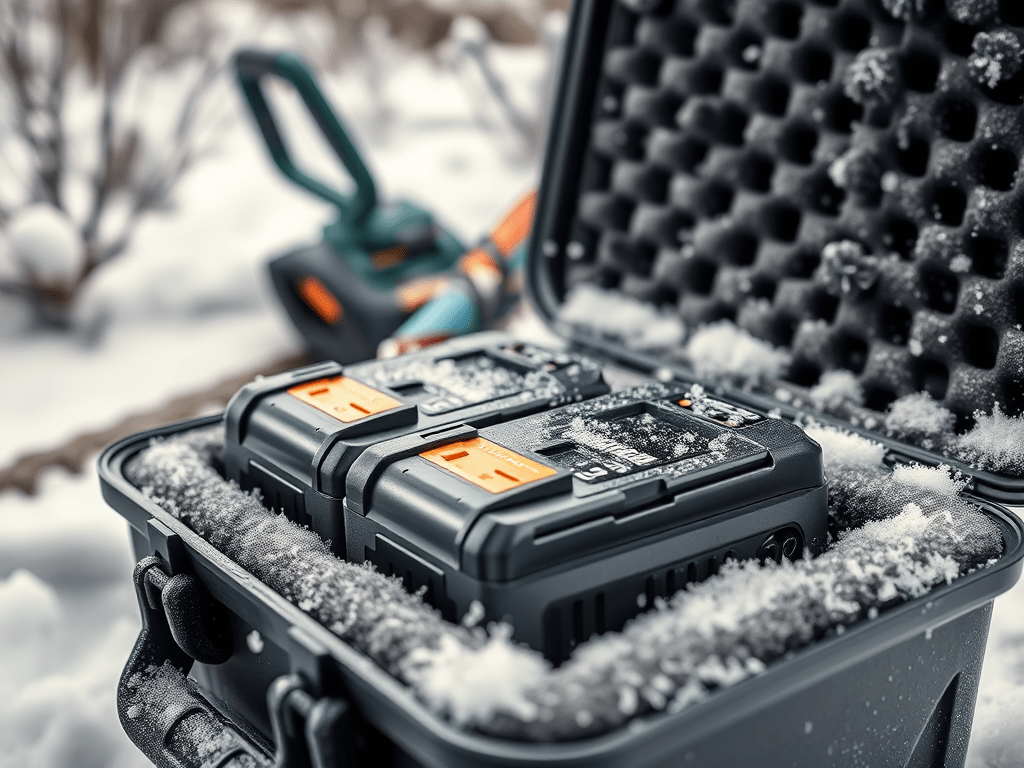
| How Cold Weather Snaps Affect Gardeners Who Use Battery-Operated Power Tools Unexpected cold snaps can catch even experienced gardeners off guard, especially those relying on battery-powered tools. Sometimes, lessons come the hard way. Earlier this week, a sudden temperature drop led to a surprising discovery. The other day, our milder weather suddenly changed. A snap of colder air drifted through, and, whilst I was still able to work, something happened that I’m now very grateful I caught in the moment. All of my power-tool batteries—despite being stored neatly in boxes in the garage—had been drained by the cold! Eeek! For a short, heart-stopping moment, I panicked. I only use battery-powered tools, and I own around forty lithium-ion batteries… or, in other words, roughly £1,500 worth of kit that could have turned into a nightmare. Luckily, I caught the issue as the cold snap arrived; I don’t think there’s lasting damage -well, l hope l have caught it entirely. The experience taught me a valuable lesson. I took on the garage in December 2024, but only moved equipment in February 2025, and the batteries at the end of March. I hadn’t realised an uninsulated garage could cause this. Every battery needed recharging, and now they’re back inside the house at room temperature for the winter season. But also l have just bought two insulated power battery cases for tool power for myself and my other gardener. This means that we can always keep the batteries warmed when outside working and the tools aren’t in use. |
| Why Batteries Don’t Like the Cold Modern garden tools use lithium-ion batteries—lightweight, powerful, quieter, and more eco-friendly than petrol ones. But they’re temperature-sensitive. When the mercury drops (i.e., when temperatures fall), the chemical reactions inside these batteries slow down. This leads to: Reduced capacity Shorter run times Sluggish or inconsistent performance Longer charging times A battery that works perfectly well on a mild morning can suddenly behave like it’s half its normal strength during a cold snap. |
| How Cold Weather Affects Gardeners in Real Life 1. Shorter Running Times Cold batteries drain quickly, needing more recharging or swaps. 2. Reduced Power When Cutting or Strimming Cold cells can’t deliver the same power output, so tools may struggle with: Hedge cutting Pruning tougher stems Strimming dense patches Blowing wet or heavy leaves 3. Slow or Blocked Charging Many lithium batteries refuse to charge (won’t start recharging) until they’ve warmed up. A battery left in a freezing shed or garage may not charge in the morning. |
| How to Protect Your Batteries in Winter The good news: a few habits keep your tools running all winter. 1. Store Batteries Indoors A stable, room-temperature environment (10–20°C, or 50–68°F) is ideal. 2. Warm Batteries Before Use Let them gently reach indoor temperature naturally—never on a heater. 3. Keep Spare Batteries Warm Many gardeners keep a spare battery in a coat pocket. A warm battery works better. 4. Avoid Cold Charging Charging below 5°C (41°F) can damage cells. Make sure batteries have warmed up first. 5. Don’t Leave Tools in Freezing Buildings Uninsulated garages, sheds, or vans can get colder than expected. |
| With these strategies in mind, you may wonder whether battery tools are still practical during winter. Absolutely. Despite their quirks in cold weather, battery-operated tools remain: Cleaner Quieter Lighter Wildlife-friendly Less disruptive for neighbours Far more pleasant to use As technology improves, winter performance will continue to improve. |
| Final Thought Cold snaps pass, but the lesson lasts: batteries need as much winter care as gardens. I now know this and will be better prepared for the coming seasons. |
 Earthly Comforts
Thank you for sharing your knowledge, Rory. Car batteries don’t like freezing temps either. We learned that the hard way when the temps went down to 9F.
LikeLiked by 1 person
Hey Eugenia, yes l have heard about car batteries also [albeit when researching for my own tool issue, l never thought the cold would affect batteries so]. Lesson learned 🙂
LikeLiked by 1 person