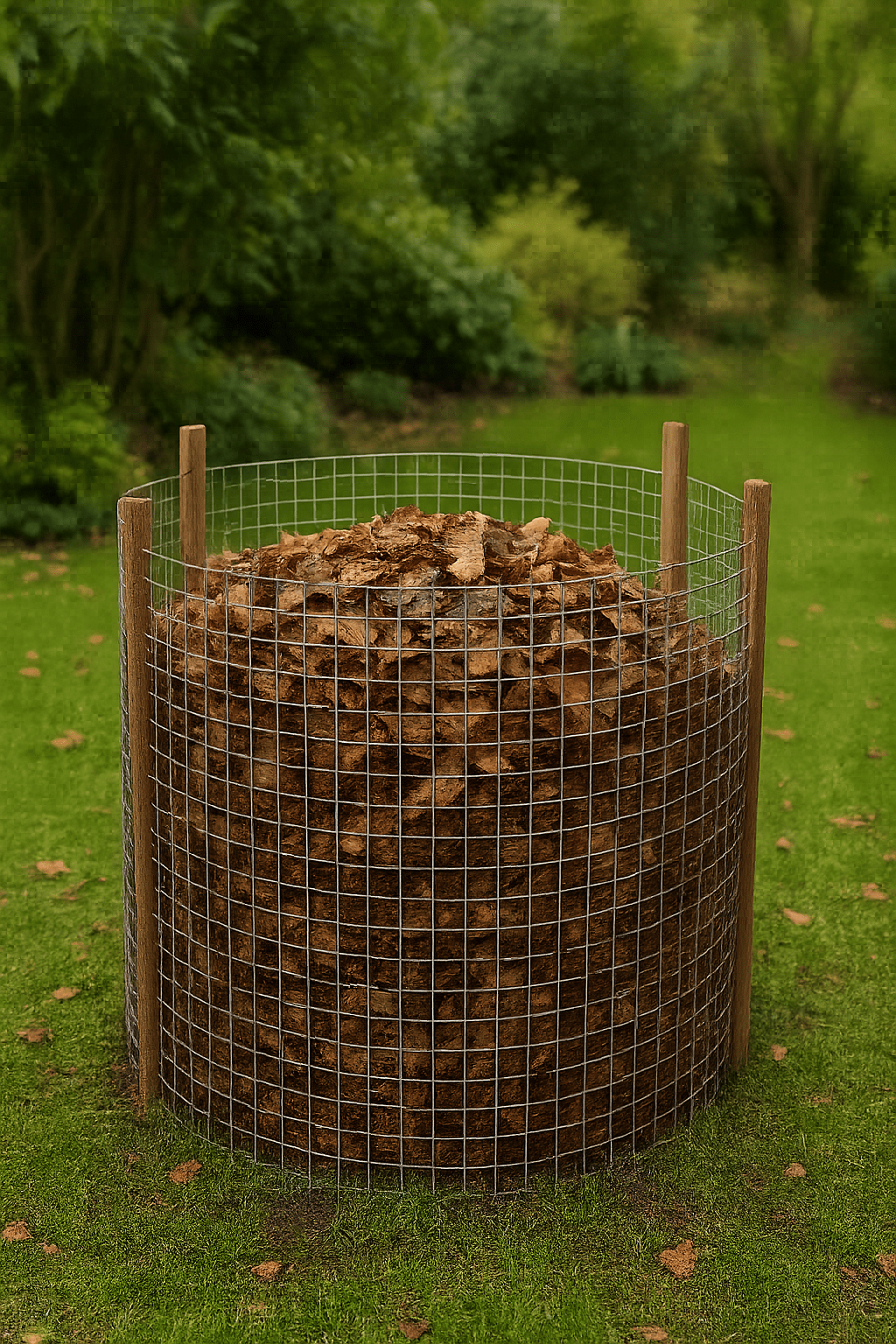
| Why Every Garden Needs a Leaf Kraal As autumn sweeps through Kent, lawns, streets, and borders begin to fill with crisp, colourful leaves, many gardeners see nothing but mess. But in truth, those fallen leaves are one of the most valuable—and often overlooked—resources your garden will ever receive. With a simple wire-caged leaf kraal, you can turn this seasonal abundance into rich, crumbly leaf mould: a free, eco-friendly soil conditioner that dramatically improves plant health, structure, and resilience. At Earthly Comforts, we encourage as many clients as we can to create a leaf kraal—especially if you want a greener, healthier, wildlife-friendly garden with minimal effort. |
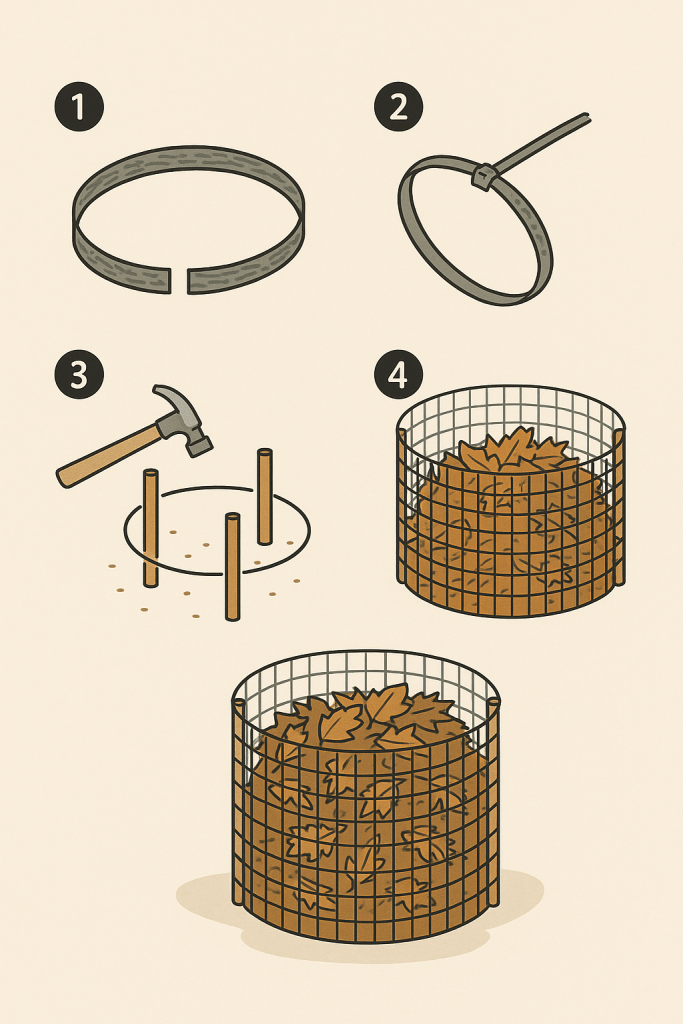
| What Is a Leaf Kraal? A leaf kraal is a simple wire mesh container designed to collect and store leaves as they naturally break down. Think of it as a lightweight compost bin specifically for leaf mould. It requires no turning, no heat, no additives—leaves, moisture, and time. It’s one of the easiest garden structures to build, usually in less than 10 minutes. How to Make One (Quick Overview) You only need: A length of galvanised wire mesh 3–5 stakes A few cable ties or garden wire Form the mesh into a ring, secure it, add support stakes, and start filling it with leaves as they fall. That’s it. What Is Leaf Mould? Leaf mould is decomposed leaves, broken down by fungi into a soft, dark, earthy material similar to woodland soil. It’s not technically compost (which relies on nitrogen-rich materials and microbial heat), but it’s every bit as applicable—sometimes more so. Leaf mould improves moisture retention, structure, drainage, biodiversity, and root health across your entire garden. |
| The Benefits of Leaf Mould 1. Incredible Moisture Retention Leaf mould can hold up to 500% of its weight in water. This means: Less watering in summer Healthier, more resilient plants Excellent support during heatwaves and drought spells For sandy soils and coastal gardens around Sandwich, this benefit alone is transformative. 2. Boosts Soil Structure Adding leaf mould: Lightens heavy clay Improves drainage Helps sandy soil hold nutrients Creates a crumbly, workable texture Your borders, beds, and vegetable patches will thank you. 3. Wildlife Friendly Leaf kraals support natural fungi and small beneficial invertebrates. Hedgehogs, frogs and beetles may also shelter in the leaf pile—actual “wild gardening”. And because leaf mould breaks down slowly and gently, it’s fully aligned with Earthly Comforts’ low-noise, eco-friendly ethos. 4. Free, Sustainable & Zero Waste Instead of paying for waste bags or green bin collection, you’re recycling a material your garden already produces. A leaf kraal: Reduces waste Lowers your carbon footprint Costs almost nothing to make Produces an entirely free soil conditioner This is sustainability at its simplest. 5. Plants Absolutely Love It Leaf mould can be used for: Mulching around shrubs, roses, and perennials Improving soil before planting Seed-sowing mixes (sieved) Moisture-retentive topdressing Boosting woodland plants such as ferns, hostas, hellebores, and hydrangeas If your garden has shade, leaf mould is invaluable. How Long Does Leaf Mould Take? Usually: 6–12 months for partially broken-down mould (ideal as mulch) 12–24 months for fine, crumbly, seed-sowing grade material Leaf type matters: oak, beech, and chestnut break down slowly; lime, alder, and ash break down quickly. Your leaf kraal can be topped up throughout the winter as the volume settles. |
| Final Thoughts: A Small Effort, a Big Reward Building a leaf kraal is one of the most straightforward and most rewarding garden projects you can undertake. With only a few minutes of effort, you create a low-maintenance system that turns autumn’s leaf fall into some of the finest organic material your garden will ever receive. |
 Earthly Comforts