

| Carpenter Bees Rare but Remarkable Pollinators in UK Gardens Carpenter bees — members of the Xylocopa genus — are often mistaken for pests, but these striking insects are actually powerful pollinators and essential contributors to wildlife-friendly gardens. Although they resemble bumblebees, carpenter bees can be identified by their shiny, hairless black abdomens and the characteristic way they hover and inspect flowers (and gardeners!). |
| Do Carpenter Bees Live in the UK? While carpenter bees are common across mainland Europe, they are still infrequent visitors and occasional breeders in the UK. The most notable species is the Violet Carpenter Bee (Xylocopa violacea), a large, glossy black bee with a beautiful violet-blue sheen on its wings. |
| UK Records First recorded breeding in England in 2007. Observations have occurred in southern England, including Kent, where warmer microclimates may support occasional colonies. They are considered vagrants or sporadic colonisers, not yet fully established residents. Because of their rarity, spotting one in a UK garden is a notable wildlife event and worth recording. |
| Why Carpenter Bees Matter Despite being uncommon here, carpenter bees are excellent pollinators. They use a technique called buzz pollination, vibrating flowers so that tightly held pollen is released — beneficial for plants like tomatoes, peppers, and certain wildflowers. If they visit your garden, they contribute to bigger, healthier blooms and increased biodiversity. Do They Cause Damage? Carpenter bees tunnel into untreated, soft, or decaying wood to lay their eggs. In gardens, the impact is typically minimal and rarely causes structural problems. They prefer old, weathered wood rather than sound timber. Providing alternative habitats — such as deadwood piles, old logs, bee blocks, or dedicated wildlife corners — helps keep them away from sheds or garden structures. Encouraging Wildlife Without Attracting Problems Even though carpenter bees are rare in the UK, the same gardening practices that support them also benefit dozens of more common native pollinators. |
| Garden Tips: Leave a small area of natural wood or a deadwood pile in a quiet corner. Grow nectar-rich plants such as lavender, rosemary, foxglove, salvia, and open-faced wildflowers. Avoid pesticides, especially during peak pollinator activity. Embrace a more wildlife-friendly, less rigid garden style — perfect for the Earthly Comforts philosophy. |
| Gentle Garden Companions Despite their size and impressive appearance, carpenter bees are generally non-aggressive and rarely sting. They spend their time pollinating, nesting, and boosting the health of your garden. So, suppose you ever spot a large, glossy black bee with violet wings investigating a piece of old wood in your Kent garden. In that case, you may be witnessing something special — a rare glimpse of the magnificent Xylocopa. |
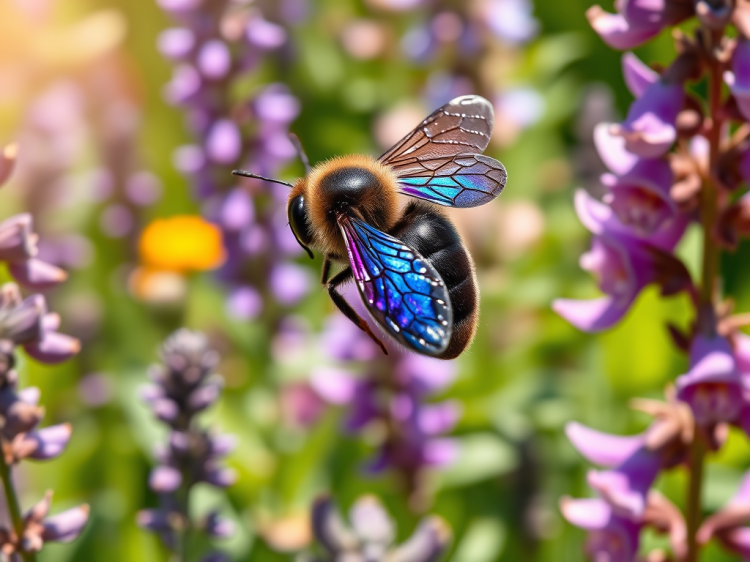
| AI Generated Carpenter Bee |
 Earthly Comforts
Bees, and other insects have their role in nature. Thank you for sharing this information, Rory.
LikeLiked by 1 person
Thanks for commenting eugenia, they [insect world] is absolutely critical to our overall survival.
LikeLiked by 1 person
My pleasure, Rory.
LikeLiked by 1 person