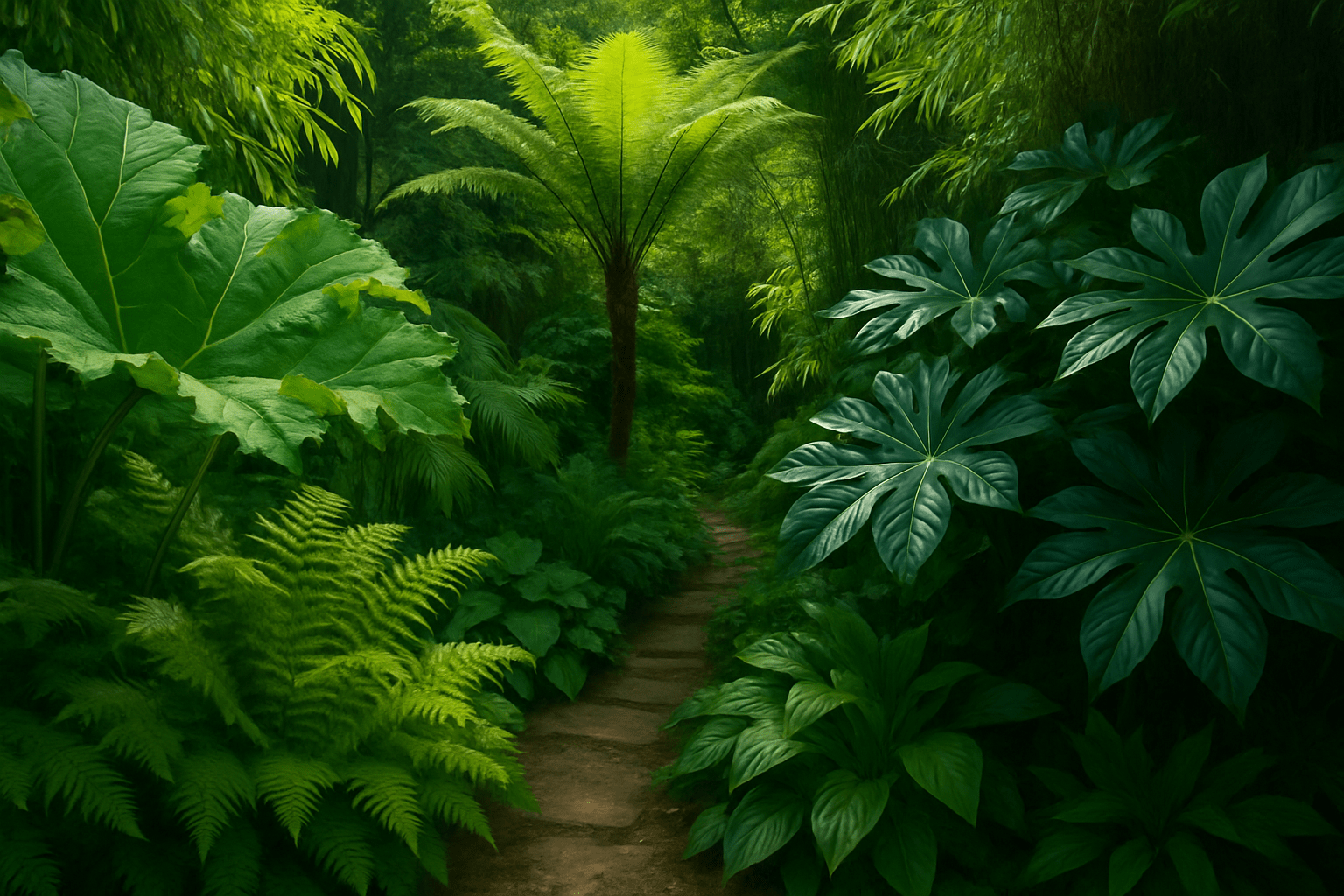
| Jungle-Style Gardens – Bold Leaves and Wild Textures Jungle-style gardens are unapologetically lush, immersive, and dramatic. Inspired by tropical rainforests but perfectly adaptable to UK conditions, this garden style celebrates oversized leaves, layered planting, and rich textures that make a space feel alive. Whether you’re working with a compact town garden or a larger plot, jungle planting is less about neatness and more about abundance, atmosphere, and sensory impact. This trend has surged in popularity as gardeners move away from formal layouts and embrace nature-led design. A jungle garden doesn’t just look wild—it feels wild, offering shelter, shade, wildlife value, and a sense of escape right outside your door. |
| What Defines a Jungle-Style Garden? At its heart, a jungle garden is built on foliage rather than flowers. Colour still matters, but it comes from leaf shape, size, and contrast rather than blooms alone. Key characteristics include: Large, architectural leaves that immediately catch the eye Dense, layered planting with ground cover, mid-storey, and canopy plants Strong contrasts between glossy and matte, fine and bold textures A feeling of enclosure, often created by tall plants and overlapping forms. Unlike traditional borders, which showcase individual plants, jungle planting blurs boundaries. Plants weave together, creating a continuous green tapestry. |
| Bold Leaves: The Backbone of the Look Large foliage plants are the stars of any jungle garden. Their exaggerated shapes bring instant drama and structure. Popular jungle-style foliage plants for UK gardens include: Tetrapanax papyrifer – enormous leaves and fast growth Fatsia japonica – glossy, evergreen, and shade-tolerant Rodgersia – bold, pleated leaves for damp or semi-shade areas Gunnera manicata – iconic giant leaves for large, moist gardens Tree ferns (Dicksonia antarctica) – a true jungle classic These plants act as visual anchors, giving the garden its exotic feel even without flowers. |
| Wild Textures and Layering Texture is where jungle gardens really come alive. Think less about colour palettes and more about how plants feel visually. To build texture: Pair huge leaves with fine, feathery foliage (ferns, grasses, bamboo) Mix upright forms with arching and cascading plants. Allow plants to overlap rather than spacing them too neatly. Layering is essential. Low growers, such as hostas, epimediums, and hardy gingers, form the base. Mid-height shrubs and perennials fill the space, while taller plants and climbers create a canopy effect. This approach also helps suppress weeds and retain soil moisture—practical benefits hidden within the wildness. |
| Shade Is Your Ally Many people assume jungle gardens need full sun, but in reality, dappled shade is ideal. Woodland edges, north-facing gardens, and courtyards are perfect candidates. Shade-loving plants often have the largest, boldest leaves—exactly what this style thrives on. Moist, humus-rich soil will keep foliage lush and prevent that stressed, droopy look during summer heat. Adding organic mulch not only feeds the soil but enhances the “forest floor” aesthetic. |
| Hard Landscaping: Keep It Subtle In a jungle-style garden, hard landscaping should support the planting rather than dominate it. Good choices include: Natural stone or reclaimed paving Timber sleepers or boardwalk-style paths Gravel paths that disappear under planting edges Curved paths and partially hidden seating areas add to the sense of discovery. A simple bench tucked among foliage feels far more magical than a formal patio set-up. |
| Wildlife and Wellbeing Benefits Jungle gardens aren’t just visually striking—they’re havens for wildlife. Dense planting provides shelter for birds, insects, and small mammals, while layered habitats support biodiversity year-round. From a human perspective, these gardens feel calming and immersive. The abundance of green, rustling leaves, and filtered light creates a restorative environment that encourages slowing down and reconnecting with nature. |
| Bringing the Jungle Look to Small Gardens You don’t need acres of land to go to the jungle. In smaller spaces: Focus on fewer, larger plants rather than many small ones. Use containers with architectural foliage. Let climbers and tall plants draw the eye upward. A single-statement plant, combined with layered underplanting, can completely transform a compact courtyard or town garden. |
| Embrace the Wild A jungle-style garden is about letting go of perfection. Leaves may tear, plants may self-seed, and things will grow where they please—and that’s part of the charm. With bold foliage, rich textures, and thoughtful layering, you can create a garden that feels adventurous, comforting, and wonderfully alive. |
 Earthly Comforts