| Recently, a client asked whether composting could work indoors in a fully closed environment. My answer was honest and practical: yes, it can be done — but that doesn’t mean it’s the best option. While many stages of compost preparation can happen indoors — such as sorting materials, shredding, storing carbon sources, or managing tools — hot composting itself performs best outdoors, where it can interact with natural climate conditions. Exposure to rain, airflow, temperature changes, and local microbial life dramatically improve the composting process, efficiency, and final quality. This article explains why composting works best outside, and why open-air systems consistently outperform fully enclosed ones. |
| Why Composting Works Best Outdoors (and Not Indoors) Composting is one of the most natural processes on Earth. Long before bins, bays, or turning schedules existed, organic matter broke down in open fields, forests, and hedgerows—powered by rain, air, microbes, and time. Yet modern thinking sometimes seeks to move composting indoors: under roofs, in sheds, or in fully enclosed structures. While this can seem tidy or controlled, it often works against the biology that makes compost thrive in the first place. If your goal is healthy soil, efficient decomposition, and a resilient system with minimal inputs, composting belongs outside, in the open. Let’s explore why. |
| Compost Is a Living Process — and Nature Does the Hard Work At its core, composting is a biological collaboration between moisture, oxygen, microbes, and organic material. The more we align with natural conditions, the less effort, cost, and intervention the system needs. Outdoor composting allows nature to supply three critical ingredients continuously: Water Air Microbial life Indoors, all three must be engineered. |
| Natural Rainfall Provides Ideal Moisture Levels Healthy compost needs consistent moisture—generally around 50–60%. Too dry, and the microbes slow down. Too wet and oxygen is displaced, leading to smells and anaerobic conditions. Outdoors, rainfall does much of this work for free. Light rain keeps piles evenly damp. Heavy rain is absorbed and filtered through the soil bases. Dry spells are naturally followed by rehydration. This creates a self-balancing moisture cycle that’s hard to replicate indoors without regular monitoring, hoses, and guesswork. An outdoor system reduces labour while maintaining ideal conditions far more reliably. |
| Sun, Shade, and Airflow Drive Heat and Oxygen Balance Good composting relies on a dynamic environment: Heat builds during active decomposition. Steam is released during the hot phase. Fresh air is drawn in as temperatures fluctuate. Open-air systems benefit from daily and seasonal temperature changes, gentle wind movement, and natural evaporation. These fluctuations are not problems — they are features. They help regulate: Oxygen levels Moisture balance Microbial succession Fully roofed or enclosed systems flatten these cycles, often requiring mechanical ventilation or manual turning to compensate. Nature already does this beautifully outdoors. |
| Soil-Based Systems Manage Leachate Naturally One of the biggest challenges of indoor composting is managing liquid runoff (leachate). In outdoor systems with soil bases: Excess moisture drains safely into the ground Nutrients are filtered and absorbed. Worms and soil organisms migrate freely. This creates a living interface between compost and soil — exactly where compost is meant to end up. Indoors, leachate must be captured, piped, stored, or treated. What happens naturally in soil becomes a technical problem requiring infrastructure, compliance, and maintenance. |
| Outdoor Compost Has Far Greater Microbial Diversity The richness of compost depends on the diversity of life within it. Open-air compost attracts: Local bacteria adapted to your climate Beneficial fungi and actinomycetes Worms, beetles, springtails, and other decomposers These organisms arrive naturally — carried by wind, rain, insects, and soil contact. This biodiversity improves: Decomposition speed Nutrient complexity Long-term soil health Roofed or enclosed systems limit environmental inputs, often reducing the biological complexity that makes compost truly valuable. |
| Smell, Steam, and Heat Disperse Safely Outdoors Active compost generates: Carbon dioxide Water vapour (steam) Heat Outdoors, these by-products dissipate harmlessly. Indoors, they must be actively managed with ventilation systems to prevent condensation, odours, or heat buildup. This adds cost, energy use, and risk — especially in community or small-scale operations. Well-managed outdoor compost should smell earthy, not unpleasant — and any brief odours disperse naturally. |
| Outdoor Composting Avoids Unnecessary Costs and Regulations Once composting moves under permanent structures, it can trigger additional requirements such as: Planning permission Fire safety assessments Drainage compliance Structural inspections Ongoing insurance implications For small-scale, community, or regenerative projects, these hurdles can stall progress and drain resources. Open-air systems are simpler, cheaper, and easier to adapt as needs evolve. |
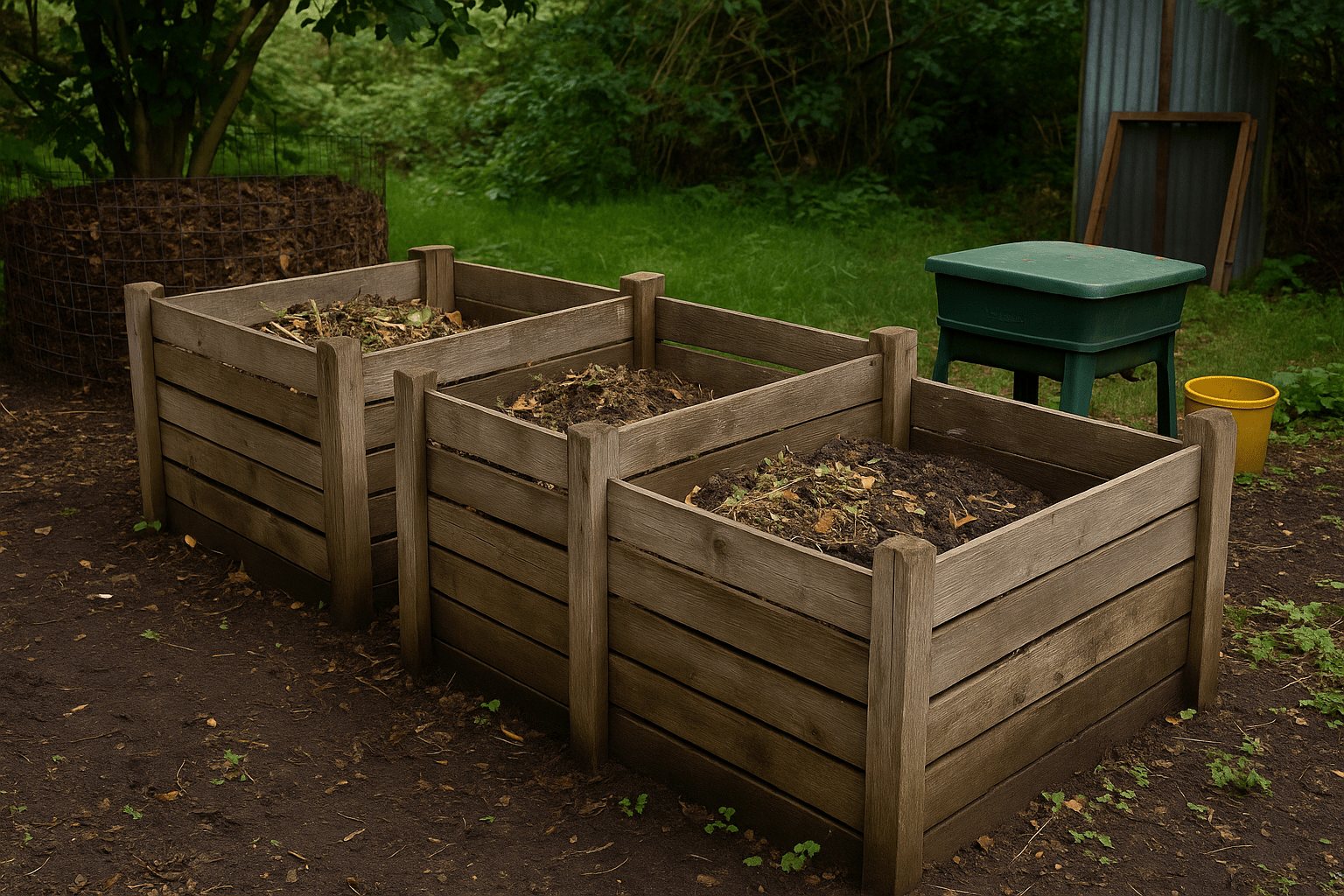
| So What Is the Ideal Setup? The most effective composting systems strike a balance — open where biology matters, sheltered where equipment matters. The Best Practice Model Looks Like This: ✔️ Open-air composting areas Compost bins are exposed to the weather. Leaf kraals open to rain and airflow Soil bases maintained ✔️ Partial shelter only where needed Shredder and machinery Sieves and tools Finished compost storage bays ✔️ Worm systems shaded, not enclosed Protected from extreme heat Still open to airflow and soil contact This approach allows you to harness natural climate cycles while protecting investments and improving workflow. It’s the model used by many high-performing community compost hubs across Europe. |
| Designed for the Outdoors — On Purpose If your composting system includes: Soil-based bin floors Rain-fed water collection Open airflow around bays Steam release during hot phases Leaf kraals rely on moisture cycles. Then it has clearly been designed to work with nature, not against it. Adding a full roof would remove many of the advantages the system relies on — increasing complexity while reducing biological performance. |
| The Short Answer Yes — composting works best outdoors. A fully enclosed or indoor operation may look tidy, but it strips away the natural forces that make compost efficient, resilient, and alive. Keep the compost outside. Add shelter only where tools and materials need protection. Let rain, air, microbes, and time do what they’ve always done best. That’s not just practical — it’s how soil has been built for thousands of years. |
 Earthly Comforts