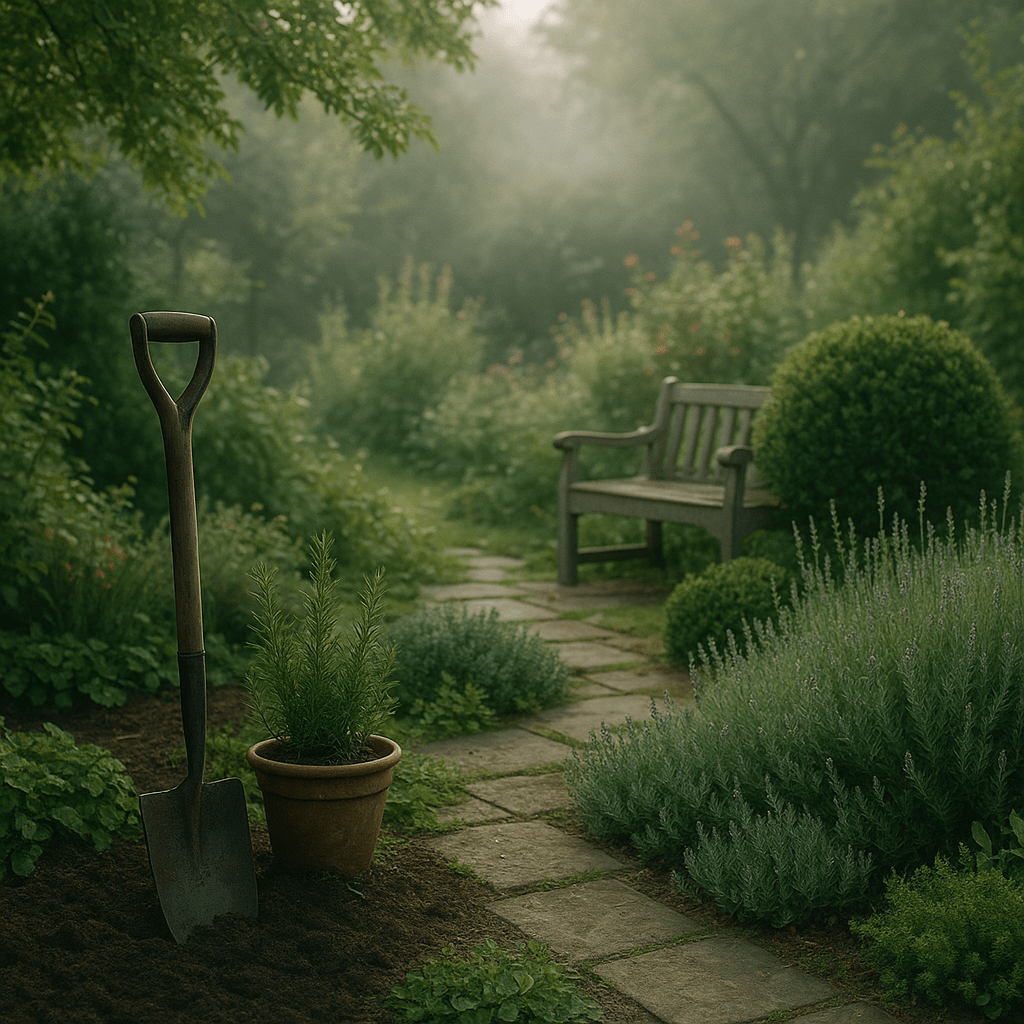
| A Personal Reflection: Asperger’s, Gardening, and Earthly Comforts I’m sometimes asked by clients whether my Asperger’s has helped or hindered my gardening business, Earthly Comforts. It’s usually asked with genuine curiosity rather than judgement, often while I’m quietly working away or packing up tools at the end of a visit. It’s a question I don’t mind at all — in fact, it’s one I’ve spent a fair bit of time reflecting on over the years. The short answer is yes, I believe it has helped. The longer answer is a little more nuanced. Being on the autistic spectrum shapes the way I experience the world, and that naturally carries through into how I work. Not in loud or obvious ways, but in subtle, steady ones. I notice small details. I value routine, clarity, and consistency. I’m comfortable with quiet focus, and I tend to prefer doing things properly rather than quickly. Gardening, as it turns out, fits those traits remarkably well. There’s something deeply grounding about garden work. The seasons move at their own pace, plants respond honestly to care (or neglect), and there’s a clear cause and effect to most things you do. You weed a bed, and it looks better. You prune thoughtfully, and the plant responds in time. You show up regularly, and the whole garden slowly settles into itself. That predictability and rhythm suit me. I’ve never been someone who enjoys rushing from one thing to the next or filling silence for the sake of it. Gardening allows space — space to think, to observe, and to work methodically. I’m happy focusing on one task at a time, whether that’s edging a lawn, tidying borders, or gently cutting back growth that’s got a bit ahead of itself. Many of the jobs that others might find repetitive, I find calming and satisfying. Over time, I’ve realised that this way of working has shaped Earthly Comforts more than any business plan ever could. I turn up when I say I will. I stick to what’s been agreed. I notice how a garden changes from visit to visit, and I adjust my approach accordingly. If something isn’t right — a plant struggling, soil looking tired, wildlife patterns shifting — I’ll notice it early. That attention to detail isn’t something I consciously try to offer; it’s simply how my mind works. Clients often tell me they appreciate the calmness of the service. The lack of fuss. The fact that I get on with the work without constant chatter or disruption. I think that’s another place where Asperger’s quietly plays a role. I’m comfortable with silence. I don’t feel the need to perform, upsell or fill every moment with conversation. For many people — particularly those who value peace in their outdoor space — that’s a relief. There’s also a strong sense of honesty in gardening that resonates with me. Plants don’t respond to exaggeration or shortcuts. You can’t rush growth, and you can’t talk your way around poor care. You either do the work thoughtfully, or you don’t. That straightforwardness suits my nature, and it’s something I try to reflect in the way Earthly Comforts operates — clear pricing, clear communication, and realistic expectations. Another thing clients sometimes notice is how connected I am to the natural side of gardening. Wildlife, soil health, seasonal rhythms — these aren’t add-ons for me, they’re central to how I see a garden. Many autistic people experience a deep, regulating connection with nature, and that’s certainly true for me. Being outdoors, working with living systems, and seeing the bigger ecological picture feels instinctive rather than learned. That connection has shaped Earthly Comforts into a business that values quieter tools, wildlife-friendly practices, and long-term care over quick fixes. It’s not about show gardens or perfection for perfection’s sake, but about creating spaces that feel looked after, balanced, and alive. Of course, Asperger’s isn’t something I see as a “superpower”, nor is it something I feel the need to explain or justify. It’s simply part of who I am. Like anyone else running a small business, I have strengths and limitations. I’ve learned what environments suit me, what working patterns keep me steady, and how to structure my days so I can do my best work without burning out. Gardening has allowed me to build a livelihood that fits those needs rather than fighting against them. When clients ask whether my Asperger’s has benefited Earthly Comforts, they’re often really asking whether it’s shaped the service they receive. I think it has. The patience, reliability, focus, and respect for the work itself are all qualities that come naturally to me, and they’re the same qualities I’ve built the business around. In that sense, Earthly Comforts didn’t grow in spite of who I am — it grew because of it. And for me, that feels like a very natural way to garden, work, and live. |
The Quiet Strength of Asperger’s in My Gardening Journey
 Earthly Comforts
Thank you Rory for sharing about your business and the influence Asperger has on it. I’m glad that it has added to your commitment towards your job. 👍🏼👍🏼👍🏼
LikeLiked by 1 person
Thanks Sadje, glad you enjoyed the read 🙂
LikeLiked by 1 person
You’re most welcome 🙏🏼
LikeLiked by 1 person