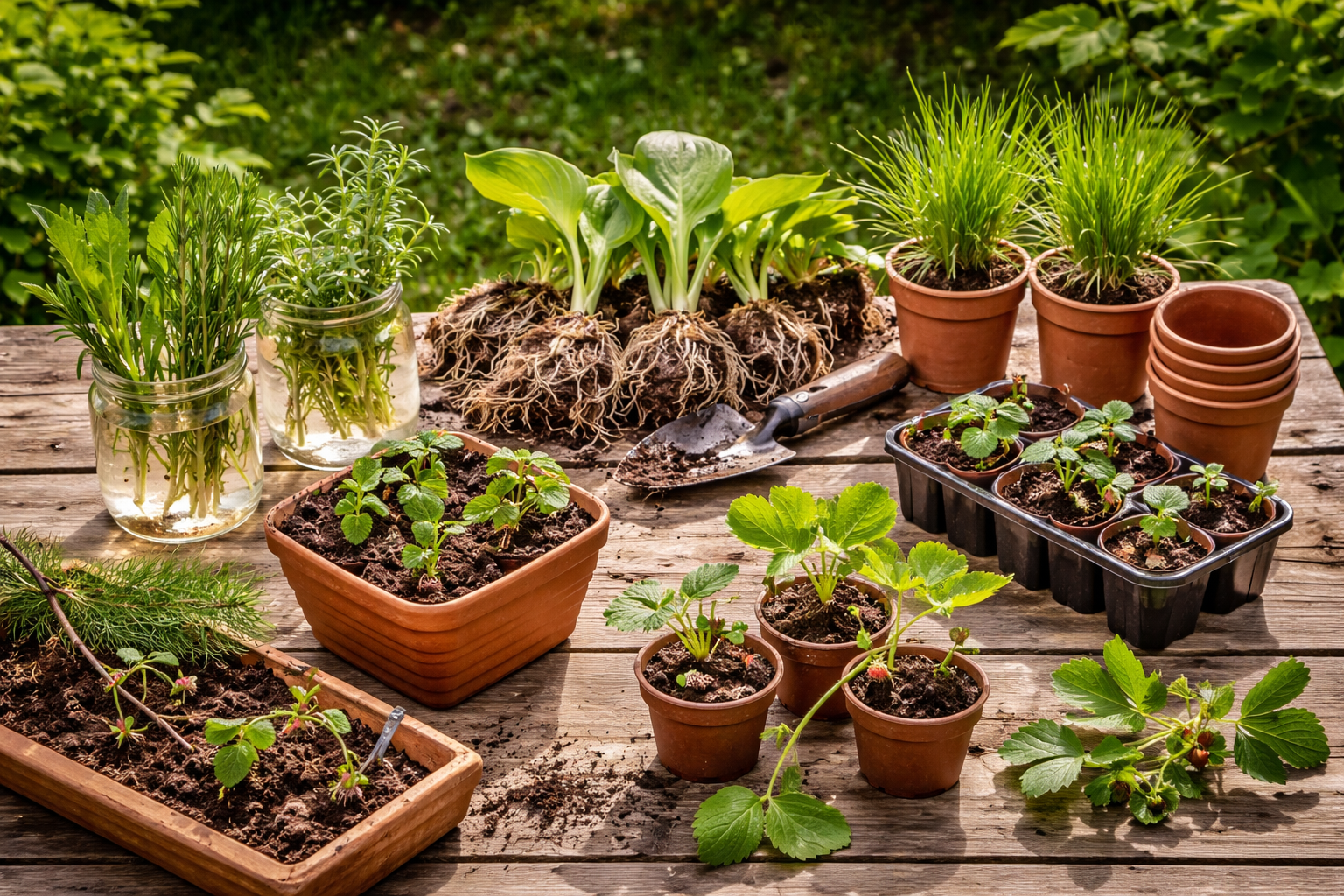
| Growing New Plants Without Seeds Vegetative propagation is one of the most satisfying, reliable, and quietly magical gardening skills you can learn. Instead of waiting for seeds to germinate and mature, this method creates new plants directly from existing ones—using cuttings, divisions, runners, or layering. The result is faster establishment, predictable outcomes, and plants that are true copies of the parent. For gardeners who value resilience, thrift, and a deeper relationship with their garden, vegetative propagation is a powerful tool. It works beautifully with herbs, shrubs, and perennials, and it fits naturally into low-waste, wildlife-friendly, and sustainable gardening approaches. What Is Vegetative Propagation? At its core, vegetative propagation uses a plant’s natural ability to regenerate. Many plants are biologically equipped to grow new roots, shoots, or whole plants from stems, roots, or side growth. When we guide that process, we can multiply plants quickly and with confidence. Unlike seed-grown plants—which can vary in size, vigour, or flower colour—vegetatively propagated plants are genetically identical to the parent. If you love a particular rosemary for its flavour, a lavender for its scent, or a perennial for its toughness, this method allows those exact qualities to continue year after year. Why Gardeners Love This Method Vegetative propagation isn’t just practical—it’s empowering. Faster results than seed growing Reliable, consistent plants One plant can become many. Beginner-friendly with high success rates Supports sustainable, low-waste gardening It also encourages closer observation. As you propagate, you begin to notice growth habits, seasonal rhythms, and subtle changes in plant health, strengthening your gardening intuition over time. The Four Main Methods of Vegetative Propagation Cuttings Taking cuttings involves removing a healthy stem piece and encouraging it to root. This works especially well with herbs and many shrubs. Choose a non-flowering, healthy shoot and cut just below a leaf node. Remove the lower leaves and place the cutting into water or free-draining compost. Keep it in bright, indirect light and ensure the compost stays lightly moist. Softwood cuttings suit spring and early summer, while semi-hardwood cuttings are better later in the season. Common plants grown this way include rosemary, sage, lavender, mint, and many ornamental shrubs. Division Division involves lifting a mature plant and separating it into smaller sections, each with its own roots and shoots. This method not only creates new plants but often refreshes older, congested ones. Spring is best for summer-flowering plants, while autumn suits those that flower earlier in the year. Once divided, sections should be replanted promptly, watered well, and lightly mulched. Herbaceous perennials, grasses, and clump-forming herbs respond particularly well to division. Runners Some plants naturally produce runners—horizontal stems that creep along the soil surface and root as they go. These can be left to establish naturally or guided into pots and separated once rooted. Runners are one of the easiest and most intuitive forms of propagation, requiring very little intervention from the gardener. Strawberries and creeping groundcover plants are classic examples. Layering Layering works by encouraging a low-growing stem to form roots while it remains attached to the parent plant. A section of the stem is gently bent to the ground, lightly wounded, and covered with soil. Over time, roots form at the buried point. Because the stem continues to receive energy from the parent plant, layering has a high success rate and is especially useful for woody shrubs and climbers. Timing, Soil, and Aftercare Successful vegetative propagation depends on a few simple principles. Clean, sharp tools reduce stress and the risk of disease. A free-draining, low-nutrient compost encourages root growth without promoting rot. Young plants benefit from steady moisture, mild temperatures, and protection from strong sun or frost. Avoid feeding until roots are well established. Once new growth appears, plants can be gradually acclimatised to outdoor conditions. A Sustainable Skill for Long-Term Gardening Vegetative propagation naturally supports eco-conscious gardening. It reduces the need for plastic pots, minimises transport impacts, and encourages plant sharing within communities. It also helps preserve plants that are well adapted to local conditions, strengthening garden resilience over time. Final Thoughts Vegetative propagation is more than a technique—it’s a way of working with plants rather than over them. It builds confidence, deepens understanding, and turns one healthy plant into many future successes. Whether you’re filling borders, expanding a herb patch, or sharing plants with others, vegetative propagation gives you a practical, sustainable way to grow your garden from what you already have. |
Vegetative Propagation
 Earthly Comforts