| I was asked recently, when I go and look at a new garden, meet a new client, and find out what they are after for their garden, what am I looking at first? Well, it’s usually not what people think! |
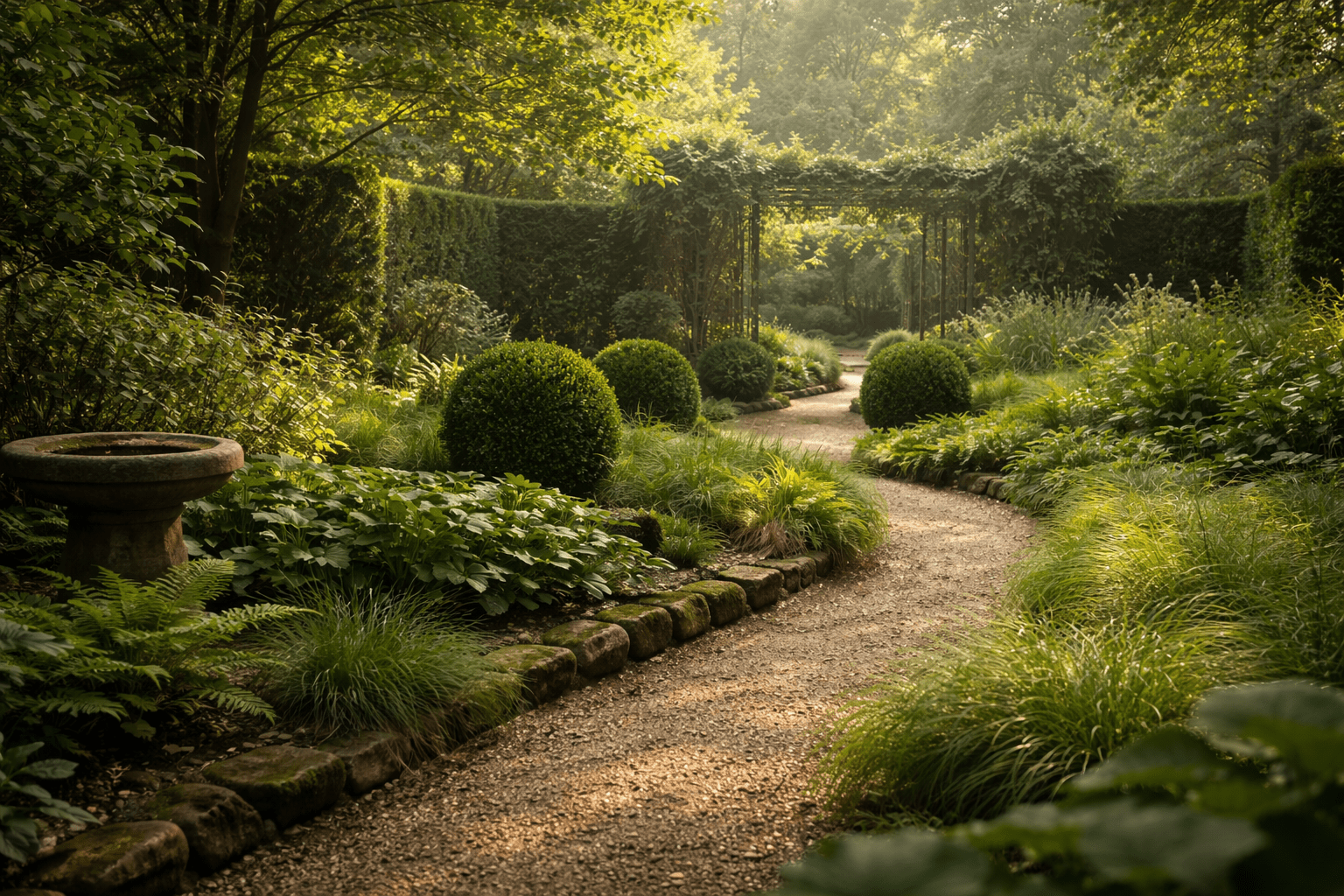
| Why the First Thing I Look at in a Garden Isn’t the Plants When I step into a garden for the first time, people often assume my eyes go straight to the plants. The roses, the borders, the lawn. But they don’t. The first thing I look at isn’t greenery at all. It’s the feel of the space. Before I notice a single leaf or flower, I’m quietly taking in how the garden functions, how it’s been used, and how it wants to be used. A garden always tells a story long before the plants start talking. I Look at the Ground Beneath My Feet My eyes go down first. Paths, patios, lawn edges, bare soil. These are the clues that reveal how the garden is lived in. Are there worn tracks where someone walks regularly? Are edges soft and blurred or sharply defined? Is the soil compacted, cracked, spongy, or alive? The ground tells me whether the garden is rushed through, lingered in, or avoided altogether. It tells me if maintenance has been reactive or intentional. It even tells me whether the space is calming or quietly stressful for the person who owns it. Healthy gardens usually have a rhythm underfoot. Unhealthy ones often feel tense, cluttered, or tired before you even look up. I Notice Structure Before Beauty Next, I take in the bones of the garden. Fences, walls, hedges, trees, raised beds, levels. These elements don’t shout for attention, but they shape everything else. A garden can have the most beautiful planting scheme in the world, but if the structure is confused, the space never quite settles. Strong structure doesn’t mean formal or rigid. It simply means the garden knows where it begins, where it ends, and how it flows. This is why some simple gardens feel peaceful and expensive, while others packed with plants feel chaotic. Structure is what allows plants to shine rather than compete. I Pay Attention to Light and Shade Before assessing what is growing, I look at what could grow. Where does the sun land in the morning? Where does it linger? Where does it never quite reach? Light patterns shape everything in a garden — from plant health to how welcoming a space feels. A seating area in full summer sun might look perfect on paper, but feel unbearable in reality. A shady corner might be written off as “difficult” when it could be the calmest place in the whole garden. Understanding light tells me far more than plant labels ever could. I Listen for Silence (or Noise) This one surprises people. I listen. Not just for traffic or neighbours, but for the absence of sound. Wind moving through hedges. Leaves brushing together. The quiet hum of insects. Or, just as importantly, the constant mechanical noise of nearby roads, poorly chosen water features, or echoing hard surfaces. Gardens that feel restorative usually soften sound naturally. Stressful gardens often reflect it. This is one reason I’m so mindful about materials, planting density, and even maintenance tools. A garden should lower your shoulders, not raise them. I Observe How the Garden Is Being Asked to Work Every garden is under pressure from something. Time. Mobility. Budget. Health. Energy levels. I look for signs of a mismatch between the garden and the person caring for it. Overly complex beds. High-maintenance lawns. Shrubs are planted too close together. Borders that demand constant attention. Most “problem gardens” aren’t badly designed — they’re simply asking too much. Before touching the plants, I want to understand what the garden needs to stop doing as much as what it needs to grow. Plants Come Later — and With Context Only then do I really look at the plants. By this point, they make sense. I can see why something is struggling, not just that it is. I can see whether a plant is in the wrong place, the wrong soil, or simply under the wrong expectations. Plants are often blamed for deeper issues they didn’t create. Once the foundations are right — ground, structure, light, sound, flow — plants become far more forgiving. They thrive instead of just surviving. Why This Matters for Garden Care This way of seeing gardens changes how they’re maintained. It leads to: Fewer quick fixes and more lasting solutions Gentler, more sustainable maintenance Gardens that feel easier to live with, not harder Spaces that support wellbeing, not just appearances It also means respecting what’s already there instead of constantly ripping things out and starting again. A good garden doesn’t need constant reinvention. It needs understanding. A Garden Is More Than What You See Plants are the most visible part of a garden, but they’re not the most important. A garden is a relationship between space, time, nature, and the person who lives alongside it. When that relationship is balanced, everything else falls into place. So when I step into a garden, I don’t rush to judge the planting. I listen. I look down. I feel the space. And only then do the plants come into view — exactly where they belong. |
 Earthly Comforts