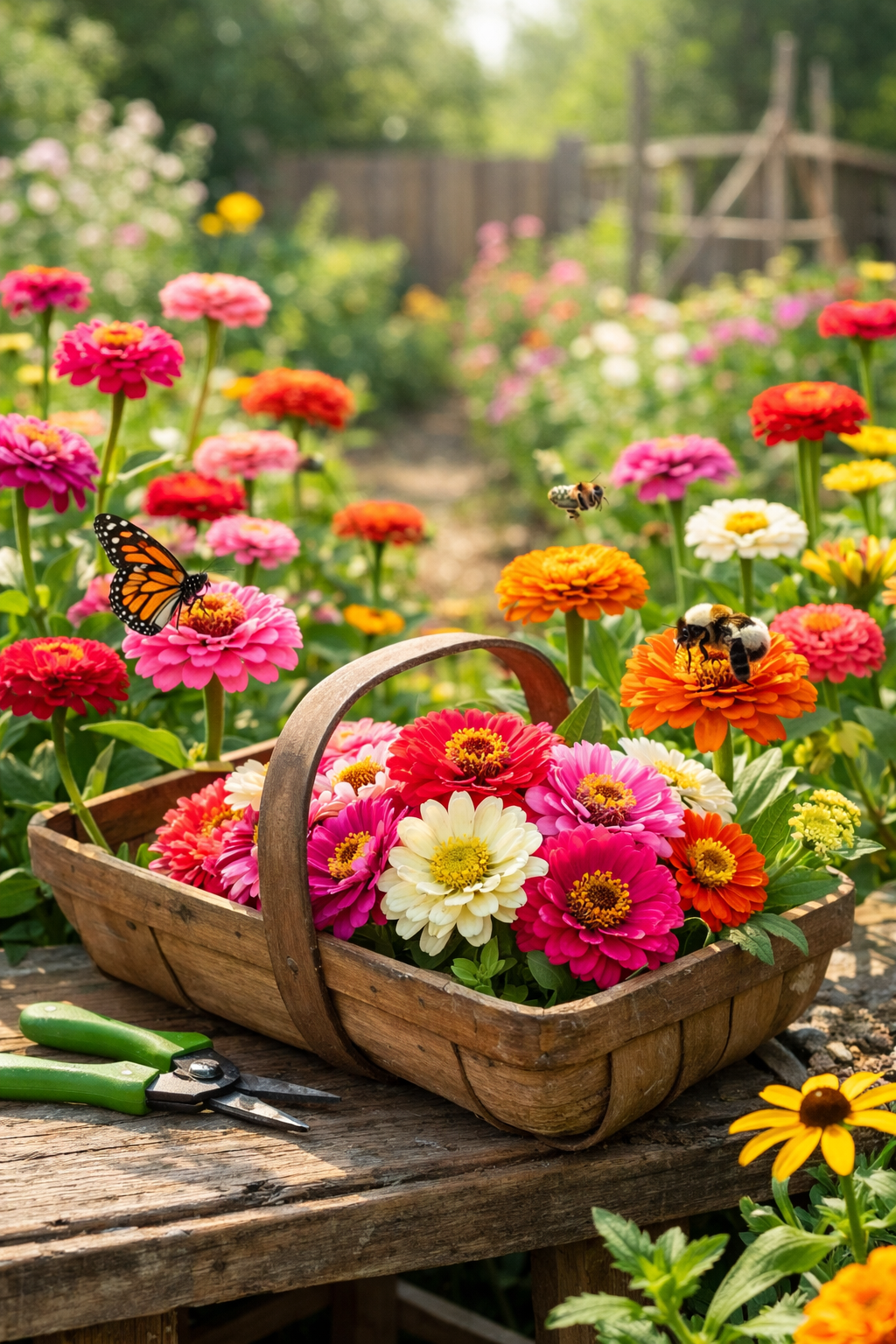
| Zinnia – Bright, Cheerful Annuals for Pollinators and Cutting Gardens Zinnias are the definition of joyful gardening. With their bold colours, long flowering season, and unfussy nature, they bring instant life to borders, pots, and cutting patches alike. Whether you’re growing your very first flowers or adding reliable performers to an established garden, zinnias are one of those plants that quietly earn their keep all summer long. This post explores what makes zinnias so special, how to grow them successfully, and a few interesting facts that might surprise you. |
| An Introduction to Zinnias Zinnias are warm-season annuals loved for their daisy-like flowers, strong upright stems, and incredible range of colours. From soft pastels to blazing reds, oranges, purples, and lime greens, there’s a zinnia for almost every garden style—from cottage and wildlife gardens to modern, structured beds. They originate from warmer climates, which explains their love of sunshine and their dislike of cold, damp conditions. Once established, however, they are remarkably resilient and will flower tirelessly from early summer through to the first frosts if well cared for. One of their greatest strengths is their generosity. A small packet of seeds can provide months of colour, armfuls of cut flowers, and a steady stream of pollinators visiting your garden. Growing Zinnias Successfully Zinnias are wonderfully straightforward to grow, making them ideal for beginners, children, and busy gardeners alike. Sowing Zinnias can be sown indoors in spring or directly outside once the risk of frost has passed. They prefer warm soil, so patience pays off—rushing them into cold ground often leads to slow or patchy growth. Sow seeds thinly, cover lightly with soil, and keep moist until germination. They usually appear quickly, often within a week in warm conditions. Position Sun is non-negotiable for zinnias. The more sun they receive, the stronger the plants and the better the flowers. A bright, open spot with good air circulation helps keep foliage healthy and reduces the risk of mildew. Soil Zinnias aren’t fussy, but they do best in free-draining soil. Overly rich soil can encourage lots of leafy growth at the expense of flowers, so there’s no need to overfeed. Watering Water at the base of the plant, not over the leaves. Once established, zinnias tolerate short dry spells, making them a good choice for low-maintenance, climate-resilient gardens. Deadheading & Cutting The more you cut zinnias, the more they flower. Regular deadheading or harvesting for vases encourages side shoots and keeps plants producing fresh blooms right through the season. Perfect for Pollinators Zinnias are a magnet for bees, butterflies, and other beneficial insects. Their open, accessible flower centres make them easy feeding stations, particularly for butterflies, which are often drawn to them in large numbers. Including zinnias in your garden is a simple way to boost biodiversity while enjoying vibrant colour. They work especially well in wildlife-friendly borders, vegetable gardens, and mixed planting schemes where flowers and edibles grow side by side. A Favourite for Cutting Gardens If you enjoy bringing flowers indoors, zinnias are hard to beat. Their long, sturdy stems and excellent vase life make them ideal cut flowers. Pick them when the blooms are fully open, and the stems feel firm—if they’re floppy, they’re not quite ready. Zinnias also mix beautifully with other summer flowers and foliage, adding structure, colour, and a cheerful, relaxed feel to arrangements. Interesting Facts About Zinnias Zinnias are often described as “cut-and-come-again” flowers because cutting them actually encourages more blooms. They were one of the first flowers grown in space as part of plant growth experiments. Different varieties range from compact plants perfect for pots to tall statement flowers over a metre high. Zinnias are excellent companion plants in vegetable gardens, attracting pollinators to crops. Despite their bold appearance, they are surprisingly tough and withstand heat and sun well. Why Zinnias Deserve a Place in Your Garden Zinnias tick so many boxes: easy to grow, affordable, pollinator-friendly, long-flowering, and endlessly cheerful. They don’t demand much, yet they give back generously in colour, wildlife value, and cut flowers. Whether you’re sowing a small patch or filling an entire bed, zinnias are one of those plants that remind us why gardening is such a pleasure—simple, rewarding, and full of life. |
 Earthly Comforts