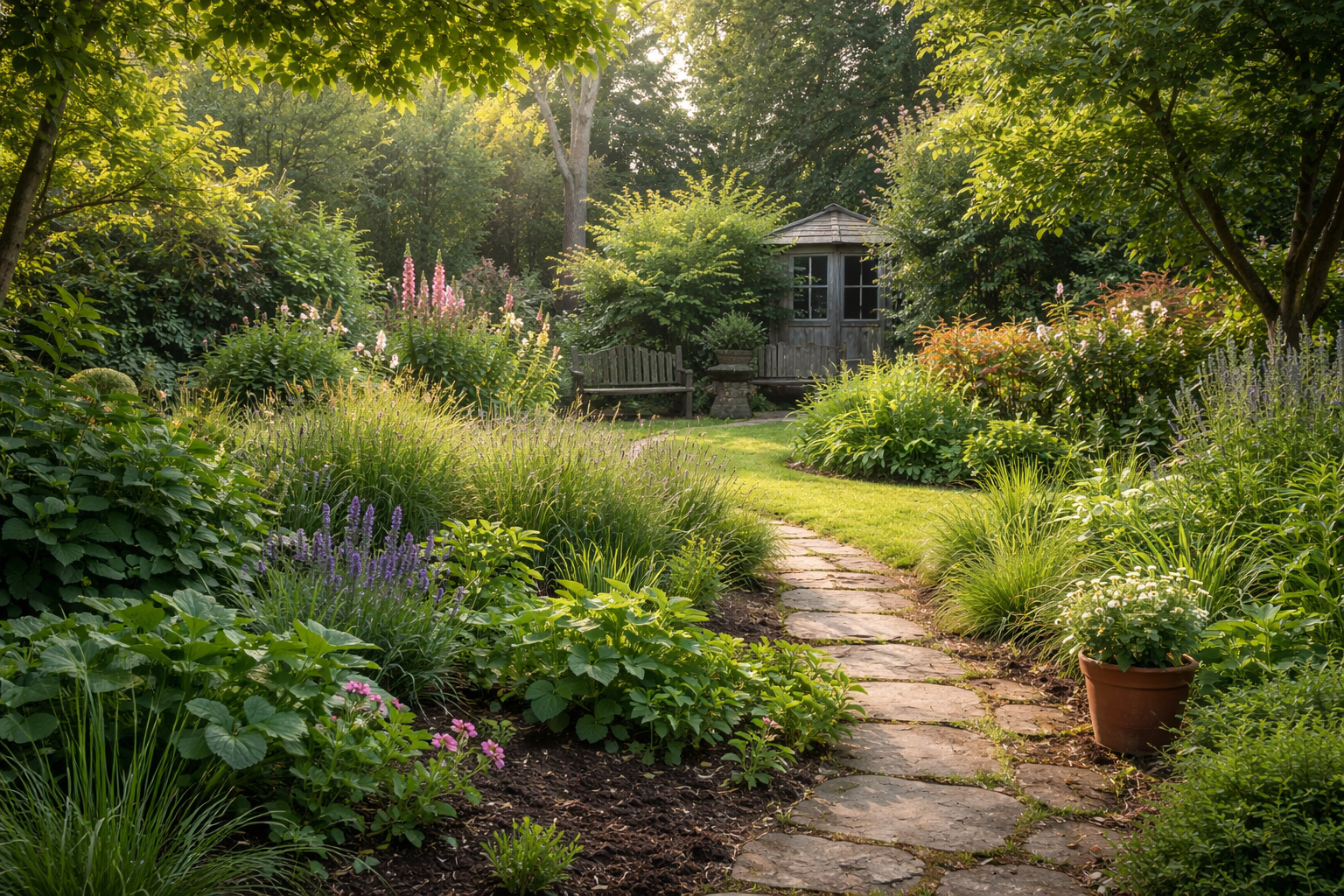
| Yesterday I addressed what I look at in a garden, and it’s not what people think it is, as in the plants. Today I will tell you what I take in the first five minutes of a new garden before I start the maintenance. |
| What I Notice in the First Five Minutes of Stepping Into a New Client’s Garden There’s a quiet moment that happens when I arrive at a garden for the first time. Before tools come out, before greetings turn into plans, I take in the space. Five minutes is all it takes for a garden to tell its story. Not just about plants and lawns, but about time, habits, pressure, and potential. These early observations shape how I work with a new client. They help me decide what the garden needs now, what it may need later, and—just as importantly—what kind of gardener will best support it. |
| The Way the Garden Greets You The entrance always speaks first. Whether it’s a gate, a path, or simply the transition from pavement to soil, it reveals how the garden is used and how it’s been coping. Overgrown edges don’t always mean neglect; often, they mean a busy life. A neatly swept path doesn’t always mean ease—it can mean effort, or even stress, to keep things looking “right.” I look at how forgiving the space feels. Is it fighting to stay tidy, or gently holding its shape? That tells me how realistic future maintenance needs to be. The Balance Between Growth and Control In the first few steps, I notice whether the garden is winning or losing its tug-of-war. Are plants thriving but spilling into walkways? Are shrubs clipped back hard, trying to behave? Or is there a sense of harmony, where growth is allowed but guided? This balance tells me a lot about previous care. Gardens don’t become unruly overnight. They slowly drift when support drops away. That drift is often reversible—with the right rhythm of care. Soil, Even When You Can’t See It Healthy soil announces itself quietly. Plants stand upright without struggle. Leaves have a certain confidence. Weeds, if present, are often easy to pull rather than stubbornly anchored. In contrast, tired soil shows through pale growth, compacted ground, or plants that look “stuck” in time. Within minutes, I can usually sense whether the garden needs cosmetic help or deeper nourishment. This distinction matters—because feeding soil is very different from simply tidying plants. Signs of Seasonal Pause or Overwhelm I look for half-finished jobs: a pile of prunings, a bed that was cleared but never replanted, a lawn that’s been edged once but not again. These are not failures. They’re signs of someone doing their best before life intervened. Gardens often fall into a pause, not abandonment. Recognising this helps me suggest realistic next steps instead of overwhelming plans. Wildlife Presence (or Absence) Within minutes, I notice movement—or the lack of it. Birds lifting from hedges, insects hovering near flowers, even the quiet buzz of life, tell me how welcoming the space is to nature. A silent garden isn’t a bad one, but it may be calling out for small changes: softer edges, less disturbance, or more variety. These tweaks often bring the biggest long-term rewards with very little effort. How the Garden Is Used, Not Just How It Looks Worn paths, compacted corners, sunny chairs pushed slightly off-centre—these details show how people live with the garden. I pay attention to where grass struggles, not to judge, but to understand footfall and habits. A good gardening service doesn’t fight how a space is used. It works with it, shaping maintenance around real life rather than ideals. The Relationship Between Hard and Soft Elements Patios, fences, raised beds, sleepers—hard landscaping sets the frame. In the first five minutes, I observe whether plants support that frame or compete with it. Often, a garden feels “messy” not because it is overgrown, but because the balance has tipped. A small adjustment—lifting a shrub, redefining an edge—can restore calm very quickly. Time Pressure Written Into the Space Some gardens feel rushed. Lawns cut too short. Shrubs clipped into shapes they don’t want to hold. Pots dried out or overwatered. These signs point to maintenance being squeezed into spare moments rather than properly supported. Other gardens feel gentle behind, but relaxed. That difference matters. It shapes how often visits should be, how long they should last, and how much intervention is truly helpful. What’s Working (and Should Be Protected) One of the most important things I notice early is what’s already working. A hedge that’s doing its job. A corner that looks peaceful. A plant that’s clearly happy where it is. Good gardening isn’t about changing everything. It’s about recognising success and building around it. Preserving what works saves time, money, and unnecessary disturbance. The Potential, Not the Perfection By the end of those first five minutes, I’m not thinking about how the garden should look in a magazine. I’m thinking about how it could feel for the person who lives there. Potential shows up fast. It’s in the light, the structure, the resilience that’s still present even in tired spaces. Most gardens don’t need rescuing. They need to be listened to—and then supported, steadily and kindly. |
| Why These First Five Minutes Matter Those early observations guide everything that follows: How often do I recommend visits? Whether short, focused sessions or longer maintenance blocks make sense What can wait, and what shouldn’t How to reduce effort while improving results A good gardening service starts with attention, not action. The garden speaks first. My job is to hear it—and then work in a way that respects both the space and the person who cares about it. |
 Earthly Comforts