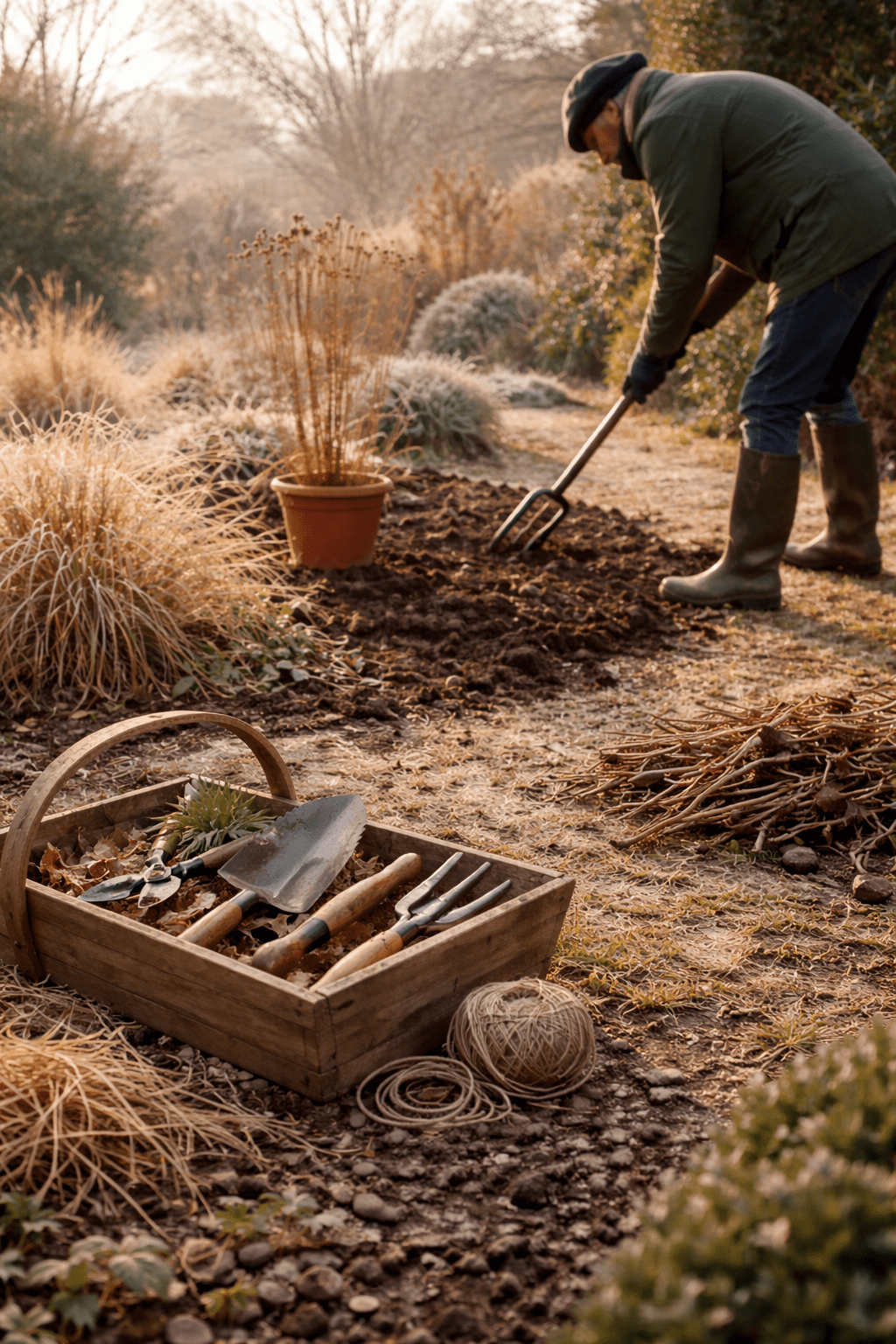
| … That Make Spring Easier January is not about improvement or transformation. It’s about positioning. The garden is quiet, the soil is cold, and growth is paused. That pause is useful. It gives us a chance to look properly at structure, health, and workload before spring accelerates everything. Most spring overwhelm comes from things not done earlier. January is where that pressure can be eased, calmly and deliberately, without rushing or forcing progress. This is not a month for heavy digging or dramatic change. It’s a month for small, sensible interventions that remove future effort. The most valuable January work is work you barely notice you’ve done. |
| Start by clearing only what needs clearing Wet leaves left on lawns cause damage that lasts well into spring. Clearing grass areas, paths, and hardstanding prevents rot, algae, and compaction. Borders are different. Stripping them bare removes insulation and habitat and often creates more work later. A January tidy should be selective. Lawns and access areas are clean. Beds protected. Edges defined, centres relaxed. The aim is to prevent problems, not create exposure. If leaves are gathered, they don’t need to leave the garden. A simple pile tucked out of the way becomes leaf mould over time. Nothing wasted, nothing rushed. Use January to prune for structure, not speed With most plants dormant, January allows you to see the shape clearly. This is when pruning should be thoughtful and structural rather than reactive. Fruit trees benefit most at this time. Apples and pears respond well to winter pruning, which encourages balanced growth and reduces congestion later in the season. Roses can also be pruned towards the latter part of the month, weather permitting, focusing on airflow and strength rather than size reduction. Dead, damaged, and crossing branches should always be removed when visible. Doing so now reduces disease pressure in spring and shortens future maintenance visits. What matters is restraint. January pruning is about setting a framework, not finishing a job. Feed the soil while nothing is asking for it Soil work done in January is quiet but powerful. Compost, leaf mould, or well-rotted organic matter laid on the surface begins improving structure long before plants start drawing energy. There is no need to dig. Disturbance in winter often causes more harm than good. Simply covering soil protects it from erosion, suppresses early weeds, and supports microbial life as temperatures slowly rise. By the time spring arrives, beds that were mulched in January are already ahead. They drain better, warm faster, and require less preparation. This is one of the clearest examples of work done once, paying back repeatedly. Cut back selectively, not completely. Not everything should be cut back in January. Some plants collapse into rot and benefit from removal. Others hold structure, shelter insects, and protect crowns beneath. Soft, decaying growth can be cleared to prevent mould and slug build-up. Strong stems, seed heads, and grasses are often best left standing. They provide frost protection and visual interest and can be removed cleanly later. A garden that retains some winter structure is usually healthier than one reduced to bare soil. Tidiness in January is about intention, not uniformity. Check containers while problems are visible Winter exposes weaknesses in pots and planters. Waterlogged compost, blocked drainage holes, cracked terracotta, and frost damage are easier to spot now than in April. Raising pots slightly, improving drainage, and removing saturated compost prevent root damage and pot failure. Empty containers can be cleaned and stacked. Frost-sensitive pots can be moved or protected. Doing this in January means planting later becomes straightforward rather than reactive. Maintain tools before urgency returns. January is the only month when tools can be serviced without interruption. Secateurs, shears, and blades benefit from cleaning, sharpening, and oiling. Wooden handles last longer with basic care. Blunt tools damage plants and slow work. Ten minutes now prevents frustration later. Spring is not the time to discover something doesn’t work properly. Reliable tools make every future task easier. Use January to observe rather than redesign This is the month to notice patterns, not impose ideas. Where does water sit after rain? Which areas feel heavy or lifeless? Which sections required constant attention last year? These observations inform better decisions than impulse planning. January reveals the garden as it really is, without growth disguising issues. A few brief notes are enough. The value comes from noticing, not documenting. January sets the tone Gardens don’t suddenly wake up in spring. They respond to what was done quietly beforehand. A garden given structure, protection, and soil care in January moves into spring with momentum rather than resistance. Less clearing. Less rushing. Fewer problems disguised as growth. January rewards patience and restraint. It’s not about doing more. It’s about doing the right things early, calmly, and once. Spring is easier when winter is respected. |
Unless stated, featured images are my own work, created independently or with the assistance of AI.
 Earthly Comforts