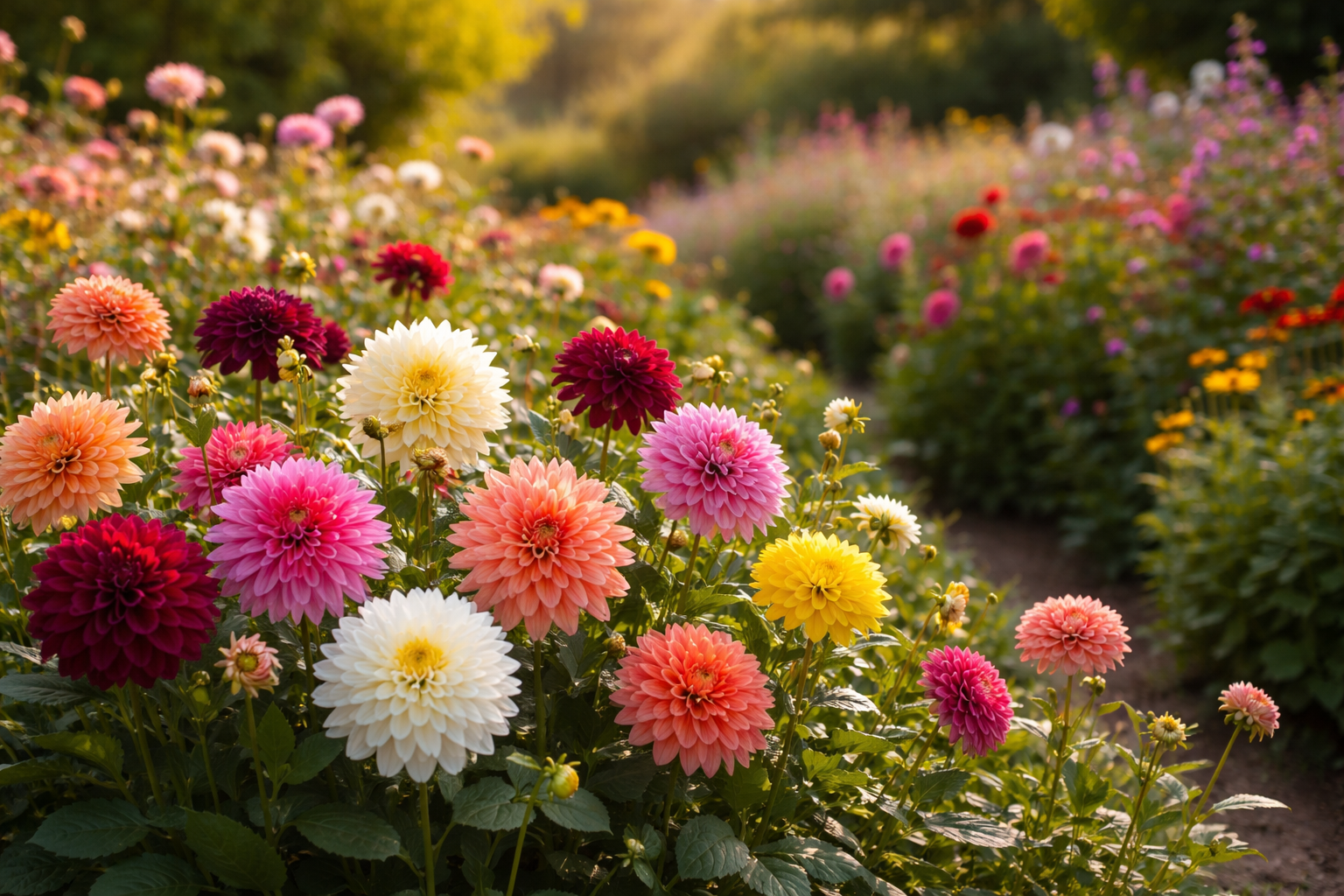
| Late-Summer Colour, Great for Cutting Gardens As many gardens begin to lose momentum in late summer, dahlias step confidently into the spotlight. From midsummer right through to the first frosts, these generous plants deliver bold colour, intricate form, and armfuls of flowers just when borders and cutting patches need a lift. Whether grown in a dedicated cutting garden or woven into mixed beds, dahlias reward a little attention with weeks—often months—of outstanding performance. A flower made for the late season Dahlias thrive during the warmest months, building strength through early summer before bursting into bloom as the days shorten slightly. This timing makes them invaluable. When spring-flowering perennials have faded, and early-summer shrubs are past their peak, dahlias are only just getting started. Their flowers range from delicate and airy to richly architectural, giving gardeners a wide palette to work with during August, September, and even October. Colour is one of their greatest strengths. Dahlias appear in almost every shade imaginable: soft creams, dusty apricots, rich plums, fiery reds, vibrant pinks, and near-black velvets. wide varieties offer subtle colour blends or contrasting centres, adding depth and interest both in the garden and in a vase. Ideal structure for cutting gardens Few flowers are as well-suited to cutting as dahlias. Their long, straight stems and abundant blooms make them easy to harvest, and regular cutting actually encourages the plant to produce more flowers. The more you pick, the more it gives. For cutting gardens, plant dahlias in rows or small blocks to make harvesting simple. Choose varieties with sturdy stems and repeat-flowering habits. Cutting blooms early in the morning or late in the evening, when stems are well hydrated, helps extend vase life. Removing spent flowers promptly also keeps plants tidy and productive. Dahlias combine beautifully with other late-season cuts such as cosmos, rudbeckia, grasses, and seed heads. Their bold forms anchor arrangements, while their colours can either lead the palette or act as a dramatic contrast to softer companions. A remarkable range of forms One of the joys of growing dahlias is their extraordinary diversity. Flowers can be as small as a coin or larger than a dinner plate. Petals may be tightly rolled, gently cupped, spiked, layered, or flat and open. This variety allows gardeners to tailor their planting style—whether they prefer refined elegance, cottage-garden charm, or dramatic statement blooms. Smaller-flowered types are particularly valuable for cutting, as they tend to last longer indoors and suit a wider range of vase sizes. Larger blooms make stunning focal points but benefit from staking and careful handling. Growing conditions and care Dahlias appreciate fertile, well-drained soil and plenty of sunlight. A sunny position encourages strong stems and better flowering, while shelter from strong winds prevents damage to tall varieties. Regular watering during dry spells is important, especially once plants are in active growth and bloom. Feeding little and often keeps dahlias productive. A balanced feed early on supports growth, while a feed lower in nitrogen later in the season encourages flowers rather than excessive leafy growth. Pinching out young plants can create bushier growth and more flowering stems—particularly useful in cutting gardens. Staking is often overlooked but essential for a wide variety of applications. Discreet supports added early prevent plants from collapsing later under the weight of their blooms. Late-summer wildlife value Although not traditionally thought of as wildlife plants, many single-flowered dahlias offer accessible pollen and nectar for insects during late summer, when other sources may be scarce. Including a few open-centred varieties can add both ecological value and visual lightness to your planting. Extending the season With consistent deadheading and feeding, dahlias will continue flowering until frost. In milder areas, this can mean colour well into autumn, bridging the gap between summer abundance and winter structure. Even as temperatures cool, their vibrant presence keeps gardens feeling alive and generous. Once frost finally arrives, plants can be lifted and stored, allowing gardeners to protect treasured varieties and replant them the following year. This cycle adds to the sense of continuity and care that dahlias bring to a garden. A late-summer essential Dahlias earn their place as late-summer stars through reliability, beauty, and sheer generosity. They bring colour when it is most needed, provide endless material for cutting gardens, and invite creativity both outdoors and indoors. With thoughtful planting and simple care, they transform the latter half of the growing season into one of the most rewarding times of the year. |
Dahlia
 Earthly Comforts
Such beautiful flowers. I love to see them when visiting cooler locations.
LikeLike