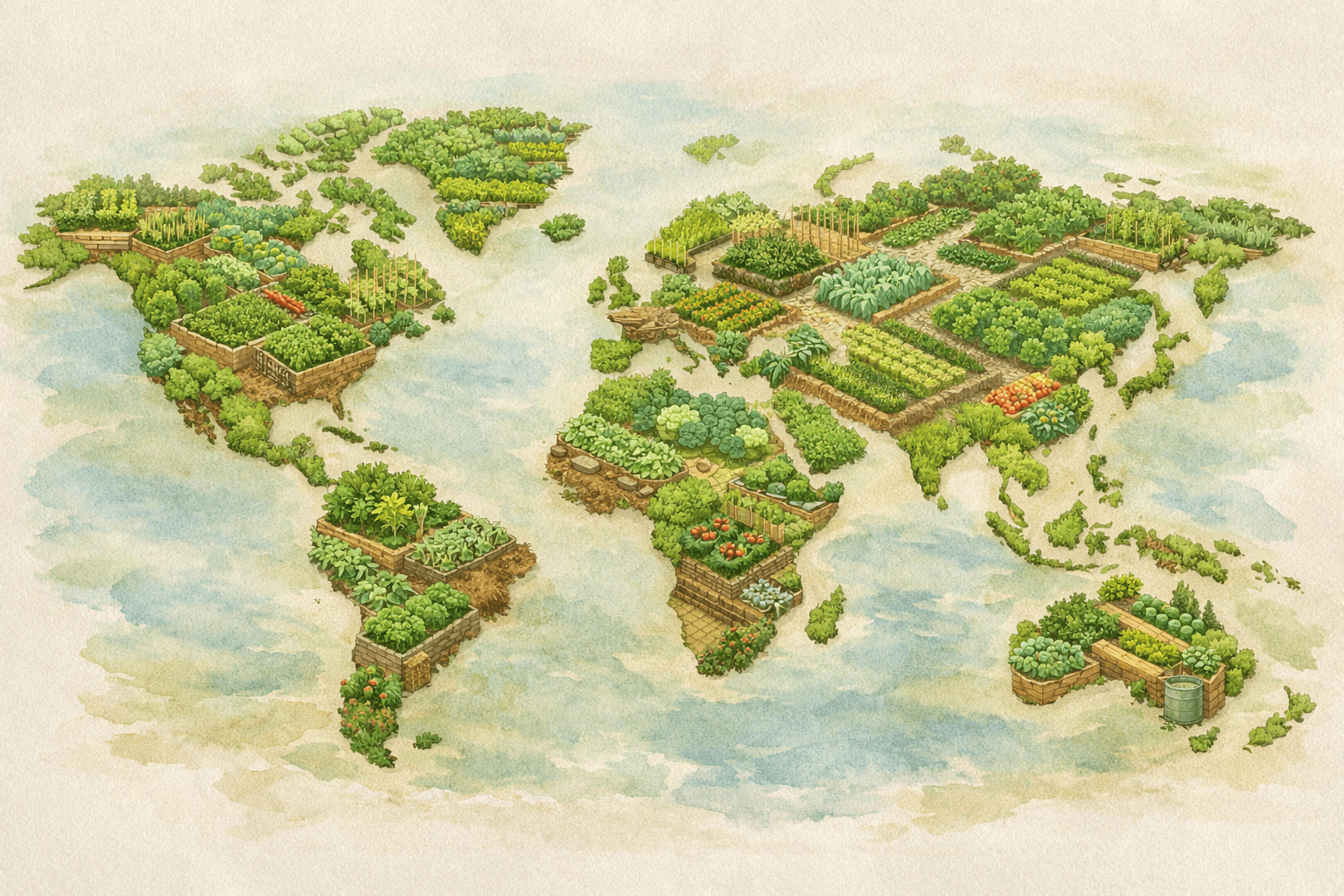
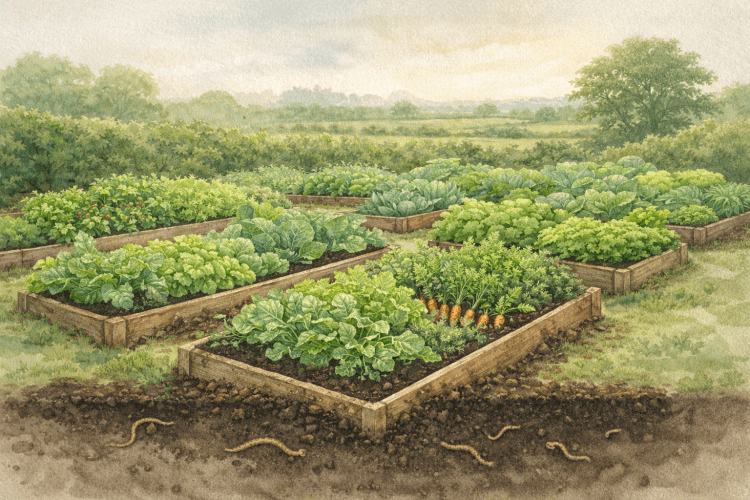
| Episode 1: Charles Dowding No-Dig Gardening and the Power of Healthy Soil Few gardeners have influenced modern vegetable growing as quietly — and as profoundly — as Charles Dowding. At a time when many gardeners were still turning soil, battling weeds, and chasing quick fixes, Dowding was patiently demonstrating something radical in its simplicity: if you care for the soil, the soil will care for your crops. This first episode in The World’s Vegetable Gardeners series begins in Somerset, England, where Dowding’s gardens have become a living classroom for growers around the world. A Gardener Shaped by Observation Charles Dowding’s journey into vegetable gardening was not driven by trends or technology, but by observation. Over decades of growing, he noticed a pattern: gardens that were disturbed less often produced healthier plants, fewer weeds, and more consistent harvests. Rather than fighting the soil, Dowding chose to protect it. This approach — now widely known as no-dig gardening — challenges long-held assumptions about cultivation. Instead of digging compost into the ground, organic matter is layered on top, allowing soil organisms to do the work naturally. What makes Dowding’s work so compelling is that it is not theoretical. His gardens are proof. Side-by-side comparisons, maintained year after year, show clear differences in yield, soil health, and weed pressure — all achieved without digging. What Is No-Dig Gardening? At its core, no-dig gardening is about minimising disturbance. Soil is a living system filled with fungi, bacteria, worms, and microorganisms that form complex relationships with plant roots. Digging disrupts these networks. Dowding’s method involves: Leaving the existing soil structure intact Adding compost or organic matter as a surface mulch Letting worms and microbes integrate nutrients naturally Protecting soil from erosion, compaction, and drying out For vegetable growers, the results are striking: cleaner harvests, fewer weeds, stronger plants, and soil that improves year after year rather than degrading. A Method That Welcomes Beginners One reason Charles Dowding has become so influential is that his method removes barriers. No-dig gardening requires: Fewer tools Less physical strain Less time spent weeding No specialist machinery This makes it especially accessible to older gardeners, those with limited mobility, and beginners who may feel overwhelmed by traditional advice. Importantly, Dowding never presents no-dig as a rigid system. He encourages adaptation — container gardens, raised beds, allotments, and even heavy clay soils can all benefit from the principles. Teaching Through Transparency Dowding’s impact extends far beyond his own garden. Through regular video updates, he shows gardens exactly as they are — successes, setbacks, pests, weather damage, and all. This transparency has built enormous trust. Gardeners aren’t just told what works; they are shown why it works and how it performs over time. His teaching style is calm, methodical, and grounded. There is no urgency, no hype — just steady encouragement to garden with patience and care. Why Charles Dowding Matters Today In an era of climate uncertainty, rising costs, and soil degradation, Dowding’s work feels more relevant than ever. His approach aligns with: Sustainable food production Reduced reliance on inputs Soil carbon retention Long-term garden resilience For home vegetable growers, his message is reassuring: you don’t need to work harder — you need to work with nature. Where to Follow Charles Dowding Charles Dowding shares his work openly and generously through: YouTube (regular garden updates and tutorials) His website and online courses Social media platforms focused on seasonal growing. Books by Charles Dowding Charles Dowding has written several influential books, including: No Dig Gardening Organic Gardening: The Natural No-Dig Way How to Grow Winter Vegetables No Dig Organic Home & Garden These books form a practical library for anyone serious about vegetable growing. A Fitting Beginning Starting this global series with Charles Dowding is intentional. His work reminds us that progress in gardening does not always mean new tools or faster methods. Sometimes, it means stepping back, observing closely, and trusting natural processes that have worked for centuries. In the weeks ahead, this series will travel across climates and continents. But the foundation laid here — healthy soil, patience, and respect for living systems — will echo throughout every episode. |
| About our writing & imagery Many of our articles are written by us, drawing on real experience, reflection, and practical work in gardens and places we know. Some pieces are developed with the assistance of AI as a drafting and research tool. Featured images may include our own photography, original AI-generated imagery, or—where noted—images kindly shared by other creators and credited accordingly (for example, via Pixabay). All content is shaped, edited, and published by Earthly Comforts, and the views expressed are our own. |
 Earthly Comforts