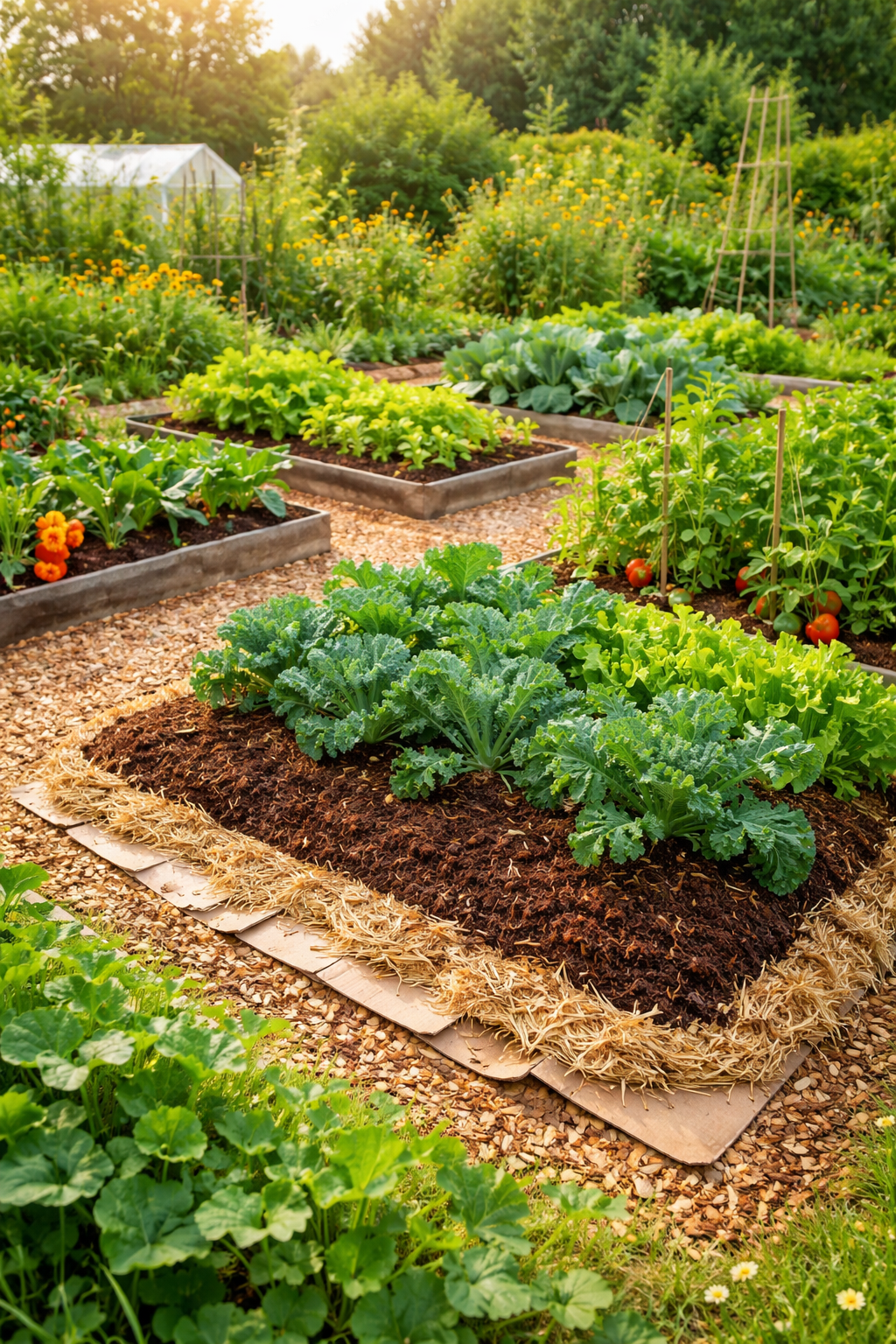
| No-dig gardening is exactly what it sounds like: growing plants without routinely digging or turning over the soil. At first glance, this can feel counterintuitive, especially if you were taught that a “good gardener” keeps the soil loose, forked, and freshly turned. In reality, no-dig gardening challenges that habit and replaces it with a calmer, more observant approach that puts soil life at the centre of the garden. Rather than disturbing the ground each season, no-dig relies on adding organic matter to the surface and allowing natural processes to do the work beneath your feet. Over time, this creates a healthier, more resilient soil that supports stronger plants with less effort. Why Digging Became the Norm Traditional digging developed for practical reasons. Heavy soils needed loosening, weeds were buried, and crops could be planted quickly. But as we’ve learned more about soil biology, it’s become clear that frequent digging breaks apart natural soil structure, disrupts fungal networks, and exposes beneficial organisms to air and light they aren’t adapted to handle. Soil is not inert. It is a living system made up of bacteria, fungi, worms, insects, roots, and organic matter, all interacting in balance. Digging repeatedly resets that system, forcing it to rebuild again and again. What No-Dig Gardening Actually Does In a no-dig garden, the soil surface is protected rather than disturbed. Organic materials such as compost, leaf mould, or well-rotted manure are laid on top of the soil. Worms and microorganisms then draw this material down naturally, improving soil structure from within. This top-down feeding mimics what happens in nature. In woodlands, meadows, and hedgerows, soil is rarely exposed or turned. Leaves fall, plants die back, organic matter accumulates, and life below the surface processes it gradually. The result is soil that becomes crumbly, moisture-retentive, and nutrient-rich without mechanical intervention. How to Start a No-Dig Bed Starting no-dig does not require perfect conditions or expensive materials. You can begin on existing soil, lawn, or even compacted ground. The basic method is simple. First, cut back any tall growth and leave roots in place. Lay cardboard or thick paper directly on the soil to block light and suppress weeds. Over this, add a generous layer of compost or organic matter, usually 5–10cm deep. That’s it. You plant directly into the compost layer. There is no need to dig out weeds or remove grass beforehand. Given time and darkness, they break down below the surface and contribute to the soil’s organic content. Weed Control Without the Battle One of the most appealing aspects of no-dig gardening is the reduced need for weeding. Because the soil is not disturbed, dormant weed seeds remain buried rather than being brought to the surface where they can germinate. Surface weeds are dealt with by mulching, not pulling and digging. Persistent weeds can be weakened over time by repeated light-blocking rather than aggressive removal. This approach is slower, but far less exhausting, and more effective in the long run. It also changes the gardener’s mindset. Weeds become indicators of soil conditions rather than enemies to be fought. Soil Health and Plant Resilience Healthy soil grows healthier plants. No-dig systems encourage fungal networks, including mycorrhizal fungi, which connect plant roots and help them access water and nutrients. These networks are fragile and easily damaged by digging. As soil structure improves, roots can move more freely, drainage becomes balanced, and moisture is retained more evenly. Plants grown in no-dig beds often show steadier growth, fewer stress responses, and better tolerance to dry spells. This is particularly valuable in a changing climate, where extremes of wet and dry are becoming more common. Pest and Disease Balance No-dig gardening does not eliminate pests or disease, but it tends to soften their impact. A diverse soil ecosystem supports a wider range of beneficial organisms that keep problem populations in check. Plants grown in living soil are also less attractive to pests. Stressed plants send out chemical signals that insects detect. By reducing stress at the root level, no-dig gardens often experience fewer severe infestations, even if the same pests are present. This doesn’t mean intervention is never needed, but it shifts the focus from reaction to prevention. Productivity and Yields There is a common fear that no-dig gardening is less productive. In practice, yields are often equal to or higher than dug beds once the system has settled. Early on, growth may be slower as the soil biology rebalances, but this is temporary. Because soil structure is preserved, beds do not compact as easily. This allows for closer planting and better root development. Over time, fertility builds rather than being depleted, reducing the need for additional feeding. For food growers, this steady improvement is one of no-dig’s strongest arguments. Is No-Dig Suitable for Every Garden? No-dig works in most situations, but it does require patience. Heavy clay soils can take longer to respond, and very weedy ground may need an initial season of thorough covering. Slopes require careful mulching to prevent material washing away. The key is consistency. No-dig is not a one-off technique; it is a way of managing soil over time. The more regularly organic matter is added, the better the system performs. It is also flexible. You can apply no-dig principles to vegetable beds, borders, raised beds, and even containers. A Gentler Way to Garden Beyond the practical benefits, no-dig gardening changes the rhythm of garden work. It reduces heavy labour, protects soil life, and encourages observation rather than intervention. For gardeners with physical limitations, limited time, or a desire to work more in tune with nature, it offers a sustainable alternative to constant digging. No-dig is not about doing nothing. It is about doing less of the wrong thing and more of what the soil already knows how to do. |
Working With the Soil, Not Against It
 Earthly Comforts