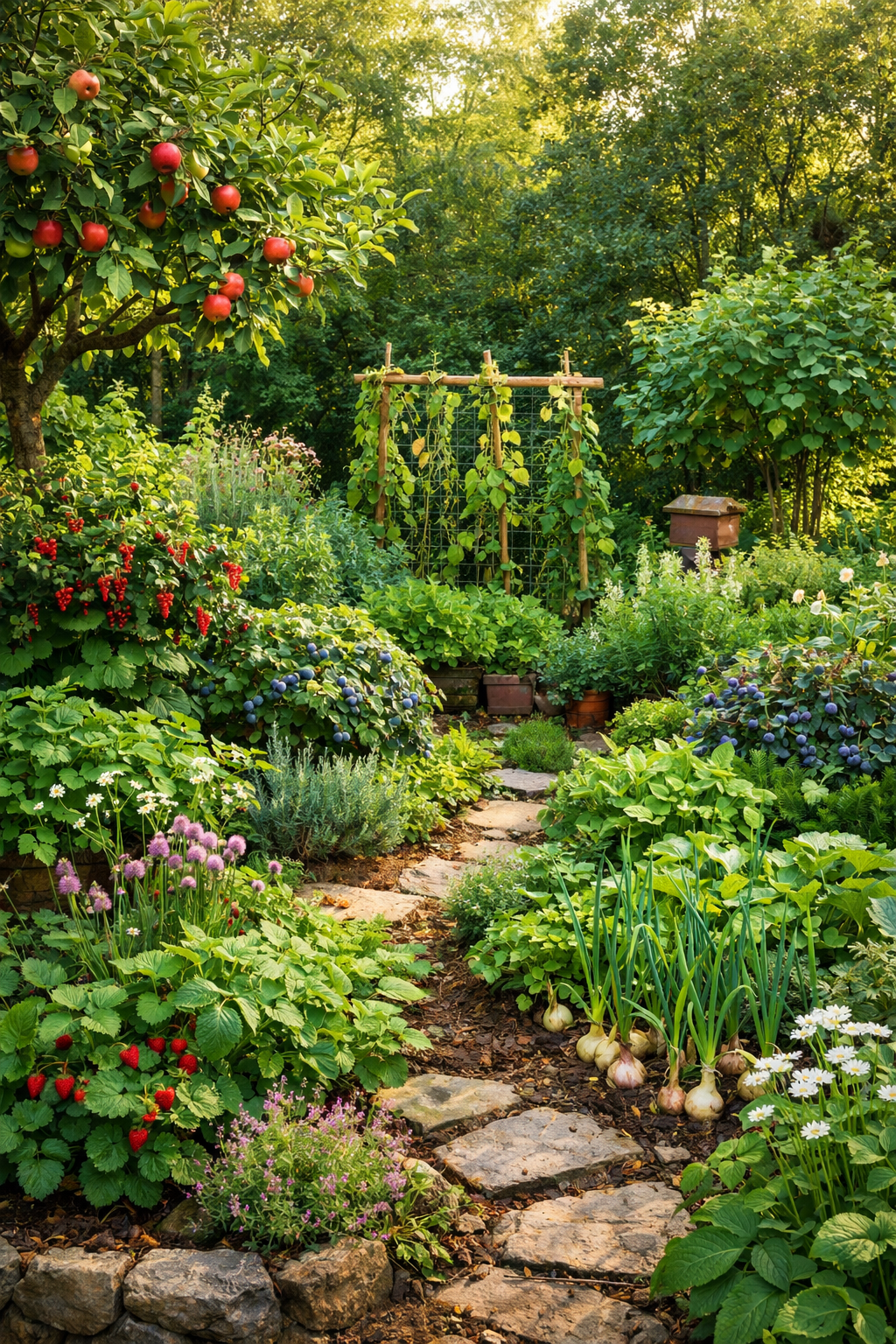
| Working With Nature, Not Against It Forest gardening is a way of growing food that borrows directly from how natural woodlands function. Instead of neat rows, constant digging, and seasonal exhaustion, a forest garden is built as a living system—layered, resilient, and largely self-sustaining. It’s not about letting a garden run wild, but about guiding nature so it does most of the work for you. At its core, forest gardening mimics the structure of a forest edge: diverse plants growing together, each playing a role. Trees provide shelter and food; shrubs fill the middle ground; ground cover protects the soil; and roots, fungi, insects, and microorganisms quietly keep the system ticking beneath the surface. When designed well, the result is a productive space that improves year after year. The Seven Layers of a Forest Garden Most forest gardens are designed around seven distinct layers. These layers are not rigid rules but a helpful framework for thinking in three dimensions rather than flat beds. The canopy layer consists of larger trees, such as fruit or nut trees. These create shade, regulate temperature, and act as the long-term backbone of the system. Beneath them sits the low tree layer—smaller fruit trees or nitrogen-fixing trees that support soil fertility. The shrub layer includes fruiting bushes such as currants, gooseberries, and blueberries. These thrive in partial shade and help fill space efficiently. Below that, the herbaceous layer is made up of perennial vegetables, herbs, and flowers that return each year without replanting. Ground cover plants spread across the soil surface, suppressing weeds, retaining moisture, and protecting soil life. Think strawberries, creeping herbs, or living mulches. The root layer adds another dimension, using underground space for crops such as garlic, onions, or perennial roots. Finally, the vertical layer includes climbers—plants that scramble up trees or supports, turning height into productivity. Not every forest garden contains all seven layers immediately. Many start small and develop gradually, which is both practical and beneficial for long-term balance. Why Forest Gardening Works So Well Forest gardens succeed because they rely on cooperation rather than control. Plants are chosen not only for what they produce, but for how they support one another. Some fix nitrogen, some attract pollinators, and others deter pests or build soil organic matter. Because the soil is rarely disturbed, fungal networks and beneficial microbes can thrive. These underground relationships naturally improve nutrient uptake and soil structure, reducing the need for fertilisers. Leaf litter and prunings become mulch, feeding the soil instead of being removed. Over time, this creates a stable microclimate. Moisture is retained, temperature extremes are softened, and plants experience less stress. That resilience becomes increasingly valuable as weather patterns grow more unpredictable. Forest Gardening in a UK Context Forest gardening is particularly well-suited to temperate climates like the UK. Many traditional woodland-edge plants are already adapted to our conditions, and a wide range of edible species thrive here with minimal intervention. A common misconception is that forest gardens require large rural spaces. In reality, even small urban gardens can adopt forest garden principles. A single fruit tree with shrubs beneath, herbs at ground level, and climbers along a fence is already a functioning mini forest garden. Patience is key. Forest gardens are not about instant results; they are about long-term abundance. The first few years involve observation, planting, and adjustment. After that, maintenance typically decreases while yields and biodiversity increase. Maintenance Without the Burnout One of the biggest advantages of forest gardening is how little ongoing effort it requires compared to conventional gardening. There is less digging, less weeding, and less watering. Work shifts from constant upkeep to occasional pruning, harvesting, and thoughtful additions. Rather than fighting weeds, forest gardeners aim to outcompete them. Bare soil is avoided, mulch is abundant, and plants are chosen to occupy every available niche. Problems are seen as signals rather than failures—an opportunity to adjust balance rather than reach for a quick fix. This slower, more observational approach suits people who want a calmer relationship with their garden, one that fits around life rather than dominating it. Forest Gardening as a Mindset Forest gardening is as much about mindset as it is about method. It encourages long-term thinking, patience, and trust in natural processes. Success is measured not just in harvests, but in healthier soil, increased wildlife, and a garden that feels alive year-round. It challenges the idea that gardens must be tidy to be productive. Instead, beauty emerges from complexity—layers of green, seasonal change, and the quiet hum of life doing what it has always done best. Whether applied to a single border or an entire plot, forest gardening offers a compelling alternative to high-input gardening. It is food production rooted in ecology, designed for resilience, and deeply aligned with the rhythms of the natural world. |
Forest Gardening
 Earthly Comforts