
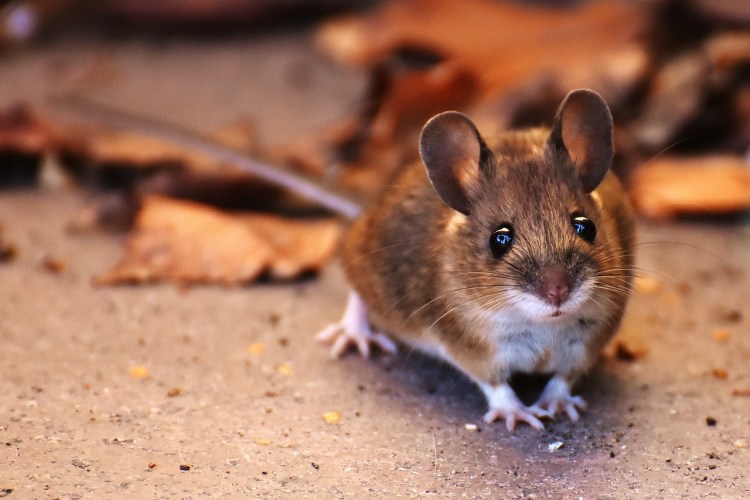
| The Agile Climber of Woods and Old Places At first glance, the yellow-necked mouse looks much like its close cousin, the wood mouse. It is small, brown, bright-eyed, and quick to vanish into cover. But spend time in mature woodland, old buildings, or tree-rich landscapes, and a different character begins to emerge. This mouse is bolder, stronger, and more adventurous. It climbs where others stay grounded, explores higher levels of the landscape, and uses vertical space in ways few small mammals do. The yellow-necked mouse lives not just on the woodland floor, but within the woodland structure itself — trunks, branches, cavities, and roofs included. |
| A Mouse with a Distinctive Mark The most recognisable feature of the yellow-necked mouse is the pale yellow or buff-coloured band across its chest, often forming a partial or complete collar between the front legs. This marking is not always bold, but when visible, it clearly separates this species from other mice. Its body is slightly larger and more robust than that of the wood mouse, with a longer tail and a broader head. Large eyes and ears give it an alert, intelligent expression. This is a mouse that notices everything. It is built not just for running, but for climbing. A Natural Climber and Explorer Unlike many small rodents that stay close to the ground, the yellow-necked mouse is highly arboreal. It regularly: Climbs trees and shrubs Uses branches and ivy as pathways Explores roof spaces and lofts Moves between ground and canopy Its long tail provides balance, while strong hind legs allow powerful leaps. It is just as comfortable scaling a tree trunk as it is darting through leaf litter. This ability opens up food sources and nesting sites unavailable to less agile species. Where Yellow-Necked Mice Live Yellow-necked mice are closely associated with mature woodland and landscapes with vertical complexity. They favour: Deciduous woodland Old hedgerows with trees Parkland and estates Woodland edges near buildings Traditional barns and houses close to trees They are far less common in open farmland or simplified landscapes. They need height, structure, and continuity. Young woodland or bare hedges rarely support them for long. Mostly Nocturnal, Always Alert Like many small mammals, yellow-necked mice are primarily nocturnal. As darkness falls, they emerge to: Forage across the ground and branches. Climb to feeding sites. Cache food Patrol familiar routes They rely on memory and scent to navigate, learning escape routes both horizontally and vertically. Predators come from all directions — above, below, and beside — so constant awareness is essential. Diet: Nuts, Seeds, and Seasonal Riches The yellow-necked mouse has a particular fondness for tree seeds and nuts. Its diet commonly includes: Acorns Beech mast Hazel nuts Seeds and berries Insects and larvae Occasional fungi This makes it especially successful in good mast years, when trees produce abundant seed crops. During these times, populations can increase noticeably. Like wood mice, yellow-necked mice store food in caches. Many of these stores are never recovered, contributing to woodland regeneration. In this way, the mouse becomes part of the forest’s renewal cycle. Nesting Above and Below Ground Yellow-necked mice build nests in a wide range of places. They may nest: In tree cavities Under roots Inside old walls Beneath floorboards In roof spaces Nests are made from grass, leaves, moss, and shredded plant material, forming warm, concealed chambers. Their willingness to nest above ground is unusual among mice and reflects their confidence as climbers. This also brings them into closer contact with human structures, especially older buildings near woodland. A Key Prey Species with a Big Role Despite their agility, yellow-necked mice are prey for many animals. They support: Owls Martens Foxes Weasels Snakes Their presence strengthens food webs, particularly in wooded landscapes. Because they rely on mature habitat, their decline often signals deeper problems — the loss of old trees, the removal of hedgerows, or the fragmentation of woodland. They are not just residents of these places. They are indicators of them. Breeding and Boom Years Yellow-necked mice breed during warmer months when food is plentiful. In years with abundant acorns and nuts, breeding success increases and populations can rise sharply. These boom years ripple through ecosystems, benefiting predators and influencing plant regeneration. In lean years, numbers fall back again. This natural fluctuation is part of woodland rhythm — not a problem, but a pulse. Living Near People, Carefully Yellow-necked mice sometimes enter buildings, especially in autumn and winter, seeking warmth and shelter. This usually happens when: Buildings are close to woodland. Trees overhang roofs Natural shelter is disturbed. They are not aggressive and prefer to remain hidden. Conflict arises only when access points are created unintentionally. In healthy landscapes with intact woodland and cover, most yellow-necked mice remain outdoors, fulfilling their ecological role unseen. Why the Yellow-Necked Mouse Matters The yellow-necked mouse often goes unnoticed because it looks familiar. But its role is distinct. It: Disperses tree seeds Links ground and canopy ecosystems Supports woodland predators Reflects the health of mature landscapes Where this mouse thrives, woodlands tend to be rich, layered, and long-established. Its absence is a warning sign that something important has been lost. What This Mouse Teaches Us The yellow-necked mouse reminds us that: Vertical space matters in nature Old trees are ecosystems, not obstacles. Small animals maintain big systems. Woodland Health is built from the ground up. It thrives where landscapes are allowed to age, where trees are left standing long enough to hollow, seed, and shelter life. A Life in the Branches and Shadows You may never see a yellow-necked mouse clearly. If you do, it will likely be a brief flash — a leap across a branch, a movement in ivy, a soft rustle above your head. But its influence is lasting. Quietly, night after night, it carries seeds, feeds predators, and keeps woodland systems turning. The yellow-necked mouse does not ask for attention. It simply needs trees that are allowed to grow old — and time to do what it has always done. |
 Earthly Comforts