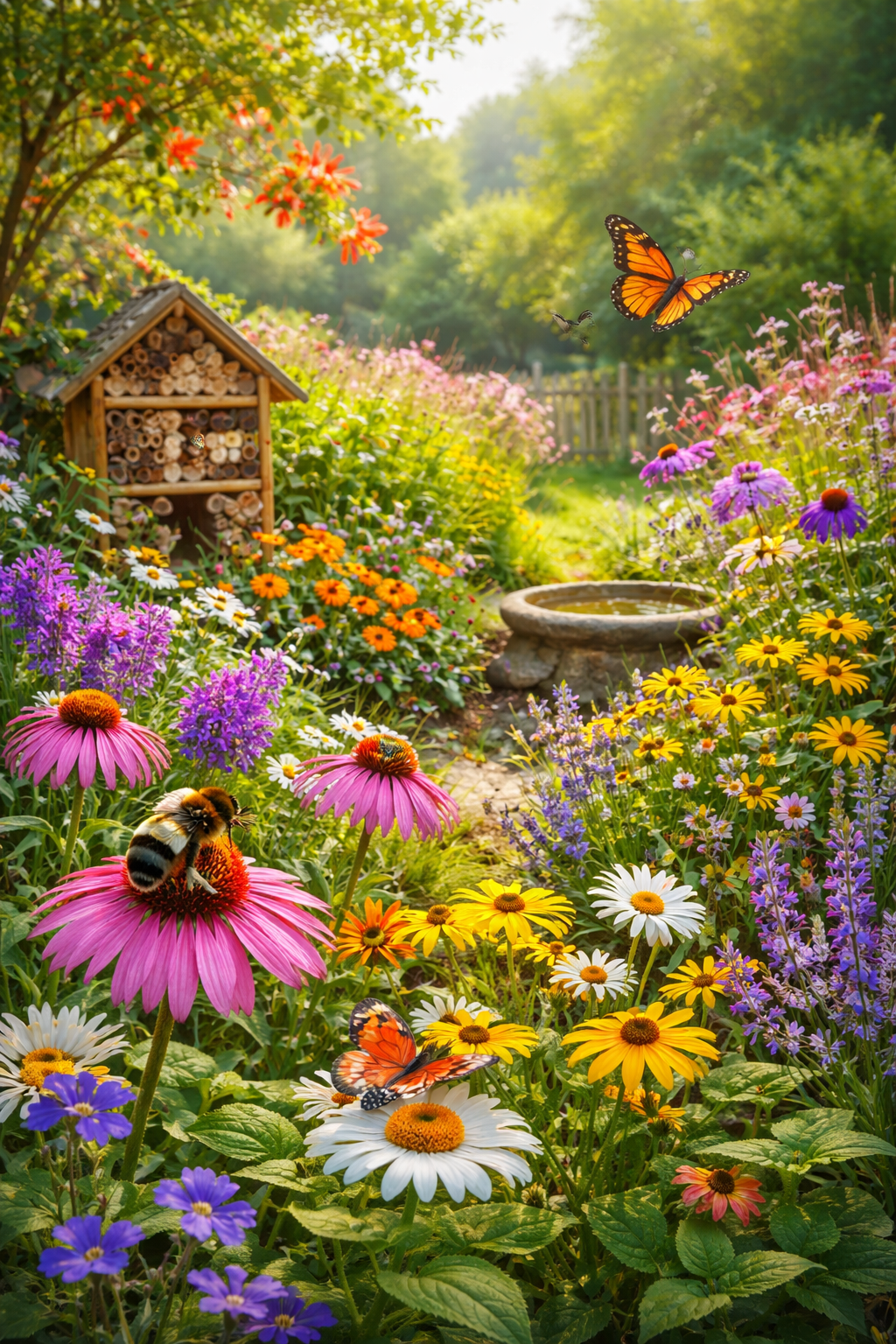
| Gardening With the Small Majority in Mind Pollinator-first design is a way of thinking about gardens that starts not with how a space looks to us, but with how it functions for bees, butterflies, moths, hoverflies, beetles, birds, and other pollinating species. These creatures underpin much of our food system and natural balance, yet their needs are often treated as an afterthought. Pollinator-first design flips that priority, placing ecological function at the heart of every planting decision. At its core, this approach recognises a simple truth: a garden that works for pollinators almost always works better overall. Healthier plants, richer soils, fewer pests, and more resilience to weather extremes naturally follow. Beauty becomes a by-product of balance, rather than something forced into place. Pollinators don’t experience gardens as borders and beds. They experience them as networks of food, shelter, and safe passage. A pollinator-first garden, therefore, thinks in systems rather than features. Nectar and pollen sources must be available across the entire growing season, not just during peak summer. Early spring flowers are critical for emerging queens and solitary bees, while late autumn blooms help insects build energy before winter. Gaps in flowering are effectively hunger gaps. Plant choice is the most powerful tool available. Single-flowered plants with accessible centres provide far more value than highly bred doubles that look impressive but offer little usable nectar. Native and near-native species tend to outperform exotics because local pollinators have evolved alongside them. That doesn’t mean ornamental plants are banned, but they are chosen carefully and used sparingly, supporting rather than dominating the planting scheme. Structure matters as much as flowers. Pollinators need places to rest, hide, nest, and overwinter. Hollow stems, undisturbed soil patches, log piles, leaf litter, hedges, and long grass all provide vital habitat. A garden that is too tidy can be as hostile as one that is neglected. Pollinator-first design embraces a managed softness, allowing natural processes to continue within gentle boundaries. Chemical input is where many gardens fail pollinators, often unintentionally. Pesticides, herbicides, and even some organic treatments disrupt navigation, feeding, and reproduction. A pollinator-first garden accepts that a certain level of insect activity is normal and healthy. Instead of eradication, it focuses on balance. Predatory insects, birds, and healthy soil biology naturally keep populations in check when given time and space. Lawn areas deserve particular attention. Traditional short, frequently cut lawns offer almost nothing to pollinators. By allowing clover, daisies, self-heal, or bulbs to flower, or by reducing mowing frequency, lawns can become significant sources of food. Even small changes, such as leaving edges longer or mowing in rotation, dramatically increase ecological value without sacrificing usability. Seasonal thinking is essential. Pollinator-first gardens are not static displays but living calendars. Spring supports recovery and reproduction, summer fuels abundance and diversity, autumn focuses on storage and preparation, and winter protects life in a pause. Cutting back, clearing, and “resetting” are timed carefully to avoid destroying nests or overwintering insects. Often, doing less achieves more. Importantly, pollinator-first design is scalable. It works in large gardens, small courtyards, communal spaces, and even containers. A single window box planted with nectar-rich flowers can function as a stepping stone in an urban landscape. When many small spaces adopt this mindset, they form corridors that allow pollinators to move, adapt, and survive. There is also a mindset shift involved. Pollinator-first design asks us to let go of absolute control and perfection. Chewed leaves, seed heads, and irregular growth are signs of participation in a wider system. This perspective can be surprisingly calming. Gardening becomes less about constant correction and more about observation, patience, and stewardship. Ultimately, pollinator-first design is not about sacrificing aesthetics for ecology. It is about redefining what a successful garden looks like. A garden alive with movement, sound, and seasonal change tells a deeper story than one that is visually perfect but biologically empty. By designing first for pollinators, we create gardens that are resilient, meaningful, and genuinely alive. |
Pollinator-First Design
 Earthly Comforts