
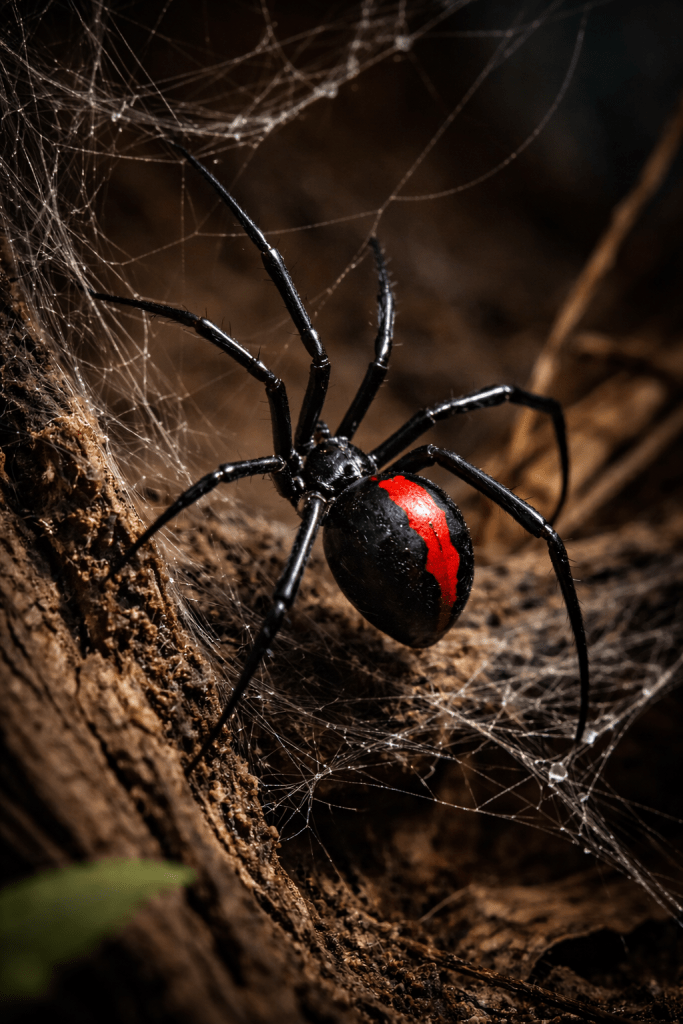
| I didn’t know it was dangerous at the time. That’s the honest truth — and perhaps the most important part of the story. It was 1967 – I was four, what am I supposed to know at that age? In Australia, spiders weren’t introduced with warning labels or whispered about in hushed tones. They were simply there. In corners, under outdoor furniture, behind the bins, they thread their presence quietly into everyday life. To a child with curiosity humming louder than caution, they weren’t threats — they were prizes. The redback was the crown jewel. Small, glossy, and impossibly striking, it carried itself with a confidence that suggested it knew something I didn’t. That red stripe — clean, deliberate — felt less like a warning and more like a signature. I didn’t read it as danger. I read it as important. Armed with a lollipop stick (the height of scientific equipment), I would coax spiders into jam jars with the gentle determination of a young forager convinced of their own competence. The method was simple: patience, steadiness, and an unwavering belief that nothing bad would happen because it hadn’t yet. Once captured, the jar would be sealed and placed — proudly — in the fridge. The logic was flawless, at least to me. Cold meant slow. Slow meant safe. Safe meant look what I found. Like a cat delivering a half-alive mouse to the kitchen floor, I presented my parents with evidence of my skill, my bravery, my contribution to household discovery. They did not share my enthusiasm. Looking back now, with adult knowledge and a gardener’s respect for venom and boundaries, the whole thing feels astonishing. Not reckless — just beautifully unaware. Children don’t seek danger; they seek understanding. They don’t want to dominate the wild; they want to touch it, name it, prove they noticed it first. What the redback taught me — long before I had language for it — was that beauty and danger often coexist quietly. That not everything vivid is loud. That some of the most powerful forces in nature don’t chase, don’t hiss, don’t announce themselves. They wait. In the garden today, I still pause when I see spiders working close to the soil. I don’t collect them. I don’t interfere. I watch. I notice their placement, their patience, their precision. Spiders are not accidents in gardens; they are indicators. Of balance. Of food webs functioning as they should. The redback no longer feels like a trophy species. It feels like an early lesson — one I was lucky to walk away from — about restraint. About knowing when observation is enough. Behind the spade, you learn this quickly. The garden doesn’t reward bravado. It rewards attention. And sometimes, the smartest thing you can do with something powerful is leave it exactly where it is. |
| 10 True Facts About the Redback Spider Redbacks are a type of widow spider. They belong to the same broader group as black widows, sharing similar venom and behaviour, although they are a distinct species found primarily in Australia. Only the female has the famous red stripe. Adult females carry the bold red or orange stripe along their abdomen. Males are much smaller, paler, and often go unnoticed. Redbacks are not aggressive hunters. They don’t chase or attack. Bites usually occur when a spider is accidentally pressed against skin — in shoes, gloves, or outdoor furniture. Their venom affects the nervous system. Redback venom interferes with nerve signals, which is why bites can cause intense pain, sweating, and muscle discomfort rather than tissue damage. Deaths from redback bites are extremely rare today Modern medical treatment means fatalities are virtually unheard of, even though the bite can still be very unpleasant. They prefer messy, sheltered spaces. Redbacks thrive in undisturbed areas — sheds, woodpiles, fence corners, and beneath outdoor items where insects gather. Their webs are messy but functional. Unlike the neat spirals of garden orb-weavers, redback webs are tangled and irregular, designed to trap crawling insects rather than flying ones. Females often eat the male after mating. Sexual cannibalism is common. The male’s sacrifice may increase the survival chances of the eggs — an efficient, if brutal, strategy. Redbacks play a role in pest control. They feed on flies, beetles, cockroaches, and other insects that congregate around human spaces, quietly reducing pest numbers. Cold temperatures slow them dramatically. Redbacks become sluggish in cooler conditions, which is why refrigeration — while not recommended — temporarily reduces their movement. |
 Earthly Comforts