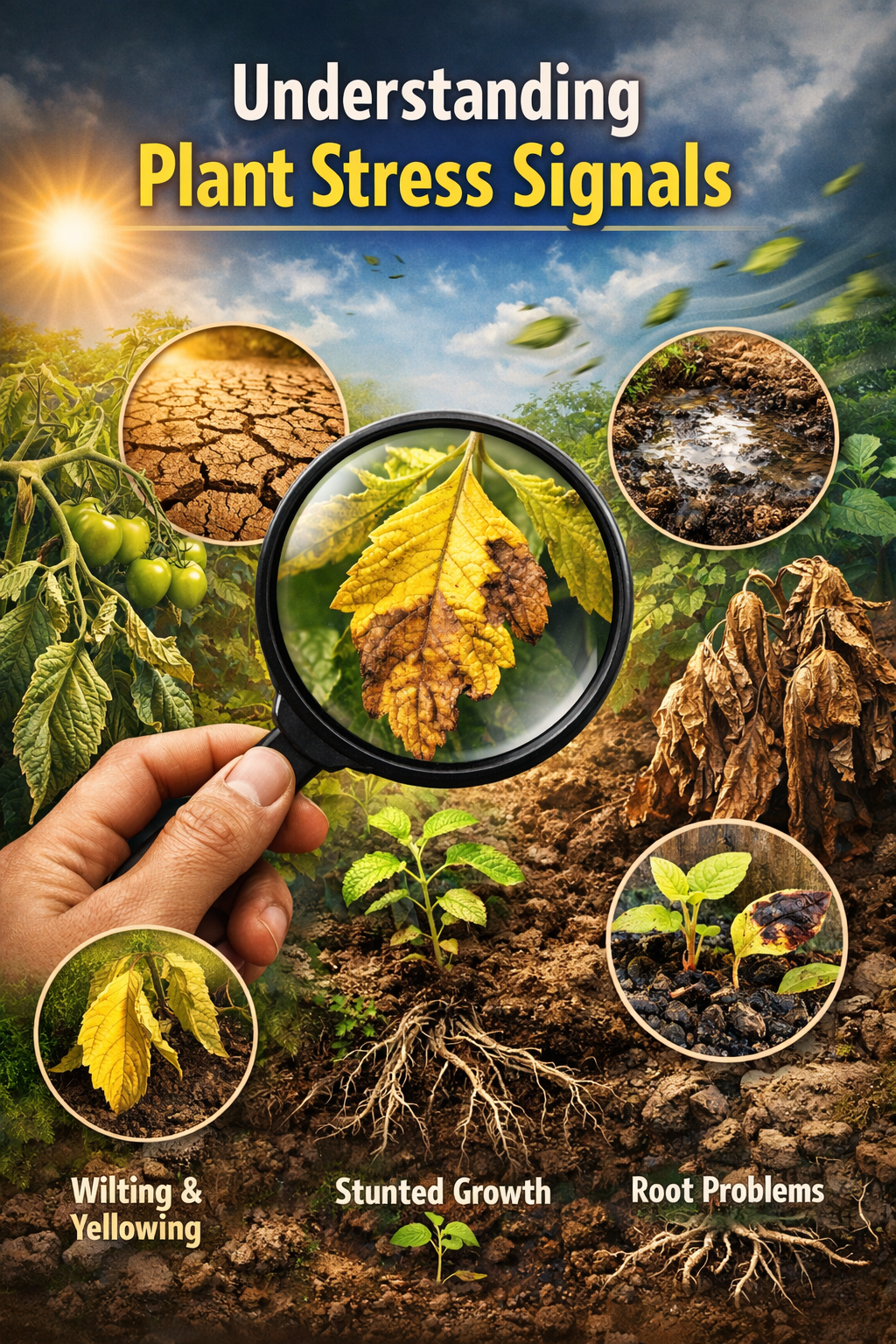
| How Plants Tell Us Something Is Wrong Plants may appear silent and still, but they are anything but passive. Every day, they respond to pressure from their environment and communicate those responses through subtle, readable signals. These stress signals are the plant’s way of saying something is out of balance. Learning to recognise them allows gardeners to intervene earlier, reduce long-term damage, and work with the plant rather than against it. Plant stress is not always dramatic. In many cases, it begins quietly, long before leaves collapse or growth stops. By the time a plant visibly fails, it has often been under strain for weeks. Understanding how plants respond to stress helps shift gardening from reactive to observation-led care. What Is Plant Stress? Plant stress occurs when a plant’s basic needs are not being met within its tolerable range. These needs include water, light, nutrients, oxygen at the roots, temperature stability, and physical integrity. Stress can be acute, such as sudden frost damage, or chronic, such as compacted soil slowly restricting root function. Unlike animals, plants cannot move away from stress. Instead, they adapt internally, reallocating energy and altering growth patterns. These adaptations leave visible and behavioural clues. Stress signals are not failures; they are survival responses. The Language of Leaves Leaves are the clearest communicators. Changes in colour, texture, size, or orientation often signal internal imbalance. Yellowing leaves may suggest nutrient issues, root stress, or water mismanagement. However, the pattern matters. Uniform yellowing tells a different story than yellowing between veins or at leaf edges. Leaf curl is another common signal. An upward curl can indicate heat or light stress, while a downward curl often points to overwatering or root oxygen deprivation. Wilted leaves do not always mean dryness. In waterlogged soil, roots struggle to absorb oxygen, preventing proper water uptake even when moisture is abundant. Spots, scorch marks, and translucent patches suggest stress linked to exposure. This could be intense sun after a period of shade, wind desiccation, or salt accumulation in the soil. Leaves are sensitive surfaces, and their damage often reflects environmental mismatch rather than disease. Growth Patterns That Signal Trouble Plants under stress often change their growth patterns. Slowed growth is the most obvious sign, but erratic growth is equally revealing. Long, weak stems with wide leaf spacing usually indicate light stress. The plant is stretching, investing energy into reaching rather than strengthening. Conversely, very compact growth can indicate temperature stress or chemical interference in the soil. Sudden flushes of growth followed by collapse often point to inconsistent watering or nutrient spikes followed by depletion. Root stress is particularly important and often overlooked. A plant may appear healthy above ground while roots struggle below. Repeated stress leads to shallow root systems, making plants increasingly vulnerable to drought, wind, and temperature swings. Water Stress: Too Little and Too Much Look Similar Water stress is the most misunderstood form of plant stress because its signals overlap. Both drought and overwatering can cause wilting, yellowing, and leaf drop. The difference lies in timing and recovery. A drought-stressed plant often perks up after watering, at least temporarily. Overwatered plants do not. Instead, they may worsen as roots rot and beneficial soil organisms decline. Persistent dampness disrupts the delicate balance between roots and microbes that allows nutrient exchange. Plants under irregular watering regimes also experience stress, even if the total water amount is adequate. Constant fluctuations force the plant into repeated adjustments, draining energy that would otherwise support growth and resilience. Nutrient Stress Is Rarely About Shortage Alone Nutrient stress is often blamed on a lack of fertiliser, but imbalance is more common than deficiency. Excess nutrients can block the uptake of others, leading to misleading symptoms. For example, too much nitrogen may drive lush leaf growth at the expense of root strength and flowering, increasing susceptibility to pests and drought. Soil condition plays a major role. Compacted, lifeless soil restricts nutrient access regardless of how much is present. Healthy soil biology buffers stress by regulating nutrient release and improving root communication. When soil life is disrupted, plants lose an important support system. Environmental and Mechanical Stress Temperature extremes are powerful stressors. Heat stress reduces photosynthetic efficiency, while cold stress slows cellular processes. Sudden changes are particularly damaging, as plants have less time to adjust their internal chemistry. Wind causes both physical and physiological stress. Constant movement increases water loss and can lead to thicker, tougher growth as the plant reinforces itself. While some wind exposure builds resilience, excessive exposure drains energy reserves. Mechanical damage from mowing, pruning, foot traffic, or pets creates stress signals that redirect energy toward repair. Poorly timed or excessive cutting can weaken plants in the long term, even if the damage looks minor at first. Stress Signals as Early Warning Systems One of the most important shifts a gardener can make is seeing stress signals as information rather than problems to suppress. A stressed plant is not failing; it is communicating. The earlier the message is understood, the gentler the required intervention. Repeated stress compounds over time. A plant that survives one stress event may be less tolerant of the next. This is why gardens with ongoing low-level stress often decline gradually rather than suddenly. Observing patterns across seasons is as important as responding to individual symptoms. Supporting Plants Through Stress Reducing plant stress begins with consistency. Stable watering, appropriate spacing, and soil care prevent most issues before they arise. Mulching buffers temperature swings, retains moisture, and feeds soil organisms, reducing stress from multiple angles. Intervention should aim to restore balance rather than force growth. Overcorrecting with fertilisers, heavy pruning, or excessive watering often increases stress rather than resolving it. Gentle adjustments give plants time to recalibrate their internal systems. Choosing plants suited to local conditions is also a stress-reduction strategy. Plants that naturally align with soil type, light levels, and climate require fewer interventions and display clearer, less frequent stress signals. Learning to Read, Not Override Plant stress signals are part of an ongoing conversation between the plant and the environment. When gardeners learn to read those signals, gardening becomes less about control and more about responsiveness. This leads to stronger plants, healthier soil, and gardens that adapt rather than struggle. By paying attention to subtle changes, gardeners can prevent escalation, reduce inputs, and support long-term resilience. Stress, when understood early, becomes guidance rather than damage. |
Plant Stress Signals
 Earthly Comforts
Thank you for sharing this helpful advice, Rory.
LikeLiked by 1 person
Glad it was helpful Eugenia
LikeLiked by 1 person
😊
LikeLiked by 1 person