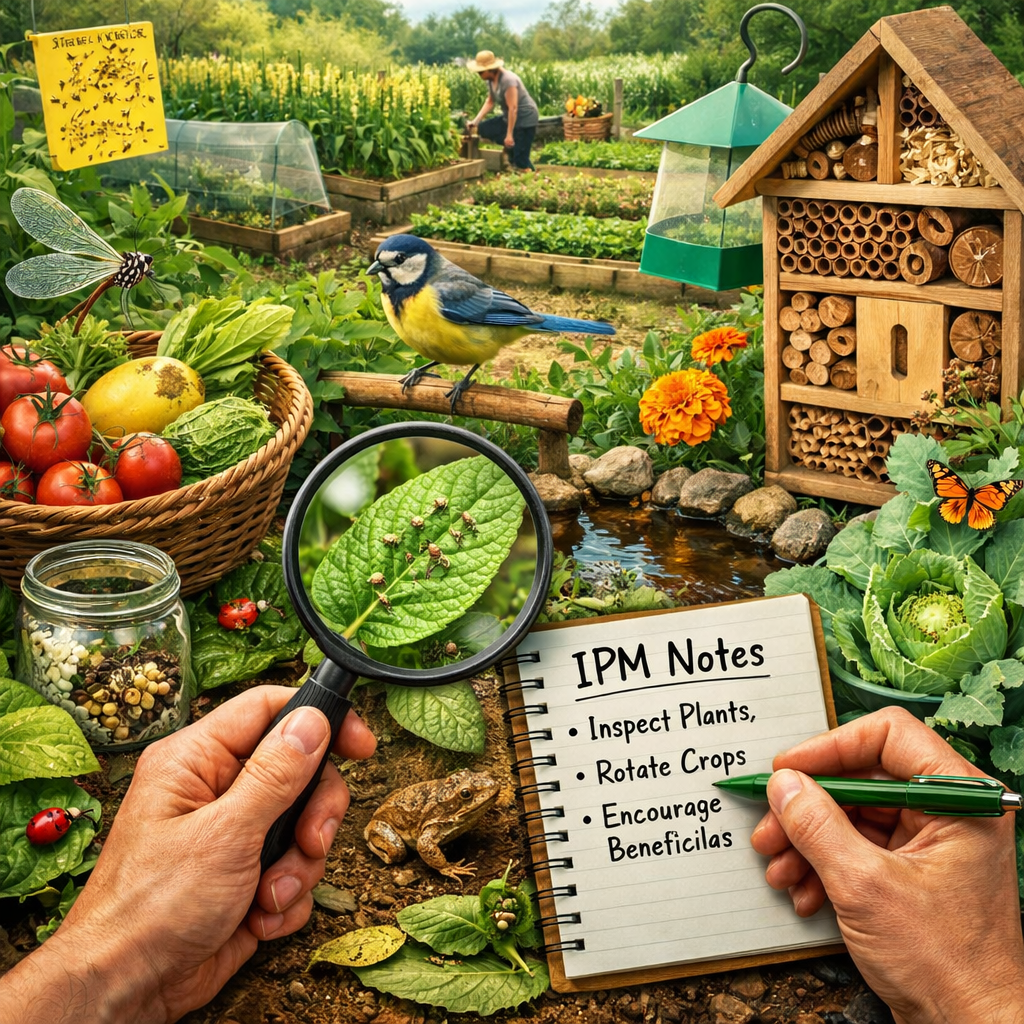
| A Smarter Way to Protect Your Garden Integrated Pest Management, often shortened to IPM, is a thoughtful, balanced approach to dealing with pests in the garden. Rather than reaching straight for sprays or treatments, IPM asks a more important question first: is intervention actually needed, and if so, what is the least disruptive way to do it? For gardeners who value plant health, soil life, wildlife, and long-term resilience, IPM offers a framework that works with nature instead of against it. At its heart, Integrated Pest Management recognises that pests are part of a functioning ecosystem. Aphids, slugs, beetles, and caterpillars are not intruders in the strict sense; they are organisms responding to conditions we have created. IPM shifts the focus away from eradication and towards balance, resilience, and informed decision-making. Understanding the IPM mindset Traditional pest control often operates on a simple trigger: see a pest, eliminate it. IPM replaces that reaction with observation and understanding. Not every insect causes harm, and not every sign of damage threatens the plant’s survival or productivity. A few chewed leaves or aphids on a rose shoot may look alarming, but in many cases, the plant can cope without issue. IPM encourages gardeners to accept a small level of imperfection. This tolerance is not neglect; it is a conscious choice to avoid unnecessary disruption. Gardens managed this way tend to be calmer systems, with natural predators present and plants developing stronger resistance over time. The first pillar: observation and monitoring The foundation of Integrated Pest Management is careful observation. Regularly walking through the garden, looking under leaves, checking stems, and noticing changes helps identify problems early. Early detection usually means simpler solutions. Monitoring also helps distinguish between temporary visitors and genuine problems. Some insects appear briefly and then disappear as the weather changes or predators arrive. Acting too quickly can remove beneficial insects or trigger pest rebounds later in the season. Keeping notes, even informally, can be valuable. Patterns soon emerge: which plants attract pests, when problems tend to peak, and how long they last. Over time, this knowledge becomes one of the gardener’s strongest tools. The second pillar: prevention through good garden practice Prevention is where IPM truly shines. Healthy plants grown in suitable conditions are naturally more resistant to pests and disease. Poor soil, overcrowding, inconsistent watering, and unsuitable plant choices all create stress, and stressed plants send out signals that attract pests. Simple preventative steps make a significant difference. Improving soil structure and organic matter supports strong root systems. Spacing plants correctly improves airflow and reduces humidity-related problems. Rotating crops in vegetable beds prevents the build-up of pest populations year after year. Plant diversity is another powerful preventative measure. Monocultures act like open invitations to pests, while mixed planting makes it harder for any one species to dominate. A diverse garden also supports predators such as birds, beetles, and beneficial insects. The third pillar: identifying pests accurately Correct identification is essential in Integrated Pest Management. Treating the wrong problem wastes time and may worsen the situation. Leaf damage, for example, may be caused by insects, weather, nutrient imbalance, or mechanical damage. Understanding a pest’s life cycle is equally important. Some pests cause damage only at one stage of their life cycle, while others are vulnerable at specific times. Acting at the wrong moment can be ineffective, while well-timed intervention can solve the problem with minimal effort. IPM rewards patience and curiosity. Learning which insects are beneficial and which are problematic transforms how a gardener sees the garden, turning frustration into informed action. The fourth pillar: choosing control methods thoughtfully When intervention is necessary, IPM follows a clear hierarchy. The least disruptive methods are tried first, with stronger measures reserved for situations where damage is severe or persistent. Physical controls are often highly effective. Hand-picking pests, using barriers, netting, traps, or simply washing insects off plants with water can significantly reduce populations without harming other organisms. Biological controls come next. Encouraging natural predators is one of the most sustainable solutions available. Birds, frogs, beetles, lacewings, and parasitic wasps all play roles in keeping pest numbers in check. Providing habitat through hedges, ponds, log piles, and flowering plants strengthens these natural systems. Chemical controls are considered a last resort within IPM, and even then, selection matters. Targeted, low-toxicity treatments used sparingly are preferred over broad-spectrum products. The goal is control, not annihilation, and always with awareness of wider impacts. Accepting thresholds instead of perfection A key concept in Integrated Pest Management is the action threshold. This is the point at which pest damage becomes unacceptable, whether for plant health, productivity, or aesthetics. Below this threshold, no action is taken. This idea can feel uncomfortable at first, especially for gardeners used to immaculate results. However, thresholds reduce unnecessary work and help maintain ecological balance. Many gardens managed with IPM experience fewer serious pest problems precisely because small populations are allowed to exist and support predator communities. Thresholds vary depending on the gardener’s goals. A vegetable grower may tolerate more pests on ornamental plants, while a formal garden may have a lower tolerance in visible areas. IPM adapts to these preferences rather than enforcing rigid rules. Long-term benefits of Integrated Pest Management The benefits of IPM extend well beyond pest control. Gardens managed this way tend to be more resilient to weather extremes, less dependent on purchased inputs, and more supportive of wildlife. Soil health improves, plant losses decrease, and the gardener gains confidence and understanding. IPM also reduces the cycle of repeated treatments that often accompany chemical-heavy approaches. When pests are constantly suppressed without addressing underlying causes, they frequently return stronger and harder to control. Integrated Pest Management breaks this cycle by addressing root problems rather than symptoms. For professional gardeners and home growers alike, IPM aligns with sustainable, future-focused gardening. It respects natural systems while still delivering practical results. Bringing IPM into everyday gardening Integrated Pest Management does not require specialist equipment or advanced training. It begins with slowing down, observing, and asking better questions. Each season builds knowledge, and each challenge becomes an opportunity to refine the approach. By working with nature rather than against it, IPM creates gardens that are healthier, calmer, and more rewarding to care for. It replaces panic with understanding, and short-term fixes with long-term balance. In a changing climate and increasingly pressured ecosystems, this way of gardening is not just sensible, it is essential. |
Integrated Pest Management in Gardening
 Earthly Comforts