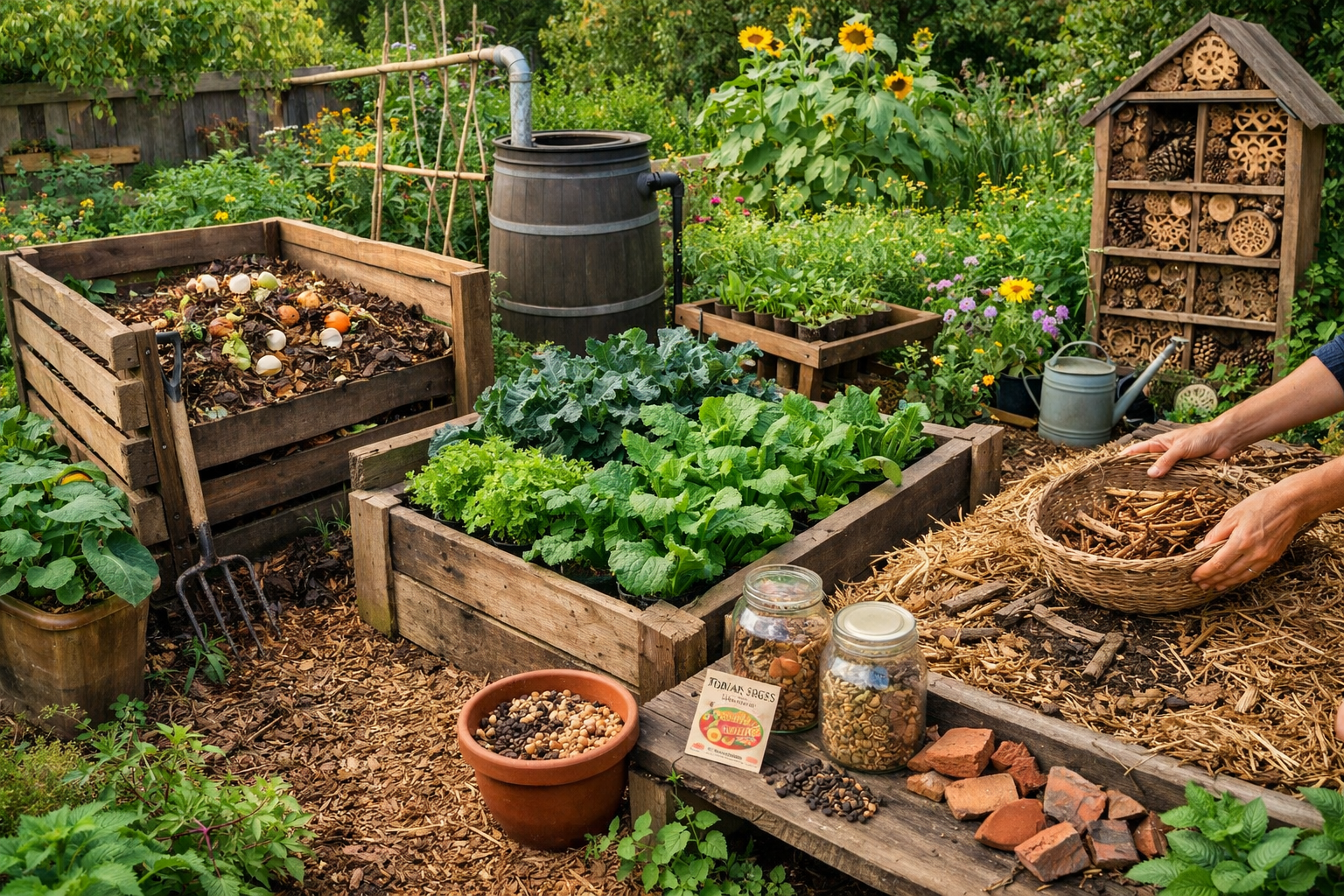
| Growing More by Throwing Less Away Zero-waste gardening is not about perfection or rigid rules. It is about designing your garden so that materials circulate, resources are reused, and as little waste as possible leaves the site. In practice, this approach saves money, improves soil health, reduces reliance on bought-in products, and creates a garden that is calmer, more resilient, and easier to manage over time. At its heart, zero-waste gardening treats the garden as a closed-loop system. Leaves feed soil, soil feeds plants, plants feed people and wildlife, and the leftovers return to the soil. Nothing is rushed to the bin. Everything is given a second purpose. Rethinking What “Waste” Really Is Most garden waste is only waste because we have labelled it that way. Grass cuttings, fallen leaves, pruned stems, faded flowers, even cardboard and paper from the house can all be useful resources. When we stop seeing these materials as problems to be removed and start seeing them as inputs, the entire rhythm of gardening changes. Instead of weekly clear-outs and constant disposal, the garden becomes a place of quiet recycling. Tasks slow down. Decisions become more thoughtful. The result is less physical effort and a more self-sustaining space. Composting as the Engine of the Garden Compost is the backbone of zero-waste gardening. It turns kitchen scraps, garden trimmings, and organic paper into rich, living material that feeds soil life and plants alike. Even a simple compost heap, managed gently, can produce enough compost to support borders, veg beds, pots, and trees. The key is balance rather than complexity. Mixing greens (soft plant material and food scraps) with browns (dry leaves, cardboard, woody stems) helps prevent odours and speeds breakdown. Turning is helpful but not essential. Time, moisture, and microbes do most of the work for you. What compost replaces is just as important as what it creates. Each bag of compost not bought saves packaging, transport emissions, and cost, while keeping nutrients exactly where they belong. Mulch: Protection, Not Waste Mulching is one of the simplest zero-waste habits to adopt. Instead of removing organic material from beds, it is spread back onto the soil surface. Leaves, shredded prunings, compost, wood chips, and even grass cuttings (used sparingly) all make good mulch. Mulch reduces evaporation, suppresses weeds, feeds soil organisms, and improves structure over time. It also means fewer weeds to remove and less watering required. In a zero-waste garden, nothing organic should leave the site before it is considered mulch. Saving Seeds and Sharing Plants Seed saving closes another loop. Allowing a small number of plants to flower and set seed reduces the need to buy new packets each year and helps plants gradually adapt to your local conditions. Even simple crops like beans, peas, tomatoes, and salad leaves are easy places to start. Beyond seeds, zero-waste gardening encourages sharing. Divided perennials, surplus seedlings, and cuttings become gifts rather than clutter. This strengthens local growing networks and reduces the need for mass-produced plants raised far from home. Reusing Materials Creatively A zero-waste garden does not need everything to match or look like it was just bought. Old timber becomes raised beds or edging. Broken pots become drainage crocks. Bricks, stones, and slabs can be reused for paths, supports, or insect habitats. Even items from the house have a place. Cardboard suppresses weeds under mulch. Glass jars store seeds. Old containers become planters. The aim is not to create a messy garden, but a thoughtful one where materials are valued until they genuinely reach the end of their life. Water Without Waste Water is a resource easily wasted in gardens. Zero-waste principles encourage capturing rainfall, improving soil to hold moisture, and watering only where needed. Mulch plays a major role here, as does planting appropriately for your climate and soil. Healthy soil acts like a sponge. When organic matter is built up year after year, less watering is required, and plants cope better with dry spells. This reduces both water use and time spent maintaining the garden. Letting Nature Do More of the Work A zero-waste garden is not overly tidy. Some seed heads are left standing. Fallen leaves are allowed to gather under hedges. Dead stems remain through winter to protect insects and birds. This approach reduces labour and supports biodiversity while still allowing the garden to feel cared for. By working with natural cycles rather than against them, gardeners spend less time fixing problems and more time observing, adjusting, and enjoying the space. Starting Small and Staying Realistic Zero-waste gardening does not need a dramatic overhaul. It can begin with a single habit: composting peelings, mulching a bed, or saving one type of seed. Each small step builds confidence and reduces waste without adding pressure. Over time, these small changes stack up. The garden becomes cheaper to run, easier to maintain, and far more connected to its surroundings. Most importantly, it becomes a place where nothing is rushed, nothing is wasted, and everything has a role. |
Zero-Waste Gardening
 Earthly Comforts