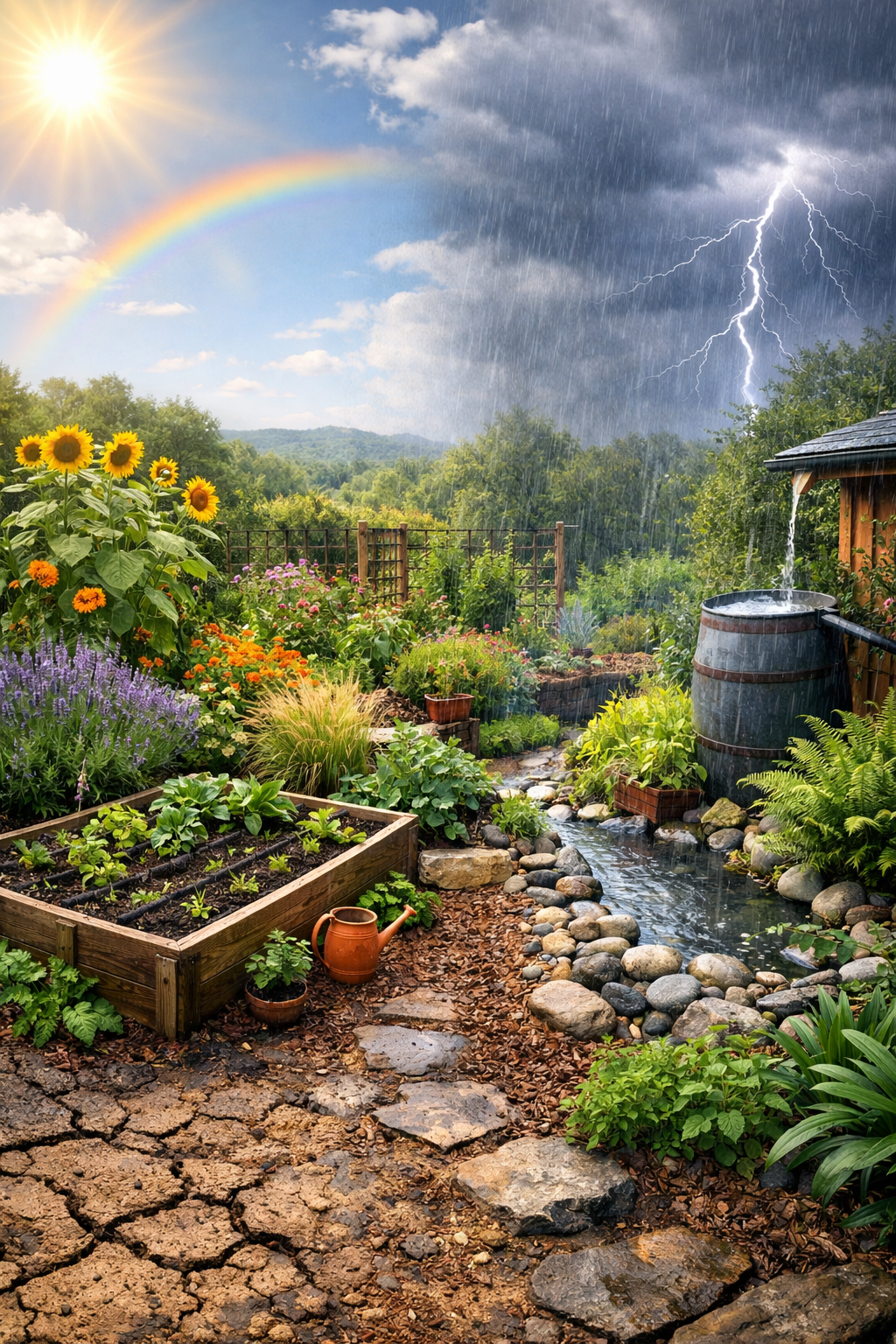
| Growing With Uncertainty, Not Against It Gardening used to follow fairly dependable rhythms. Seasons arrived when expected, rainfall patterns were familiar, and planting dates could be pencilled into diaries with confidence. Today, that predictability has softened. Sudden heat spikes, prolonged wet periods, late frosts, and unseasonal storms are becoming part of everyday gardening life. Variable-weather gardening is not about fighting this change, but about learning to work alongside it with flexibility, observation, and resilient practices. At its core, variable weather gardening is a mindset shift. Instead of aiming for control, it prioritises responsiveness. Gardens that thrive under variable conditions are not rigid systems; they are adaptive ones. This approach focuses on soil health, plant choice, timing awareness, and design strategies that cushion against extremes rather than collapse under them. One of the most important foundations is soil. Healthy soil acts like a buffer. During heavy rainfall, well-structured soil absorbs water rather than shedding it. During drought, it retains moisture instead of baking solid. Building organic matter through compost, leaf mould, mulching, and reduced disturbance improves soil structure over time. Gardens with rich, living soil recover faster after weather shocks and place far less stress on plants during extremes. Plant selection plays an equally important role. Variable weather favours diversity over uniformity. A garden dominated by a single species or cultivar is far more vulnerable than one planted with a mix of plants that respond differently to stress. Deep-rooted plants can access moisture when shallow-rooted ones struggle. Some species tolerate heat better, others manage wet feet more gracefully. By mixing these traits, the garden becomes more resilient as a whole. Native and near-native plants often perform well in variable conditions because they have evolved alongside local weather fluctuations. That does not mean exotic or ornamental plants should be avoided, but they should be chosen carefully and placed thoughtfully. Sheltered microclimates, free-draining soil pockets, and wind-protected areas allow more sensitive plants to coexist with tougher companions. Timing is another area where flexibility matters. Fixed calendar dates are becoming less reliable, while observation is gaining importance. Instead of planting by the date, plant by the conditions. Soil temperature, ground moisture, and short-term forecasts matter more than tradition. This may mean delaying sowing even when the calendar says it is “time”, or acting quickly during unexpected windows of favourable weather. Water management has become one of the defining challenges of variable weather gardening. The paradox many gardeners now face is alternating drought and deluge. Capturing excess water during wet periods and storing it for dry spells can make a significant difference. Water butts, swales, rain gardens, and permeable surfaces help slow water movement and keep it within the garden system rather than allowing it to flow into drains. Mulching deserves special attention in this context. A well-mulched garden experiences fewer temperature extremes at the soil surface, reduced evaporation, and less erosion during heavy rain. Organic mulches also improve soil over time, compounding their benefits. In variable weather, mulch acts as an insulation, shock absorber, and moisture regulator all at once. Structural elements in the garden can also moderate the effects of weather. Hedges, fences, shrubs, and trees break wind, create shade, and reduce evaporation. Even small gardens benefit from layered planting, where ground cover, shrubs, and taller plants work together to soften exposure. These layers create microclimates that allow a wider range of plants to survive unpredictable conditions. Lawns, often the most weather-sensitive feature in a garden, may require rethinking. Traditional, tightly cut grass struggles during drought and becomes vulnerable during prolonged wet periods. Allowing grass to grow slightly longer, reducing mowing frequency during stress, and accepting seasonal colour changes can dramatically improve lawn resilience. Some gardeners are also reducing lawn areas in favour of mixed planting that better withstands extremes. Maintenance routines also need to adapt. Variable weather rewards attentiveness rather than routine. Regular light checks often prove more effective than infrequent heavy interventions. Catching stress early allows for small corrective actions, such as additional mulch, temporary shading, or selective pruning, before problems escalate. It is also important to accept a degree of imperfection. Variable weather gardening does not promise flawless borders or uninterrupted growth. It prioritises long-term health over short-term appearance. Plants may die back unexpectedly, flowering times may shift, and yields may vary. These changes are not failures; they are signals. Gardens that are allowed to respond naturally tend to stabilise over time. Wildlife plays an increasingly valuable role in this approach. Pollinators, soil organisms, birds, and insects contribute to garden resilience by supporting plant health and balance. Gardens that welcome wildlife often experience fewer pest explosions and recover more quickly after stress events. Creating habitats by planting diverse species, leaving some areas undisturbed, and avoiding harsh chemicals strengthens this partnership. Variable weather gardening is not about predicting the future perfectly. It is about designing gardens that can withstand surprises. The most successful gardens of the coming years will not be those that resist change, but those that bend, adapt, and recover. By focusing on soil, diversity, observation, and thoughtful design, gardeners can create spaces that remain productive, calming, and alive even as the weather grows less certain. In many ways, this approach returns gardening to its roots. It asks us to watch more closely, intervene more gently, and respect the rhythms that still exist, even when they no longer follow the patterns we once knew. Gardening with variable weather is not a loss of control; it is an invitation to garden more intelligently, more sustainably, and with greater resilience than ever before. |
Variable Weather Gardening
 Earthly Comforts