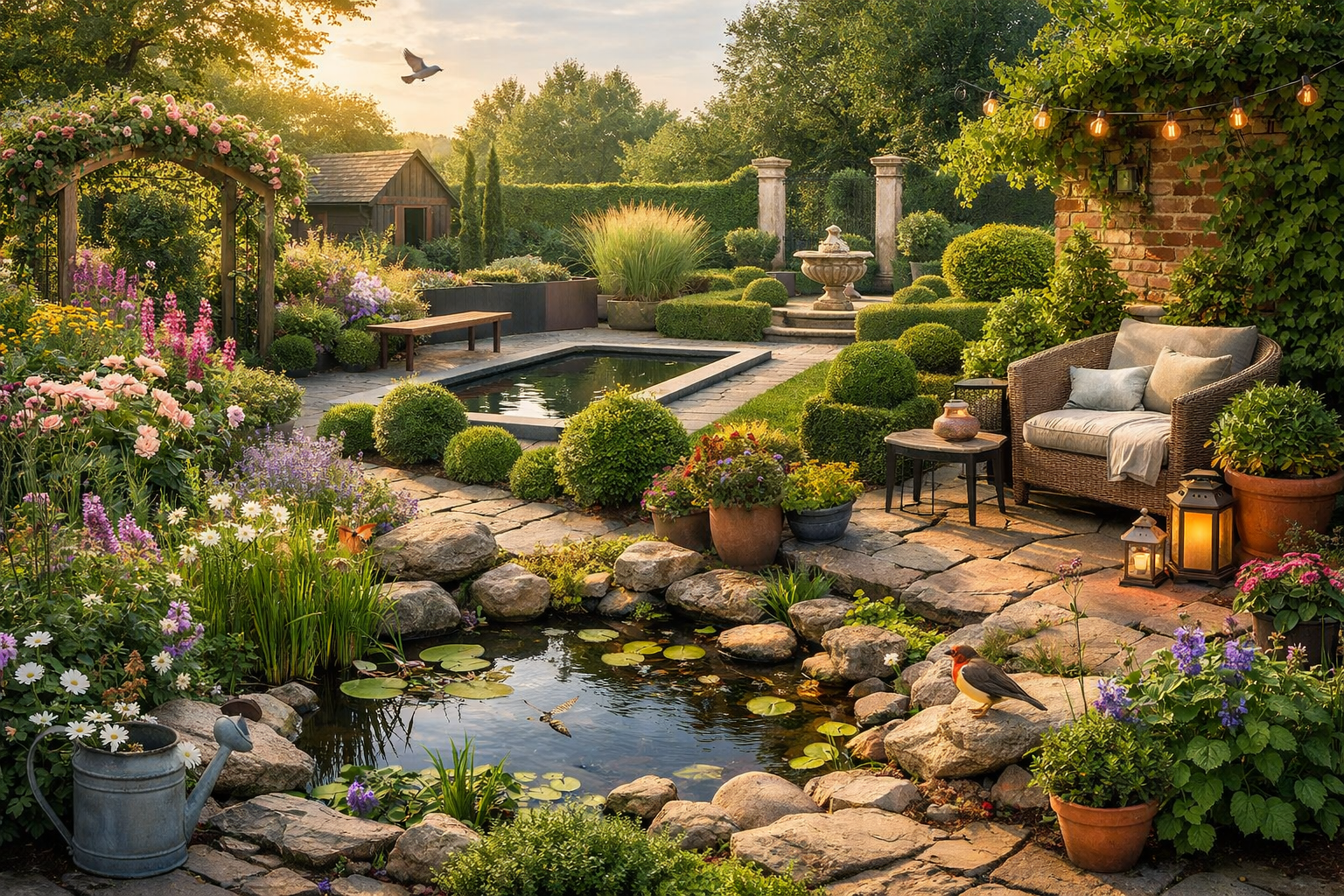
| What It Says, and How to Listen Every garden has a personality. Even the most modest patch of green carries a character shaped by space, soil, light, history, and the people who tend it. Some gardens are calm and ordered, others are expressive and unruly, and many sit somewhere in between. Understanding your garden’s personality is not about following trends or copying magazine spreads; it’s about recognising what your garden naturally wants to be, and working with it rather than against it. A garden’s personality reveals itself quietly. It shows up in which plants thrive without fuss, which corners always feel peaceful, and which areas resist your best efforts to tame them. When we stop forcing a garden to meet an imagined ideal and instead observe how it behaves, maintenance becomes easier, and the space feels more authentic. A garden that suits its own nature is more resilient, more sustainable, and far more satisfying to spend time in. Personality often begins with structure. Hard landscaping, paths, boundaries, and the layout of beds all set the tone before a single plant goes in. Strong lines and symmetry tend to create a formal, composed feel, while winding paths and irregular shapes suggest softness and movement. Neither is better than the other; the key is consistency. A garden feels unsettled when its structure and planting are telling different stories. Plant choices are the clearest expression of character. A garden full of clipped shrubs, repeating forms, and restrained colour speaks of control and clarity. One filled with self-seeding flowers, mixed heights, and seasonal surprises feels generous and relaxed. Many gardens naturally lean one way due to soil type, sun exposure, and microclimate. Working with those conditions allows the garden’s personality to strengthen rather than fracture. Maintenance style plays a surprisingly large role. Some gardens enjoy regular attention and respond beautifully to frequent shaping, mowing, and edging. Others resent interference and look best when allowed to settle into their own rhythm. There is no failure in choosing a lower-intervention garden; in fact, recognising how much time and energy you realistically have is part of honest garden design. A garden’s personality should match the gardener’s life, not compete with it. Seasonality also shapes identity. Gardens that change dramatically through the year often feel dynamic and alive, even when winter strips them back. Evergreens and permanent structures create steadiness and reassurance. Many of the most balanced gardens combine both, offering moments of excitement alongside dependable anchors. Personality isn’t fixed; it unfolds across time. Wildlife presence is another indicator. Gardens that welcome birds, insects, and small mammals tend to feel softer and more interconnected with the wider landscape. This doesn’t mean abandoning order, but it does mean allowing space for life to move through. A garden that hums, flutters, and rustles quietly announces that it belongs to its place. Your own response matters just as much as the garden’s physical traits. Pay attention to where you pause, where you feel drawn to sit, and which views you naturally protect when pruning or planting. These instincts are clues. A garden’s personality is a relationship, not a label, and it evolves as you do. Ultimately, understanding your garden’s personality is an act of respect. It allows you to make decisions that feel right rather than forced, and it reduces frustration by aligning expectations with reality. When a garden is allowed to be itself, it becomes easier to care for, richer in detail, and more rewarding to live with. The most successful gardens are not the loudest or the most fashionable; they are the ones that feel settled, honest, and quietly confident in who they are. |
Your Garden’s Personality
 Earthly Comforts